
Shares in Britain's largest oil companies eased in early London trading on Tuesday as oil prices staged a partial rebound after U.S. military action in southern Iran overnight. Market participants were left balancing the prospect of progress in talks against the possibility that the fragile ceasefire could deteriorate.
By 05:14 ET (09:14 GMT), Shell Plc had fallen 0.40% while BP Plc slipped 0.71%. Smaller producers tracked the majors lower, with Harbour Energy down 1.97%, Serica Energy off 1.83% and Ithaca Energy losing 1.56%.
Brent crude futures rose 3.4% to $96.59 a barrel, recovering part of a sharp decline from Monday when Brent closed down 6.78% at $93.42. U.S. West Texas Intermediate (WTI) was down 3.64% at $93.08.
The U.S. military said it had carried out "self-defence strikes" overnight against Iranian missile launch sites and boats it said were allegedly laying mines near the Strait of Hormuz. CENTCOM spokesman Timothy Hawkins told CNN that forces acted "to protect our troops from threats posed by Iranian forces," and he insisted the ceasefire remained in place. Tehran gave no immediate indication it agreed with that assessment.
The strikes came hours after U.S. President Donald Trump said on Truth Social that talks had made significant progress and claimed Iran’s enriched uranium stockpile would be handed over to Washington or destroyed at an agreed location.
Iran offered a more cautious appraisal. Foreign Ministry spokesperson Esmaeil Baqaei acknowledged movement on "a large portion of discussion topics" but warned that "frequent changes in the positions of American officials complicate every negotiation," adding that no imminent agreement could be claimed.
A senior Iranian delegation including parliament speaker Mohammad Bagher Ghalibaf and Foreign Minister Seyed Abbas Araghchi travelled to Qatar on Monday for fresh talks, a move a U.S. official described as a positive development. CNN reported that differences over wording on the nuclear programme and the sequencing of sanctions relief remained key sticking points. According to the report, Washington is insisting on a sequencing described by officials as "no dust, no dollars" - that Iran must dispose of nearly 1,000 pounds of highly enriched uranium before receiving financial relief.
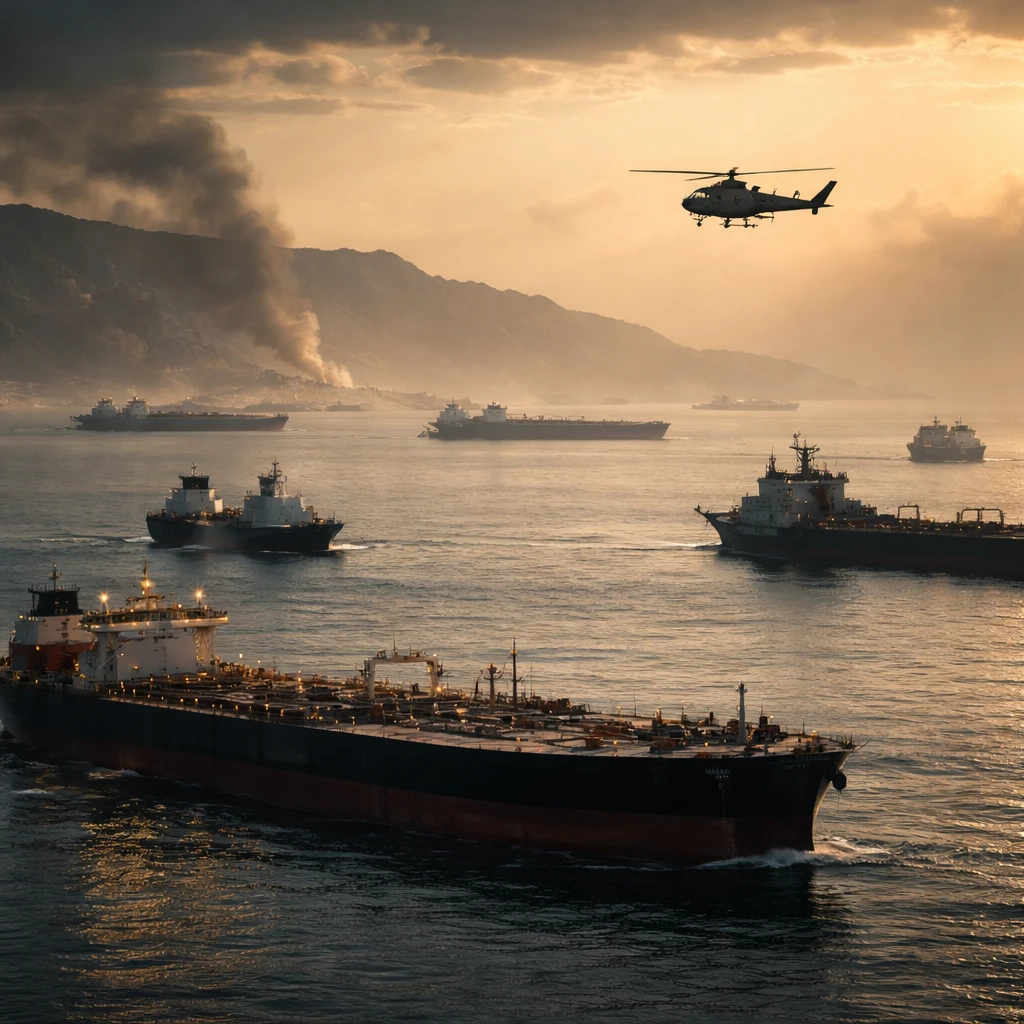
The Strait of Hormuz, through which roughly a fifth of global oil supplies transit, has remained largely closed since hostilities began. Secretary of State Marco Rubio said the waterway would reopen "one way or the other" but cautioned that a deal could "take a few days."
For oil majors, elevated crude prices during the conflict have supported stronger earnings. Market participants noted, however, that any durable peace arrangement that restored regular flows through Hormuz could quickly remove that price-supporting factor.
Market context and implications
- Oil price volatility reflects the dual forces of military action and diplomatic engagement.
- Equity moves among UK-listed energy companies tracked the commodity swings, with majors and smaller producers alike under pressure.
- Flows through the Strait of Hormuz remain the central transmission channel from geopolitics to oil markets.
Quotes cited in this report
- "To protect our troops from threats posed by Iranian forces," said CENTCOM spokesman Timothy Hawkins on the strikes.
- President Donald Trump said talks had shown "significant progress" and referenced the handling of Iran's enriched uranium stockpile.
- Iran's Foreign Ministry spokesperson Esmaeil Baqaei said progress had been made on "a large portion of discussion topics" but cautioned that shifting U.S. positions complicated negotiations.
The immediate outlook remains uncertain. Oil markets and UK-listed energy stocks are likely to stay sensitive to any further military activity around the Strait and to developments in the Qatar-based talks. Traders and corporate observers will be watching both price moves and diplomatic signals closely for indications of whether a ceasefire will hold and whether the strategic choke point will reopen to regular traffic.