
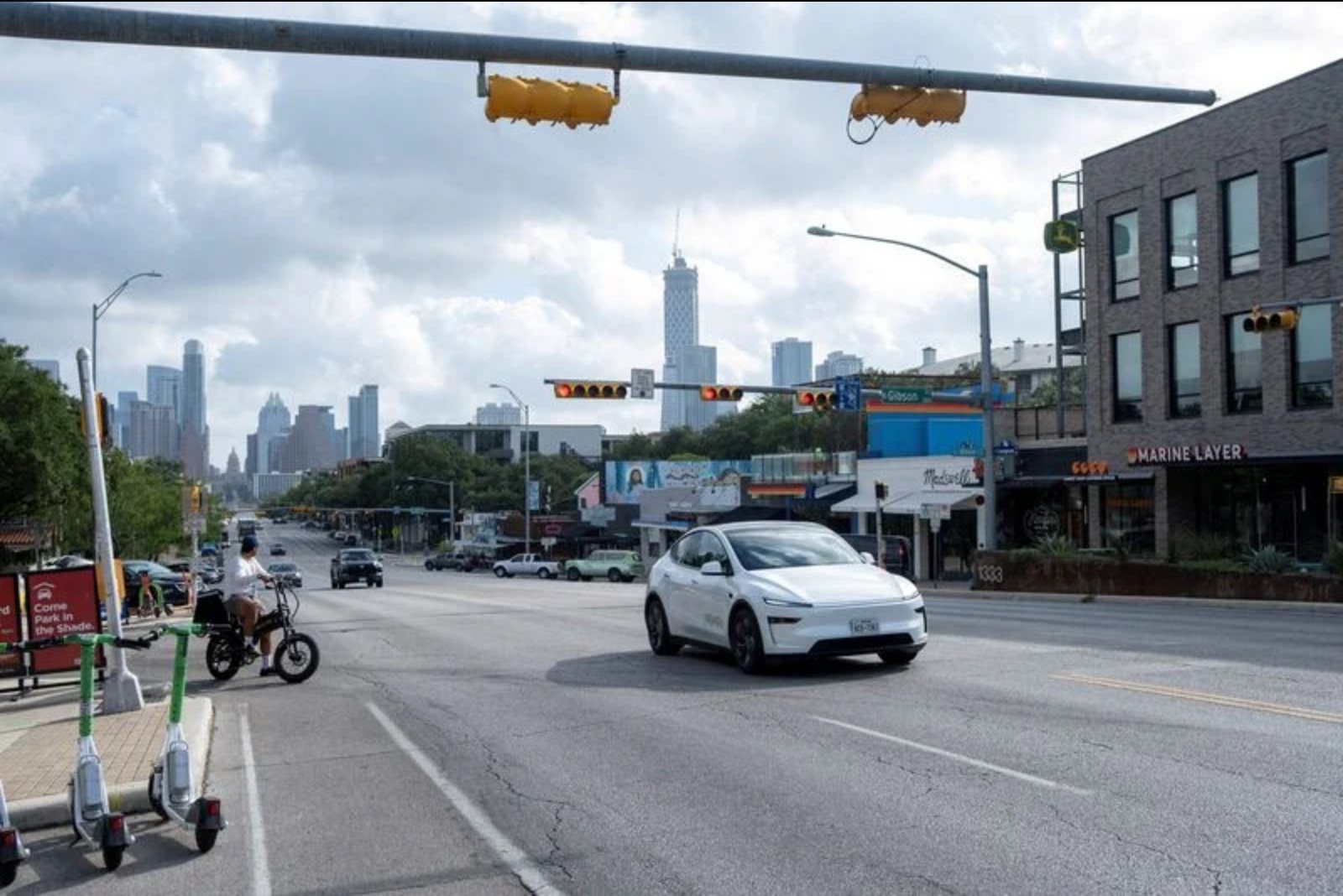
Tesla has begun operating unsupervised robotaxis across the entire Austin Metro area in Texas, the company said on Wednesday, marking a further expansion of its autonomous ride-hailing service.
Deployment of the driverless taxis is tied to Tesla’s wider strategy to increase adoption of its full self-driving software - a version of which underpins the robotaxi technology - after a strategic pivot by CEO Elon Musk that placed greater emphasis on AI and robotics over traditional vehicle sales.
"Unsupervised Robotaxi now in the entire Austin Metro area," Tesla’s official robotaxi account posted on X. The company has been running the service in Austin for nearly a year, and some riders have reported wait times that exceed 30 minutes.
Local officials presented information showing Tesla operates roughly 50 vehicles in Austin. By comparison, Alphabet’s Waymo runs more than 250 vehicles in the same market, according to the presentation cited by city authorities.
Tesla has been introducing its robotaxi capability in other parts of Texas as well. In April, the company said it was rolling out the service in Dallas and Houston.
CEO Musk has publicly said he expects fully self-driving cars without human safety monitors to become more widespread in the United States later this year, noting that Texas has already seen introductions of such vehicles.
The Austin expansion represents another step in Tesla’s effort to scale an autonomous ride-hailing operation that relies on its full self-driving software. The company’s statements emphasize growth through wider adoption of that technology rather than through conventional vehicle unit sales alone.
While Tesla increases its presence in Austin, municipal data indicate a meaningful disparity in fleet size versus competitors in the same market, and operational reports from users point to service availability issues at times. Those factors could influence adoption rates and competitive dynamics as the robotaxi program develops.