
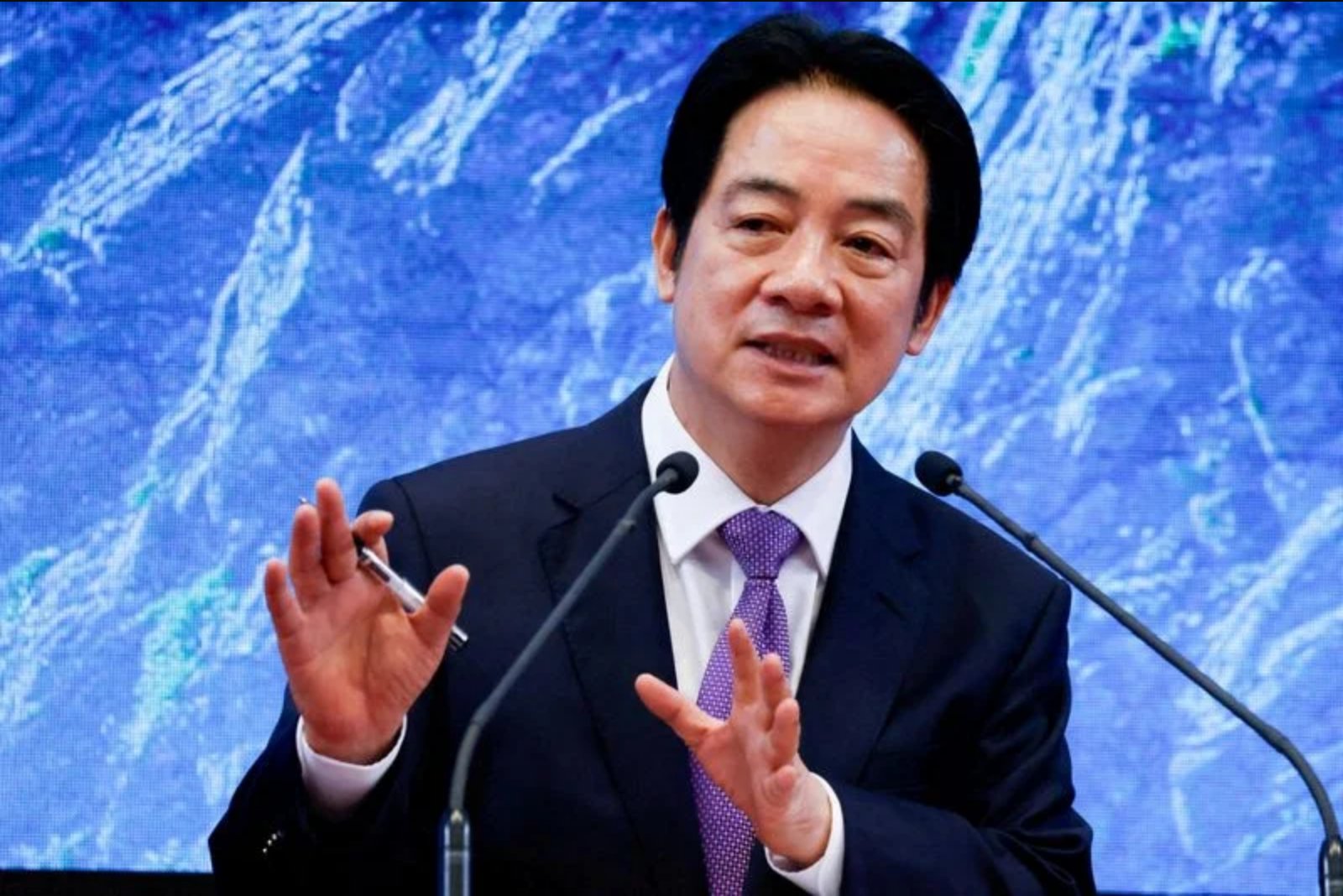
TAIPEI, May 31 - Taiwan's presidential office issued a sharp rebuke of China on Sunday after the New York Times reported that a journalist for the paper had been expelled from the mainland earlier this year.
The newspaper said on Friday that reporter Vivian Wang was expelled by Chinese authorities in February. Chinese officials told the paper the expulsion was a response to a video interview conducted in December by the paper's DealBook summit with Taiwan President Lai Ching-te. The New York Times also said Wang herself did not take part in that interview.
In a statement, Taiwan presidential office spokesperson Karen Kuo defended Lai's practice of granting interviews, describing them as a routine means of explaining the government's positions to international audiences. Kuo strongly criticized Beijing's handling of the matter, saying China was relying on "groundless pretexts and crude methods to threaten the media and interfere with press freedom," and argued those tactics worsened China's international image while demonstrating that "today's China is indeed a source of instability."
Kuo added that Taiwan would not be intimidated and that it would persist in presenting its stance to the global community in a steady and responsible manner.
The New York Times reported that Wang had previously been based in China, where her reporting included coverage of censorship and Beijing's response to COVID-19. The paper said Wang did not immediately respond to a request for comment about the expulsion. Neither China's foreign ministry nor the U.S. State Department had immediately replied to requests for comment, according to the report.
Taipei has accused Beijing of stepping up what it calls "transnational repression," citing measures such as sanctions against Taiwanese officials and lawmakers despite the fact that Chinese law does not have jurisdiction over Taiwan. Taiwan's complaint, as presented in the presidential office statement, frames the expulsion as part of a broader pattern of pressure on Taiwanese and international actors.
The situation reflects how foreign correspondents operate under visa regimes in China. The New York Times noted that foreign reporters in China typically receive one-year visas that are renewed annually and can be revoked at any time. The paper also recalled that China expelled more than a dozen journalists from U.S. media outlets in 2020 during a period of reciprocal actions between Beijing and Washington. In turn, the U.S. reduced the number of journalists permitted to work in the United States for several major Chinese state-owned media outlets to four.
The presidential office's response underscores Taiwan's view that efforts to curtail or punish media coverage relating to its leaders amount to attempts at political pressure. The statements from Taipei framed the case as both a press freedom issue and a diplomatic affront, but did not propose specific retaliatory measures.
While the New York Times' account supplies the details of the expulsion and the Chinese explanation tying it to the DealBook interview, there remains little public comment from Chinese authorities in response to the newspaper's disclosures, according to the reporting.
As described by Taiwan officials, the incident is part of a pattern of coercive measures Beijing uses, in their view, to shape external narratives and exert influence beyond its borders. Taiwan's assertion that it will continue to speak to the international community in "a steady and responsible manner" signals persistence in engaging foreign media despite the risk of diplomatic friction.