
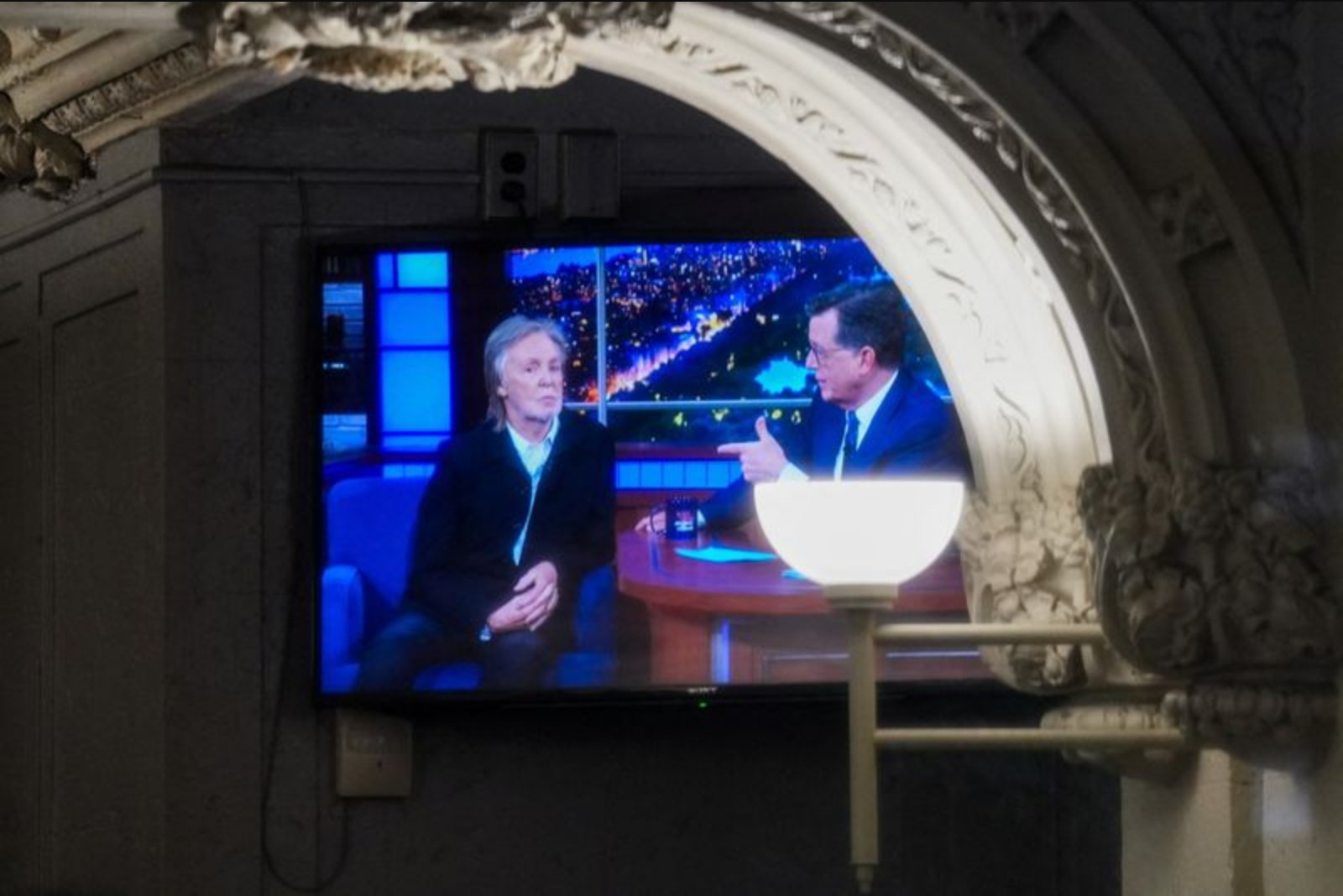
Stephen Colbert closed the curtain on his late-night program on Thursday night after 11 seasons, delivering a farewell that combined reflective moments, sharp humor about his forced exit from CBS and a surprise musical turn by Beatles legend Paul McCartney.
The final episode began with Colbert addressing both the in-person audience at the Ed Sullivan Theater in New York and viewers at home, thanking them for tuning in to his nightly coverage of current events - a run that often included pointed jabs at Republican President Donald Trump. "We were here to feel the news with you, and I don’t know about you, but I sure have felt it," Colbert told the crowd, drawing laughter in the theater.
CBS announced in July that it was canceling "The Late Show," citing financial reasons. The move comes against a backdrop of long-term declines in late-night viewership and advertising revenue, and it has attracted public criticism. Democrats and other commentators said the decision amounted to an attempt to silence political satire and raised concerns related to the free speech protections of the First Amendment.
The show's cancellation unfolded while Paramount Global, which at the time owned CBS, was seeking government approval for a merger. That merger went forward, and CBS now operates as a unit of Paramount Skydance, led by David Ellison.
Despite its ending, Colbert's program leaves a record of audience strength: Nielsen data show it was the most-watched late-night broadcast network program since the 2017-2018 season, and this season the "Late Show" averaged 2.1 million viewers.
On-screen, the finale mixed theatrical elements with callbacks to the show's recurring themes and guests. Colbert stepped away from his desk to a backstage area where a glowing green circle had appeared. Astrophysicist Neil deGrasse Tyson, a frequent guest, quipped that the circle was a wormhole caused by "two conflicting realities," calling them "a show that was number one on late night, and it also gets canceled." Tyson added, "Your cancellation has created a rift in the comedy-variety-talk continuum," and warned that "If it grows, all of late-night television could be destroyed."
Several fellow late-night hosts made appearances to offer humorous counsel, including Jimmy Kimmel, John Oliver, Jimmy Fallon, Seth Meyers and Jon Stewart.
Earlier in the show, Colbert teased viewers by saying he had lined up an interview with Pope Leo as his final guest. A staffer then joked that the pope had canceled because he did not like the snacks in Colbert's dressing room. At that moment, Paul McCartney walked onstage, saying, "I was just in the area. I was doing some errands." The musician's arrival echoed the theater's history: McCartney had appeared there in 1964 when the Beatles were introduced to American audiences on the "Ed Sullivan Show."
Colbert questioned McCartney about that 1964 performance, asking what Sullivan was like and how the young Beatles perceived the United States. McCartney recalled that he and his bandmates, who were in their early 20s then, viewed America as "the land of the free, the greatest democracy." "That’s what it was, and hopefully still is," McCartney said.
The program concluded with McCartney performing the Beatles classic "Hello, Goodbye," while Colbert provided background vocals. The musical sendoff capped an episode that balanced warmth, satire and show-business callbacks.
After the broadcast, President Trump posted on Truth Social criticizing Colbert's talent and celebrating his departure, writing that Colbert had "no talent," and adding, "You could take any person off of the street and they would be better than this total jerk," followed by, "Thank goodness he’s finally gone!"
Outside the theater before the final show, fans expressed regret not only for Colbert's exit but for the broader loss of the "Late Show" as a cultural fixture. Colbert, 62, took over the program from David Letterman in 2015.
One fan, Mike McGillicuddy, said, "This is the end of an era. The late night show is a staple. David Letterman, Johnny Carson, it’s upsetting." Another fan, Sarah Thompson, described feeling "very sad that Stephen’s leaving." She added, "It’s just going to leave a big hole in America because you need to laugh at the end of the day from all the trauma that we’re facing."
The episode and the circumstances surrounding the show's end highlighted tensions at the intersection of broadcast economics, corporate restructuring and cultural debate over political satire. The program's status as a ratings leader in late night and its recent average viewership of 2.1 million were contrasted with the network's stated financial rationale for cancellation and the subsequent public outcry from political figures and advocates of free expression.
As Colbert signed off, the combination of personal farewell, celebrity cameo and pointed commentary offered a final chapter to a program that had been a prominent voice in late-night television for more than a decade.