
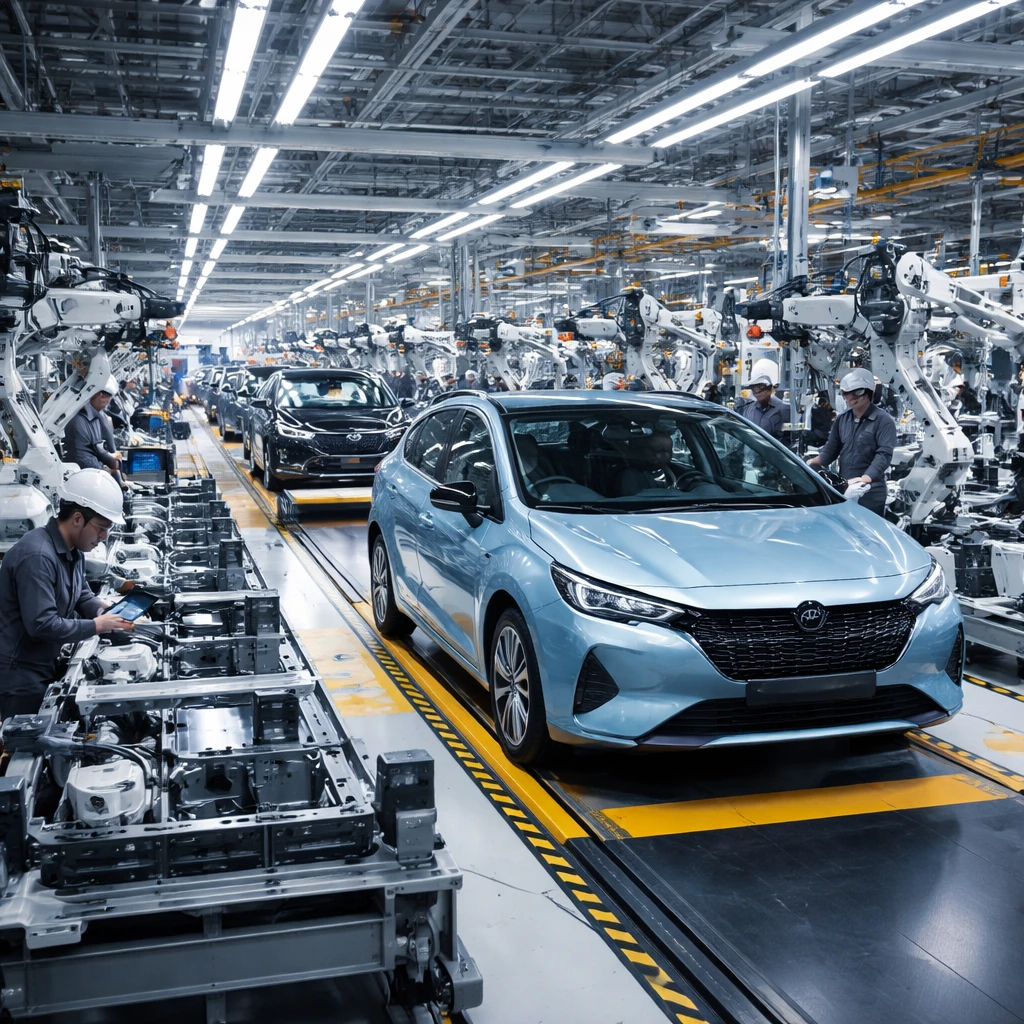
Stellantis said Tuesday it expects to produce 2 million vehicles annually on its STLA One platform by 2035, company chief executive Antonio Filosa announced. The target is a central element of the automaker's recently unveiled strategy, which positions STLA One as a cost-focused architecture for the European market.
Filosa said the new platform will be about 20 percent more competitive than the group's current architecture. That relative improvement is intended to bring Stellantis to cost parity with Chinese automakers operating in Europe, a stated goal for the company as it seeks to sharpen its pricing and manufacturing profile on the continent.
According to the timeline provided by the company, STLA One will enter series production in Spain in 2027, where it will underpin the manufacture of the new Peugeot 208. The platform was put on display at Stellantis' Mulhouse plant, a facility the company says has been adapted to support the economics and production requirements of the new architecture.
Management also outlined how the group is confronting structural issues in Europe, including excess industrial capacity. Filosa noted the company is pursuing plant-sharing arrangements in some locations - Rennes was cited as an example - while also adding new products at sites such as Mulhouse to better match capacity with expected demand and platform rollout.
The announcements underscore a focus on unit-cost competitiveness and manufacturing reconfiguration as Stellantis prepares to scale STLA One across its European operations. The company presented the platform visually at Mulhouse to show how the architecture and associated plant investments will support efforts to align costs with those of Chinese rivals competing in Europe.
Contextual summary
- Stellantis' goal: 2 million vehicles per year on STLA One by 2035.
- Platform competitiveness: A claimed 20 percent improvement over current architecture; goal of cost parity with Chinese automakers in Europe.
- Rollout: STLA One to begin production in Spain in 2027 with the new Peugeot 208; showcased at the Mulhouse plant.
- Capacity response: Plant sharing (e.g., Rennes) and investment in facilities such as Mulhouse to address excess capacity in Europe.