
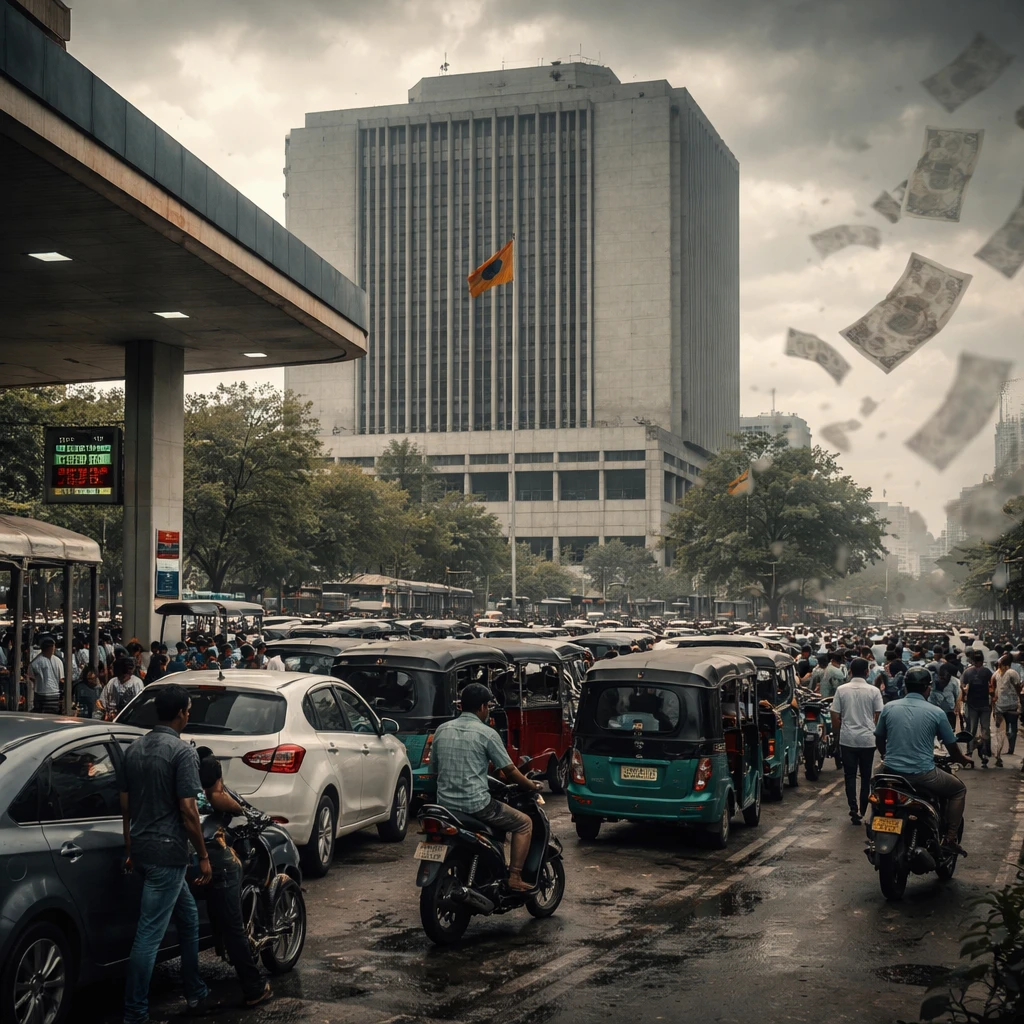
The Central Bank of Sri Lanka (CBSL) announced a 100 basis point increase to its overnight policy rate on Tuesday, lifting the benchmark to 8.75% from 7.75%. The move was substantially larger than market expectations, where analysts had broadly expected a more modest rise of around 25 basis points or a slightly higher adjustment.
In its announcement, the CBSL attributed the decision to persistently elevated inflation and continued weakness in the Sri Lankan rupee, conditions it linked to fallout from the U.S.-Israel war with Iran. The central bank said those factors have contributed to an energy price shock that has intensified domestic price pressures.
Sri Lanka imports all of its fuel, and the government has enacted a series of measures to manage the shock. Officials raised retail fuel prices by 40%, introduced rationing to curb demand, and designated Wednesdays as public holidays as part of broader efforts to reduce consumption and ease pressure on supplies.
Inflation has accelerated in recent months, with headline inflation rising to 5.4% last month from 2.2% in March. The CBSL expects headline inflation to remain above its 5% target in the near term before stabilizing around that threshold.
The Sri Lankan rupee has experienced significant depreciation, sliding nearly 9% since early March. The central bank noted that exchange market conditions have eased somewhat recently, but the cumulative weakening has been a key consideration in tightening monetary policy.
The CBSL's latest move follows its most recent policy change in May 2025, when it cut interest rates by 25 basis points. The pace and direction of policy have therefore shifted noticeably in a short period as inflationary and currency pressures have intensified.
Sri Lanka is still in a multi-year recovery from the severe financial crisis of 2022, which was driven by a shortage of dollars. The country continues to operate under a $2.9 billion programme from the International Monetary Fund, even as official foreign exchange reserves continue to contract.
Taken together, the central bank framed the 100 basis point increase as a response to immediate inflationary forces and currency depreciation tied to external developments in the Middle East, while also signaling that headline inflation is likely to remain elevated before it steadies near the bank’s target level.