
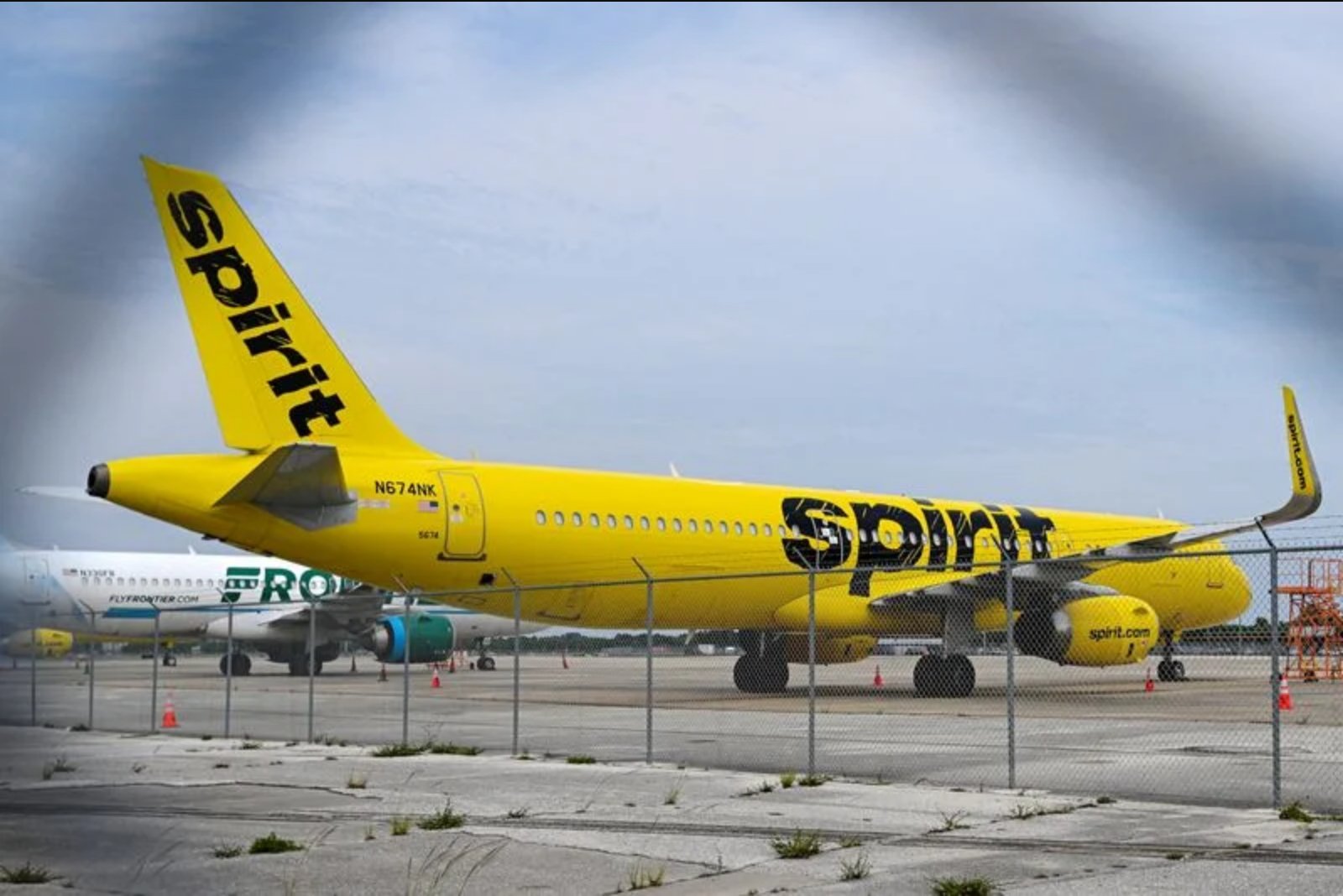
Travis Arcamone earned a high point in his career in April when he was named flight attendant of the year at Spirit Airlines' Orlando base. Less than a month later he was unemployed after Spirit failed to find a way out of a second bankruptcy and ceased operations in early May. Arcamone is among thousands of airline employees now having to reset their careers in an industry where rehiring often takes months.
Spirit's shutdown has rippled through the workforce. The carrier employed roughly 3,500 flight attendants and about 1,800 pilots at the time it closed. Uncertainty about hiring capacity at other airlines, combined with structured annual recruitment plans, means displaced workers face long waits before rejoining the industry - and when they do, they frequently forfeit seniority and its associated pay and scheduling privileges.
"My nearly decade of experience at Spirit might help me get a job somewhere else, but it means absolutely nothing when it comes to how good that job will be when I walk in the door," said a former Spirit pilot, speaking on condition of anonymity to avoid harming job prospects. That loss of status translates into starting at the bottom of a new employer's pay scale and fewer choices over schedules and base assignments.
Union leaders and affected employees say the transition back into other carriers can be slow. Sara Nelson, president of the Association of Flight Attendants-CWA, AFL-CIO, estimated that it could take four to five months for several hundred of Spirit's 3,500 flight attendants to begin working at a new airline in a best-case scenario. The union also flagged reductions in training-class sizes at major carriers, a bottleneck that limits how quickly airlines can absorb additional staff.
"Some of these airlines had been doing weekly classes of around 100 people per week. That has been cut back at the major airlines to 30 every other week or so," Nelson said.
For many laid-off employees, the immediate financial and career impacts are acute. Arcamone, who had been one month shy of his ninth anniversary at Spirit when he was let go, has taken a job as a car salesman while continuing to seek work in aviation. Former Spirit workers have filed a class-action lawsuit alleging the carrier failed to provide proper layoff notice; the suit seeks 60 days of pay and benefits on behalf of about 17,000 employees. A company lawyer countered in court that the airline issued notice as soon as it could. Spirit has until mid-July to respond to the suit.
Industry-wide labor statistics provide context for what employees are leaving behind. There are roughly 130,000 flight attendants in the U.S., earning an average annual wage of $77,440, according to Bureau of Labor Statistics data cited in the companies' discussions. Just over 100,000 airline pilots, copilots and flight engineers earn an average of $288,650 a year.
Major carriers have publicly signaled a willingness to take on some of Spirit's displaced workers, but concrete hiring remains limited, particularly for cabin crew. Airlines typically set hiring targets at the start of each fiscal year driven by expected retirements, fleet growth and scheduling needs, which constrains the pace and timing of recruitment. Some hiring is linked to peak travel seasons, narrowing the window for entry, and unpaid training periods delay the time until new hires receive a paycheck.
United Airlines, which has a planned target to hire 1,300 pilots in 2026, reported receiving 2,800 applications from former Spirit employees for various roles. Delta Air Lines said it expects to hire hundreds of pilots and flight attendants in 2026. American Airlines indicated that 2,000 former Spirit staff have applied for positions. Southwest Airlines created a dedicated microsite for Spirit employees to explore opportunities. Frontier said it will continue hiring Spirit employees as openings arise, while JetBlue temporarily put hiring on hold.
Even when airlines accept applications from displaced workers, the calendar for training and integration matters. Training classes that have been reduced in size or frequency extend the waiting time for laid-off employees to become active staff on other carriers, and two factors in particular shape rehiring speed: the timing of peak travel hiring windows and the unpaid nature of initial training.
Pilots may face somewhat different dynamics than flight attendants. Airlines planning to expand capacity over the longer term and an anticipated wave of retirements could create demand for experienced pilots. Those with specialized qualifications - such as check airmen who can evaluate and certify other pilots, or simulator instructors - are likely to be more marketable. Still, many pilots who move to other carriers will face substantial reductions in pay and lifestyle if they cannot secure direct-entry captain roles.
"It’s a huge pay cut and a huge change from your previous quality of life," said Taylor Brown, a former Spirit pilot who left the carrier in October of the prior year to start flying for UPS. UPS has said it currently has the pilots it needs.
The disruption from Spirit's collapse highlights the limits of near-term labor market flexibility within passenger aviation. While larger carriers may eventually integrate many of the displaced workers, timing, training capacity and company-specific seniority systems mean that the path back will be uneven and in many cases prolonged. For now, hundreds to thousands of crew and cockpit staff are navigating job applications, legal claims over layoff procedures, temporary employment outside aviation and the prospect of starting over at lower pay and reduced scheduling control.