
SpaceX began trading on Nasdaq on Friday following the largest initial public offering in history, which raised $75 billion on Thursday. Shares started the session at $150, above the IPO price of $135 per share, and the IPO price places the company at a $1.77 trillion valuation.
The balance sheet and operating picture that emerged ahead of trading show a company that has rapidly expanded its commercial footprint in launch services and satellite internet while simultaneously incurring heavy costs to pursue artificial intelligence and a next-generation vehicle.
Revenue mix and profitability
Last year, SpaceX reported sales of $18.67 billion, up 33% from the prior year. The company’s Starlink satellite internet business represented roughly 60% of that revenue, supported by an estimated user base of about 10.3 million and a constellation of around 9,600 satellites. Those gains, together with a robust reusable-rocket launch operation, had earlier driven profitability.
But the stand-alone financials show a notable pivot after the acquisition and integration of xAI. Merging with the money-losing xAI drove SpaceX to a net loss of $4.94 billion in the most recent year, reversing from a profit of $791 million in 2024 when Starlink’s rapid expansion and the Falcon family’s launch activity powered earnings.
Launch cadence and vehicle fleet
SpaceX’s launch tempo has grown from a single flight in 2006 to more than two launches per week today, a cadence that has positioned the company as a primary launch partner for NASA and the Pentagon. The reusable Falcon 9 has been central to that increase in sorties. Falcon Heavy, a configuration that effectively combines three Falcon 9 boosters, can lift 64 metric tons to low-Earth orbit and currently serves missions such as heavy military satellite deployments and interplanetary probes.
Looking ahead, Starship is designed to be reusable and to carry more than 100 metric tons to low-Earth orbit, a payload capacity that would exceed any operational rocket today and would expand both launch throughput and SpaceX’s ambitions for orbital AI data centers. By comparison, Falcon 9 and Falcon Heavy have capacities of about 22.8 metric tons and 63.8 metric tons to low-Earth orbit, respectively.
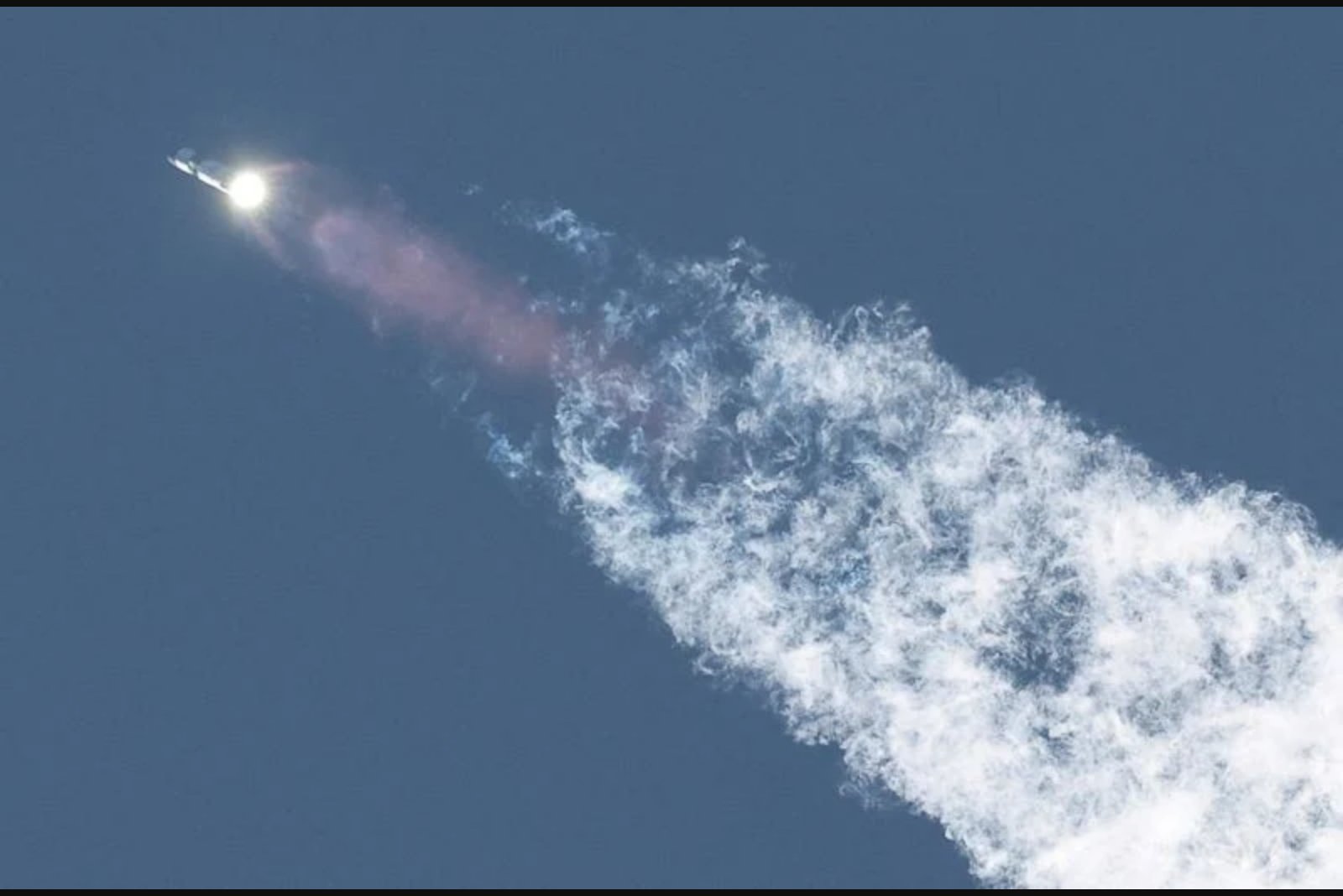
Starship’s May test flight represented a critical technical milestone. The test successfully deployed mock satellites and completed a controlled splashdown in the Indian Ocean despite the occurrence of minor engine issues.
AI strategy and competitive positioning
SpaceX has identified AI as its largest addressable market and in February completed the acquisition of xAI, bringing together two parts of Elon Musk’s business interests. However, publicly available spending data analyzed by a finance startup shows xAI trailing other AI providers on some measures of enterprise adoption.
The Ramp analysis, which is based on spending by roughly 50,000 business customers, indicated that in April more than 30% of those customers were paying for AI services from Anthropic and OpenAI, and that Anthropic's Claude Code had overtaken OpenAI in that sample. By the same measure, xAI’s adoption was approximately 5% among that customer set. The Ramp dataset captures only a portion of enterprise AI spending.
Valuation and investor premium
Investors in SpaceX’s IPO are being asked to buy shares at a multiple that places the company in rarefied company. At the $135 IPO price, SpaceX’s trailing price-to-sales multiple is roughly 94, which is higher than several large technology firms and more comparable to space-focused peers. For context, Planet Labs and Rocket Lab trade at trailing price-to-sales multiples of 50.4 and 115.4, respectively.
Because SpaceX recorded a net loss last year, the company cannot be valued on a price-to-earnings basis using last year’s figures.
How the pieces fit together
The premium investors are paying reflects a thesis that Starlink’s revenue stream and the company’s launch franchise are foundations for much larger opportunities, notably space-based AI and the lift and reuse economics promised by Starship. At the same time, SpaceX’s investment in AI computing and the development of Starship have overwhelmed profits generated by Starlink in the most recent fiscal year.
That juxtaposition of outsized valuation, sizable recurring revenue from satellite broadband, and meaningful operating losses tied to strategic investments frames the tradeoffs investors bought into as trading began.
This article lays out the core figures and lines of the business that underpin SpaceX’s public market debut without making projections beyond the reported facts.