
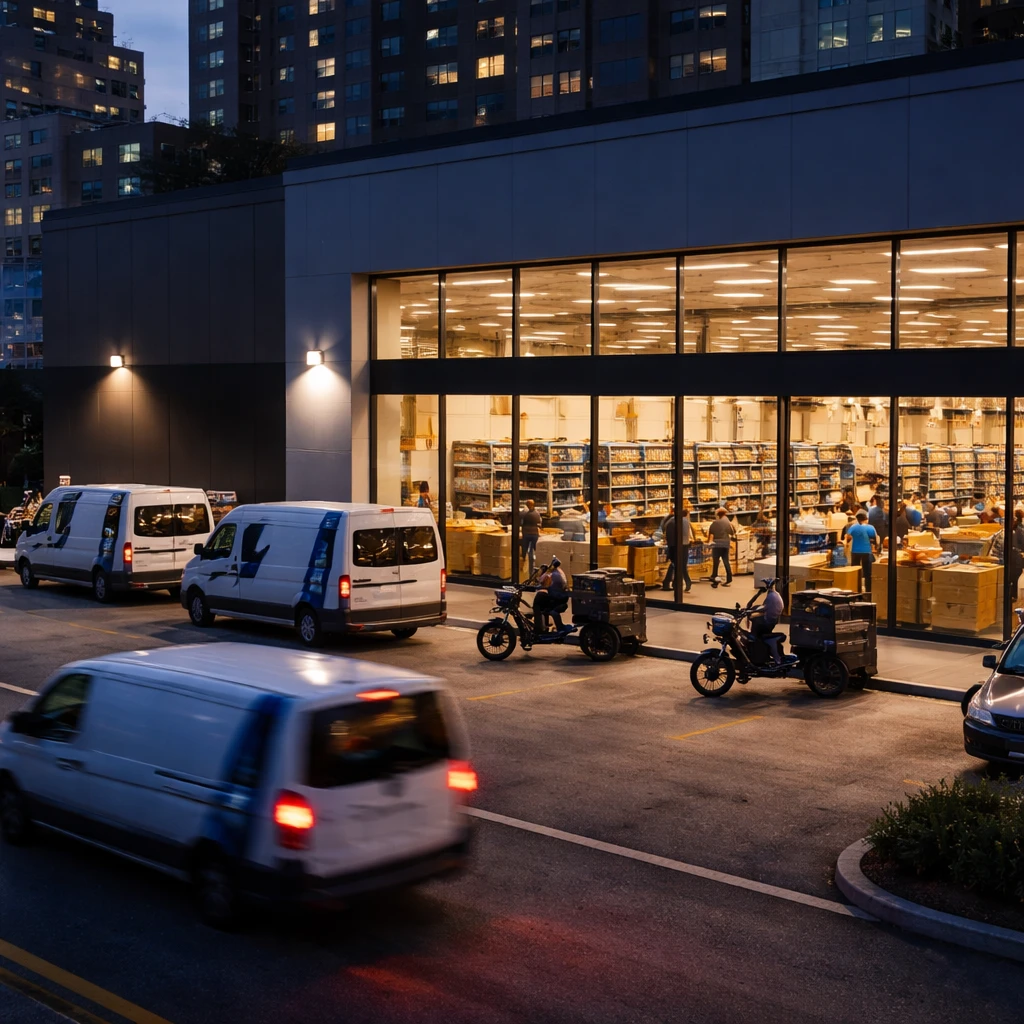
Mizuho has elevated Walmart to its top pick among retailers, pointing to faster delivery capabilities as a potentially overlooked competitive edge that could compete with Amazon’s logistics reach. The upgrade follows an extensive, artificial intelligence-driven review of Walmart’s delivery architecture that increased Mizuho’s conviction in the company’s execution and growth trajectory.
The investment bank assigned a $130 price target to Walmart shares, down from a previous $137 target, and applied an approximate 36-times multiple to fiscal year 2028 earnings estimates in reaching the new target. The shift in price guidance arrives as Walmart stock has retreated roughly 20% from May peaks, while the S&P 500 has risen about 2% over the same interval.
Network reach and delivery economics
Mizuho’s modeling suggests Walmart’s delivery network is evolving into a demand-consolidating platform with broad national reach. The firm described claims that Walmart can reach roughly 60% of U.S. households within 30 minutes as credible, and indicated those claims may understate the network’s effective coverage.
Using proprietary delivery zone analysis powered by AI tools, Mizuho found that roughly 80% of U.S. households fall within the distance threshold for 30-minute delivery when evaluating the spatial layout of Walmart’s network. By contrast, the firm says Walmart currently operates at about 60% capability for that timeframe. Adding compact fulfillment nodes could close some of that gap further.
Dark store testing and incremental footprint
The retailer has begun piloting dark store formats in the United States, drawing on operational lessons from Walmart’s activity in India and China. These dark stores are characterized as smaller facilities, typically under 10,000 square feet, that repurpose vacant retail and office space - for example, former drugstores, dollar stores, and office locations - to fulfill online orders quickly.
Mizuho estimates that introducing an additional 300 to 500 dark stores could augment Walmart’s existing brick-and-mortar estate of more than 4,500 traditional stores and materially extend the company’s expedited delivery footprint. The bank also noted that such incremental locations could contribute an additional roughly 5 percentage points of household penetration, including in high-volume coastal markets such as San Francisco and New York City.
Gig platform and unit economics
On the delivery labor side, Mizuho pointed to Walmart’s Spark Driver platform, which now counts more than 1.6 million users. The firm sees larger basket sizes and correspondingly higher gross earnings per trip as positive economic traits that make Spark an attractive alternative to other gig-economy delivery platforms, while also providing network density benefits.
Valuation posture and growth outlook
In updating its valuation, Mizuho applied a near-term multiple tied to fiscal 2028 forecasts and lowered its price target to $130 from $137. The firm signaled greater confidence in Walmart’s ability to capture market share and to sustain double-digit eCommerce growth rates over coming periods, based on the delivery infrastructure and platform economics outlined in its analysis.
Recent pricing action and rating
Separately, Walmart announced price reductions on thousands of items for the summer season, spanning groceries, beverages, and household goods. After those cuts were confirmed, Mizuho reiterated an Outperform rating on the company.
The bank’s reassessment centers on logistics and fulfillment as central drivers of competitive positioning in retail. Mizuho’s view is that the combination of dense store assets, targeted dark stores, and a sizable gig driver network can collectively improve delivery economics and market reach without changing the company’s reported store count.
Limitations: Where the article references Mizuho’s proprietary analysis and AI-driven zone modeling, those findings represent the firm’s internal work; the public data provided here reflect Mizuho’s conclusions as reported.