
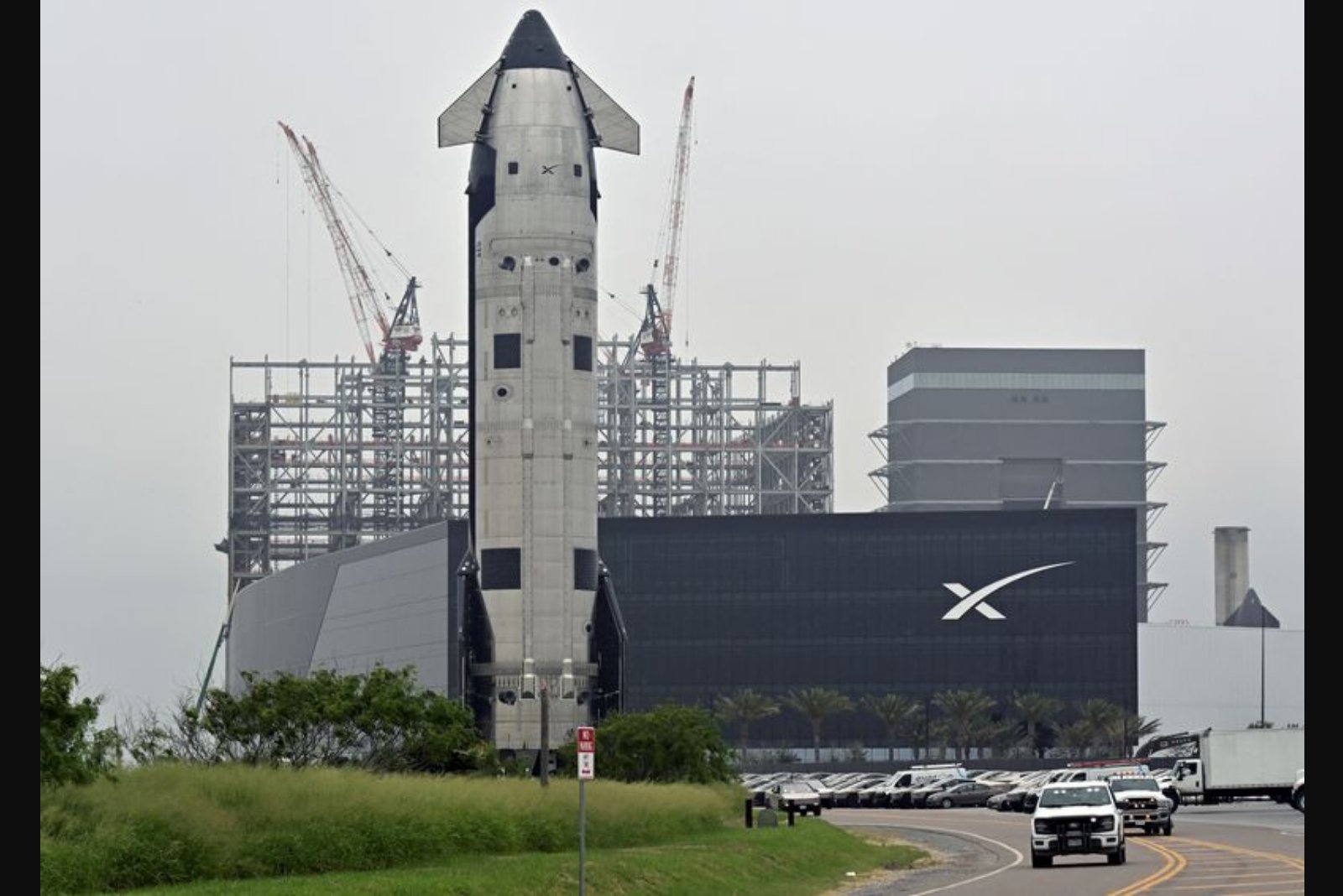
SpaceX's initial public offering paperwork presents a juxtaposition of precise financial information and sweeping, long-term ambitions for human activity beyond Earth. The prospectus, prepared as the company moves toward what could become the largest IPO on record, frames conventional lines of commercial space business with more speculative ideas such as asteroid mining and manufacturing and energy production on the moon and Mars.
At times the filing shifts from the standard language of corporate disclosure into rhetoric aimed at making a philosophical case for interplanetary travel. In one striking passage the company wrote: "We do not want humans to have the same fate as dinosaurs," using that language to argue for the importance of enabling human presence beyond Earth.
Alongside these aspirational passages, the prospectus is explicit about the feasibility constraints. The company acknowledges that many of the ventures it outlines are dependent on technologies that are still nascent or that do not yet exist, and that those capabilities may never become commercially viable. That caveat appears repeatedly, anchoring the more visionary elements of the filing to a clearer regulatory and market disclosure framework.
Analysts and market strategists have noted how unusual the paperwork is - part financial statement, part future-facing manifesto. The filing underscores how unprecedented the offering is in scale, stated valuation and the breadth of activities the company is presenting to potential investors. That mixture of concrete metrics and long-range projections also reflects the public persona of the company's founder and chief executive, whose approach has at times polarized investors.
Aswath Damodaran, a finance professor at New York University’s Stern School of Business, is quoted in the filing commentary observing that "Love him or hate him, Musk is definitely not boring, and his capacity to spin business narratives that seem outlandish at first hearing but become conventional wisdom later clearly adds to the allure of SpaceX."
Market participants will likely weigh the mix of science-fiction scale narratives and the company's more traditional commercial opportunities. SpaceX has outlined core businesses such as launch services and satellite operations, and then set out a set of potential future revenue streams - from asteroid mining to in-orbit manufacturing and lunar or Martian energy production - that are presented as possibilities rather than imminent revenue drivers.
The filing discloses a projected IPO raise of $75 billion at an approximate valuation of $1.75 trillion, a size that would place the company among the largest private-to-public transitions in market history. The company also accelerated the timeline for its initial public offering earlier in the month and is aiming to list its shares as early as June 12 on the Nasdaq.
Investors and analysts face a trade-off: the prospectus' visionary content may attract those seeking generational exposure to space-related growth, while more conservative investors may focus on the document's repeated warnings that many projects remain technologically unproven. "Very little captures public imagination like space travel, and I think investors will want that in their portfolios. SpaceX will be pitching itself as a generational company, one with a long-term vision for investors to hold onto for 20 or 30+ years," said Matt Kennedy, senior strategist at Renaissance Capital.
The prospectus also highlights the practical risk that overly optimistic projections can be counterproductive. It notes that investors often prefer tangible operational metrics to grand visions, and that projections regarded as excessively rosy could undermine credibility with hard-nosed market participants. At the same time, the company's founder's record of executing on large, transformative projects is presented as a factor that has convinced some skeptical investors to reconsider.
Ultimately, the IPO filing reads as a concerted effort to present both a defensible commercial foundation and an expansive set of future opportunities, all while acknowledging the technological and commercial uncertainties that accompany those ambitions. For investors and market observers, the document will likely serve as both a financial disclosure and a long-range strategic statement about where the company sees its future.
Summary
The SpaceX IPO filing combines detailed financial disclosure with broad plans for lunar and Martian activity, while repeatedly warning that many potential ventures depend on technologies that are nascent or do not yet exist. The offering seeks to raise $75 billion at a valuation around $1.75 trillion and the company is aiming to list as early as June 12 on the Nasdaq. The filing’s tone alternates between standard corporate reporting and expansive statements about humanity’s future in space.
Key points
- SpaceX’s prospectus presents both current commercial activities and speculative long-term opportunities such as asteroid mining and in-orbit manufacturing - impacting aerospace, satellite services and space infrastructure sectors.
- The filing projects a $75 billion IPO raise and an approximate $1.75 trillion valuation, a placement that could affect broader equity market dynamics given the size and profile of the offering.
- The document underscores that many future initiatives rely on technologies that are nascent or unproven, creating a distinction between nearer-term revenue streams and long-term research-driven opportunities for investors.
Risks and uncertainties
- Technological risk: Several initiatives described in the filing depend on technologies that are nascent or do not yet exist, which could prevent those projects from becoming commercially viable - relevant to aerospace and advanced manufacturing investors.
- Market expectation risk: Projections viewed as excessively optimistic could deter more conservative investors who prioritize concrete operational metrics over long-term visions - impacting equity demand across growth-focused portfolios.
- Execution and timeline risk: Although the company is aiming to list as early as June 12 on the Nasdaq, accelerated timelines and the scale of the offering create execution and regulatory pressures that could influence market reception.