
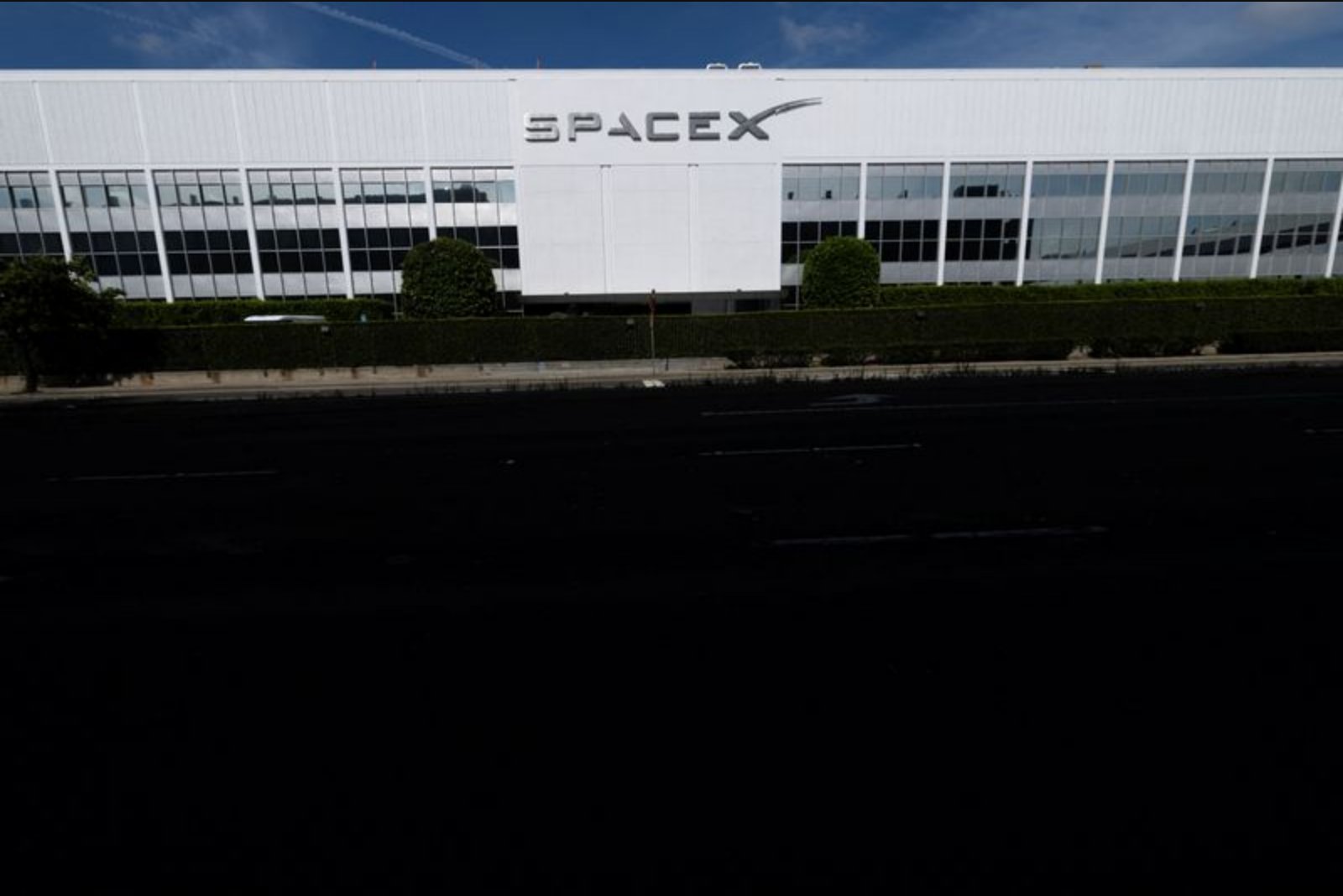
SpaceX formally submitted paperwork for an initial public offering on Wednesday, opening financial and strategic details for a company that has already reshaped launch economics and is now advertising ambitions that extend from establishing a human presence on Mars to building AI data centers in orbit.
The proposed offering, if completed as outlined, would mark the first U.S. listing to reach trillion-dollar valuation territory and could pave the way for a number of other major technology listings in the months ahead. Among the firms that could see their IPO timing and investor interest affected are the high-profile artificial intelligence developers reportedly weighing public offerings later in 2026.
According to the filing, the sale would instantly confirm SpaceX as one of the most valuable companies traded publicly and make it the second entity in Elon Musk’s corporate network to top $1 trillion in market capitalization. The company, founded in 2002, has become the largest private operator in the space sector in part by deploying thousands of Starlink internet satellites and pioneering the routine reuse of rockets.
The disclosure sets a possible peak valuation for SpaceX at $1.75 trillion. If that figure were achieved, it would surpass the scale of previous record initial offerings cited in global markets. Reuters previously reported that SpaceX had planned an offering that sought upward of $75 billion in proceeds.
Starship test flight and operational milestones
The timing of the IPO paperwork coincides with a critical stage in SpaceX’s operational program - preparations for a test flight of its next-generation Starship vehicle. The company had targeted an earlier date but now expects the launch later this week. Company statements in the filing underscore that future lunar and Mars missions, as well as the expansion of the Starlink satellite internet venture, rely materially on the capabilities the new rocket is intended to deliver.
The company’s board has structured governance and compensation to concentrate control with its founder and to reward achievement of highly ambitious objectives. The filing links a significant portion of the founder’s pay to concrete milestones, including establishing a permanent human settlement on Mars and constructing orbital data centers with compute capacity equivalent to 100 terawatts - a scale the filing equates to 100,000 one-gigawatt nuclear reactors.
Valuation context and investor perception
Analysts and academics quoted in the filing material note that investor appetite for the company may be affected by the founder’s public profile and the absence of direct peers for valuation comparison. Reena Aggarwal, a finance professor at Georgetown University, is cited saying there is "somewhat of a halo effect around Musk and his unconventional vision" and that firms of this kind are challenging to value when there is no comparable peer group.
The $1.75 trillion target, if realized, would edge beyond the value assigned to prior record-setting market debuts. The scale of the proposed offering has also focused attention on the broader corporate ecosystem around the founder, often referred to in filings and reporting as the "Muskonomy," which encompasses electric vehicle manufacturing, AI ventures and neural interface initiatives.
SpaceX consolidated business ties recently through a merger with the founder’s AI startup xAI, a deal that valued SpaceX at $1 trillion and the Grok chatbot developer at $250 billion, according to the filing. Observers quoted in the documents express concern about the founder’s ability to manage multiple enterprises whose combined market values could exceed trillions, a factor that may influence investor sentiment.
Market and sector implications
Private competition in the commercialization of space has accelerated, with companies such as Blue Origin working to reduce launch costs, build satellite constellations and win government contracts. The sector has moved from state-led programs to one attracting substantial private capital. SpaceX’s revenue mix is described in the filing as primarily driven by Starlink, which the company says is the world’s largest satellite operator with a network of about 10,000 satellites providing broadband to consumers, governments and enterprises.
Beyond consumer broadband, the company notes an expanding presence across aviation, maritime and enterprise markets that is intended to convert large, capital-intensive projects into recurring revenue streams.
IPOs, retail allocation and underwriting
SpaceX’s filing indicates plans to list on the Nasdaq under the ticker symbol 'SPCX.' Investment banks named as the lead underwriters for the offering include Goldman Sachs, Morgan Stanley, Bank of America, Citigroup and J.P. Morgan. The company intends to allocate a meaningful share of new stock to retail investors and has scheduled an event to host approximately 1,500 retail participants in June following the launch of the IPO roadshow.
Market observers and the filing materials suggest that the timing and demand for SpaceX’s public debut could influence the sequencing and appetite for other high-profile listings, including several high-profile artificial intelligence firms exploring public market entries later in 2026.
Investor communications and promotional material
The filing and subsequent public information also included promotional copy aimed at retail interest and broader investor engagement. That material highlighted the transformative impact of AI computing on equity markets and referenced proprietary strategies that claim strong performance, while noting that offer terms are expected to evolve throughout the IPO process.
Conclusion
By opening its books, SpaceX has placed a rare combination of long-term, high-ambition objectives and near-term operational milestones under public scrutiny. The filing frames a path for rapid expansion of Starlink, the development of Starship-dependent missions, and the construction of large-scale orbital computing capacity, while also raising questions for investors about governance concentration and the challenge of valuing a business without close public peers.