
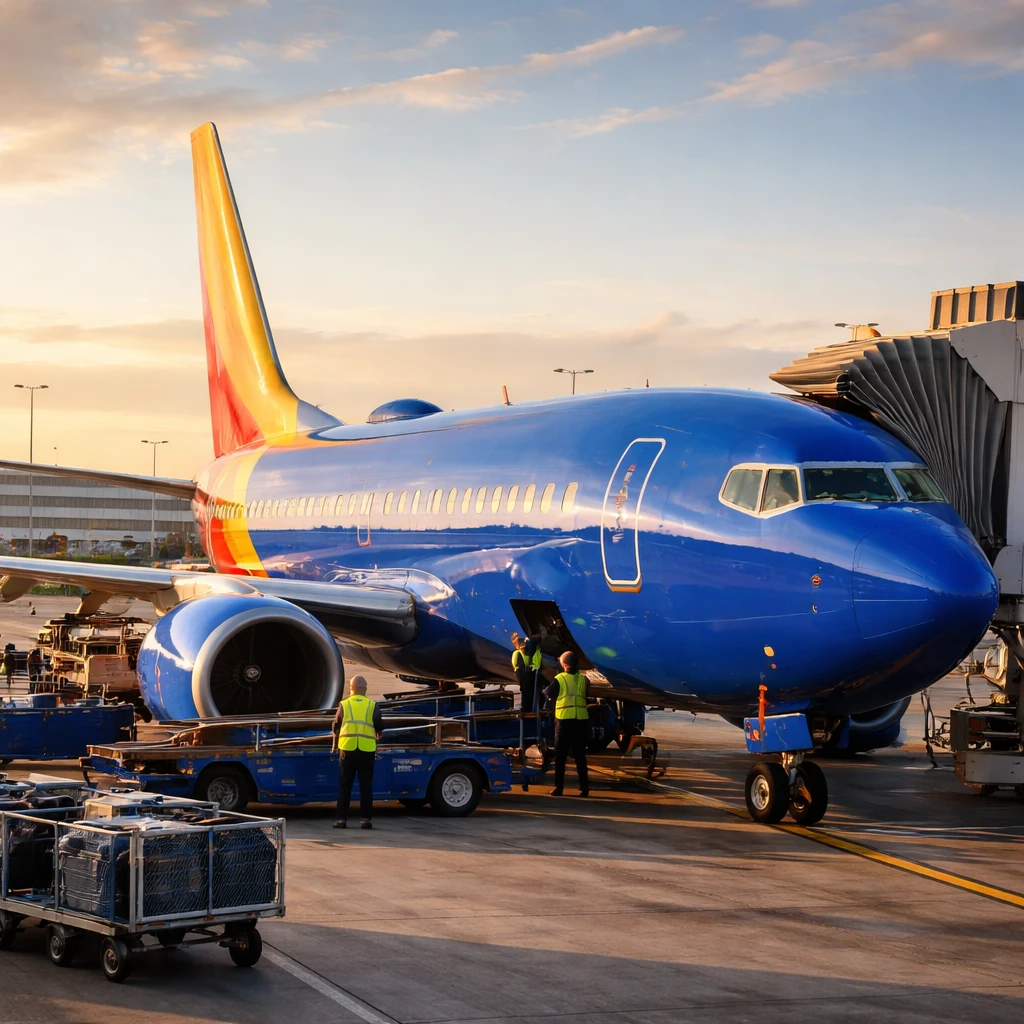
Southwest Airlines has not seen a falloff in passenger demand despite a series of fare increases, the carrier's chief executive said on Wednesday. Speaking at a Bernstein investor conference, Bob Jordan said the airline has implemented seven separate fare increases since February and has not observed weakening bookings.
Jordan described the pace of price adjustments as the most he could recall in his 38 years in the industry. He said the strength in demand is broad-based - spanning leisure and business travelers, different geographic markets and various points on the booking curve.
Those remarks come as U.S. carriers confront a notable rise in jet fuel costs that could squeeze profit margins. Jordan expressed growing confidence that Southwest can counterbalance elevated fuel expenses through stronger revenue generation tied to recent pricing actions.
Industry conditions behind that confidence, he suggested, include robust premium and business travel demand and a smaller presence of discounted competitors, dynamics that have supported carriers' pricing power even as input costs climb.
Jordan also outlined that the airline is considering more substantial changes to its product offering over time. He said Southwest may add additional cabin tiers, potentially including what he referred to as a 'true first class.' He further noted the airline is likely to explore long-haul international flying as part of its longer-term strategy.
The CEO's comments emphasize a company attempting to balance near-term margin pressure from higher fuel with opportunities to capture greater revenue from customers willing to pay more for travel. At the same time, his remarks underscore a willingness to alter both the onboard product and route structure gradually.
Context limitations: the comments reported here reflect the CEO's statements at the investor event and do not provide detailed financial projections, specific timing for product rollouts or a timetable for any long-haul international expansion.