
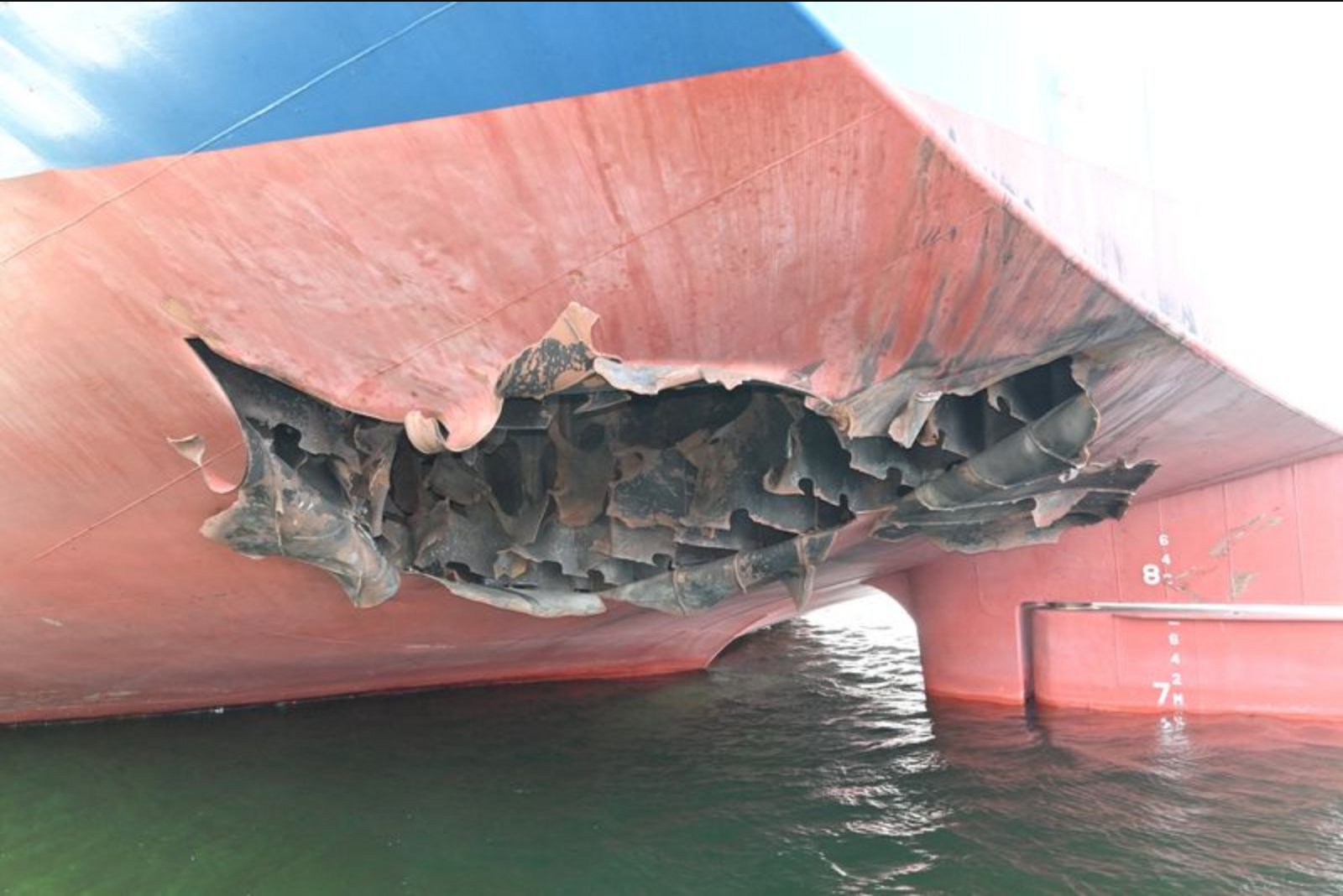
South Korea's Foreign Ministry said on Wednesday that evidence gathered during an investigation into a May 4 attack on a South Korean-operated bulk carrier suggests an Iranian anti-ship missile was likely used in the incident.
The vessel, operated by local shipper HMM and named Namu, suffered a fire and damage to its lower stern hull after the attack in the Strait of Hormuz earlier this month. The ministry set out its assessment at a briefing that presented the outcome of a government probe into the incident.
Findings from debris analysis
Officials said investigators examined fragments recovered from unidentified objects found inside the ship after the attack. The analysis indicated the ship was struck twice - the first warhead did not detonate, while a second warhead did explode. Components recovered from the debris led analysts to conclude the objects were likely produced in Iran.
First Vice Foreign Minister Park Yoon-joo described specific technical attributes observed in the remnants. Park said the engines in the recovered pieces were similar to turbojet engines manufactured in Iran, and that one component bore markings appearing to match those used by an Iranian manufacturer. The warheads were said to resemble those associated with Iranian anti-ship missiles, specifically the Noor or Qader models, according to the ministry.
Diplomatic response and denials
Seoul summoned Iran's ambassador to present the investigation's results and to register a formal protest, the ministry said. Saeed Koozechi, Iran's ambassador to South Korea, denied Iranian involvement in the attack, telling local media that his country "took no part" in the incident. The Iranian embassy in Seoul did not immediately respond to a request for further comment.
The U.S. president at the time of the attack, Donald Trump, had said soon after the incident that Iran had fired at the South Korean vessel and urged Seoul to participate in U.S.-led efforts to secure shipping through the strait. Tehran has previously denied responsibility for the attack.
While the ministry said "various pieces of evidence point toward Iran," Park also emphasized that Seoul has not reached a conclusive determination on who was responsible or whether the attack was intentional. The investigation's technical findings - the two impacts, the unexploded first warhead, the exploded second warhead, and the Iranian-linked components - formed the basis for Seoul's assessment shared with the Iranian delegation.
Context for markets and sectors
The incident and Seoul's subsequent assessment have implications for maritime security, commercial shipping operations in the Strait of Hormuz, and stakeholders involved in marine insurance and freight. Authorities have taken the step of diplomatic protest based on forensic analysis of recovered debris, while denials from Tehran and differing international statements underscore remaining uncertainty about attribution.