
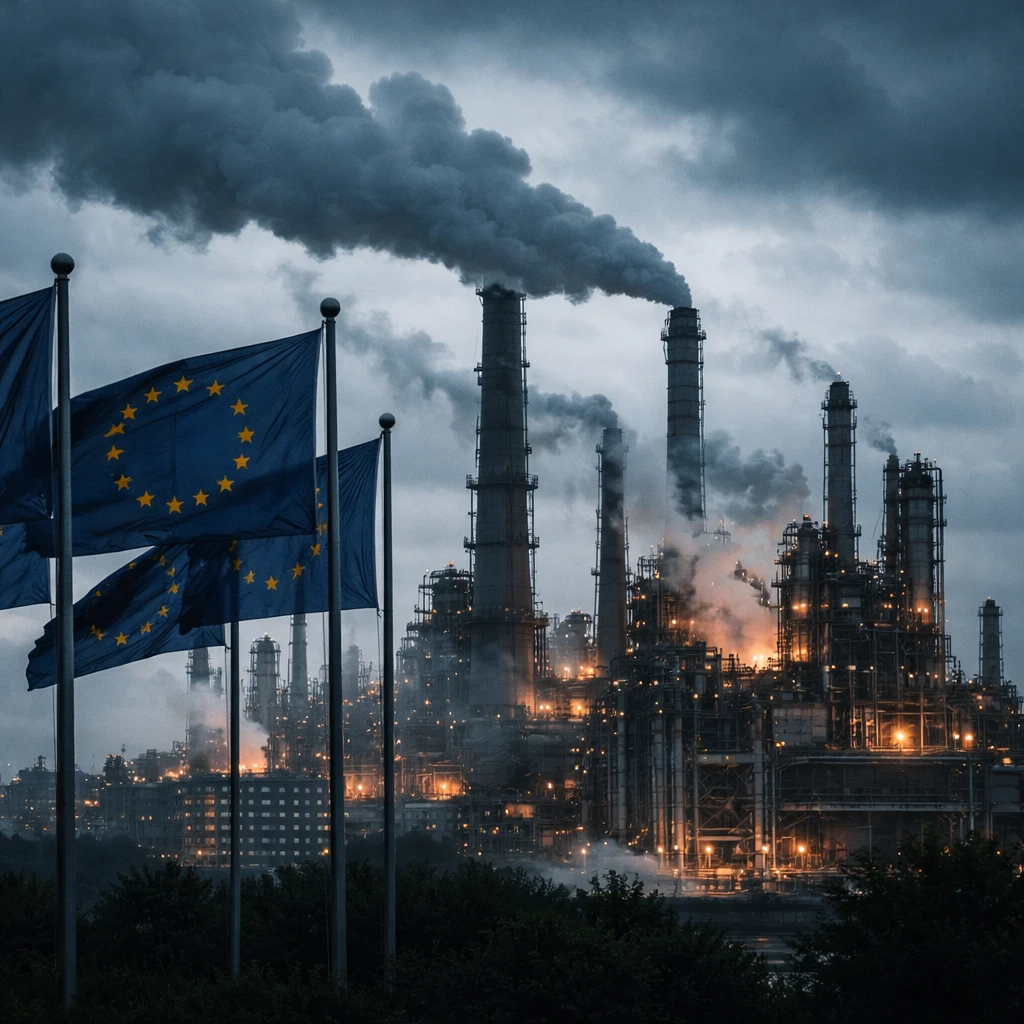
Six European Union member states are pushing back against a Commission plan to gradually reduce free CO2 permits to industry, arguing that recent energy price rises make such a step risky for energy-intensive firms.
The European Commission put forward new rules this month governing industry allocations of free emissions permits through 2030. Brussels said the proposed adjustments - which would slow the pace of reductions in free permit allocations - would result in €4 billion ($4.66 billion) lower carbon costs for industry by the end of the decade.
Officials from Bulgaria, the Czech Republic, Greece, Poland, Romania and Slovakia have formally requested that the Commission keep the number of free CO2 permits at the same level as last year, according to a circulated document. The six governments pointed to a sharp rise in energy prices since the Iran war began at the end of February as a primary concern.
In a joint paper, the six countries said that elevated energy costs threaten the competitiveness of energy-intensive industries. They cautioned that the proposed tightening of free permit allocations could drive plant closures or cause firms to relocate production outside the EU.
The Emissions Trading System is the EU's main carbon market and central policy tool for curbing CO2 emissions. Under the system, industrial operators must hold permits to cover their pollution, purchasing allowances when they emit.
Key points
- Six EU governments are asking the Commission to freeze free CO2 permit allocations at last year’s levels.
- The Commission's proposal would modify free permit rules through 2030 and is projected to lower industry carbon costs by €4 billion by decade-end.
- High energy prices since the Iran war began are cited as threatening competitiveness in energy-intensive sectors, with potential for closures or relocation outside the EU.
Risks and uncertainties
- Potential loss of competitiveness for energy-intensive industries if permit reductions proceed amid elevated energy prices - impacting manufacturing and heavy industry sectors.
- Risk of industrial closures or relocation of facilities outside the EU if firms face higher combined energy and carbon costs - affecting employment and regional industrial activity.
- Uncertainty over final policy outcomes as the Commission considers requests from member states and balances emissions policy with economic pressures.
These developments highlight tensions between climate policy design and short-term energy market pressures. The six countries' appeal seeks to pause the proposed phase-down of free allowances until conditions stabilise, while the Commission weighs the trade-offs between supporting industry and maintaining the incentives of the EU carbon market.