
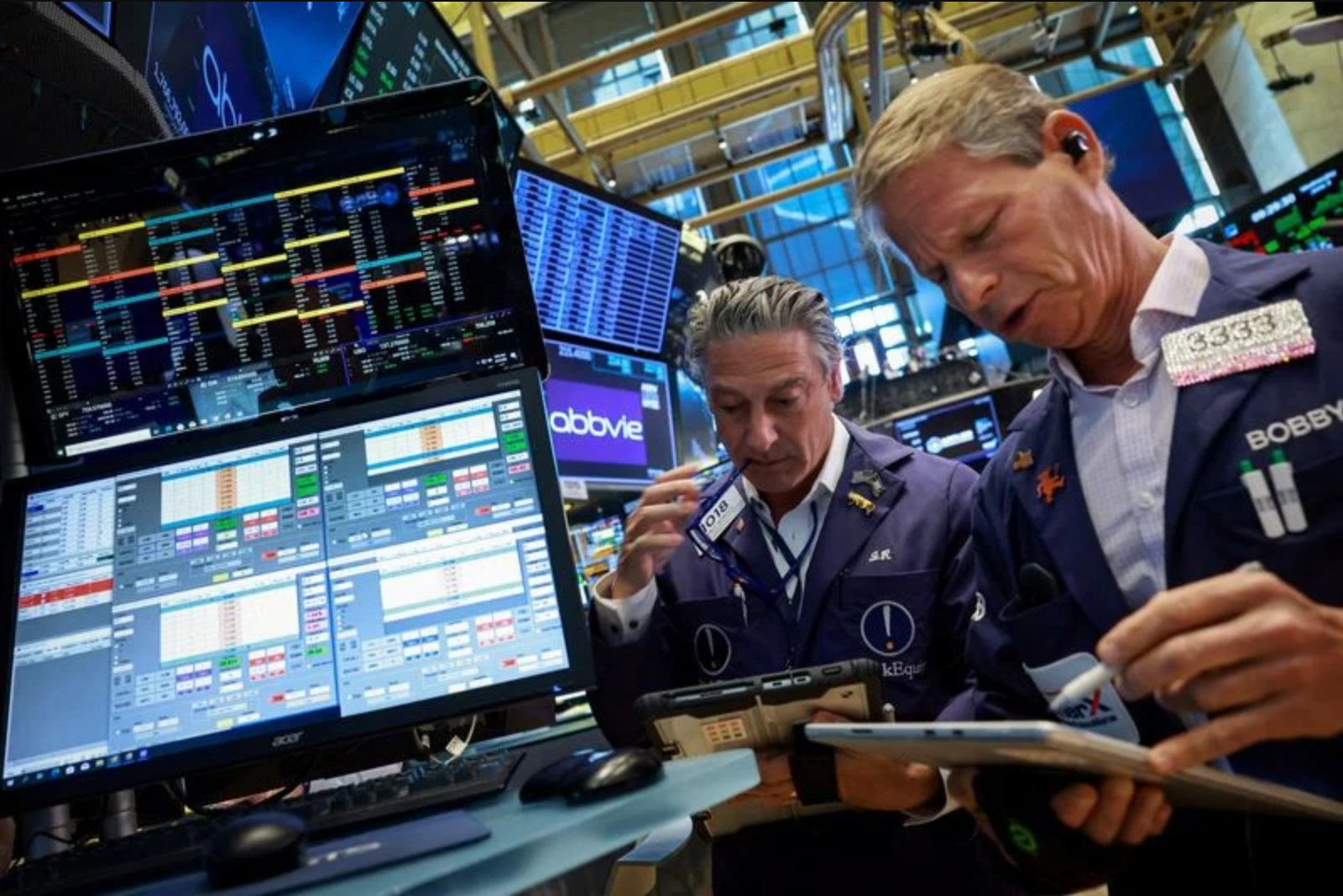
U.S. stock index futures slipped on Friday as semiconductor shares, which had powered much of the market's recent advance, lost momentum and traders positioned cautiously ahead of the Labor Department's May employment report. The report, due at 8:30 a.m. ET, is expected to be watched closely for clues about the Federal Reserve's likely policy path.
Semiconductors were the largest drags in premarket trade. Nvidia, the biggest company by market capitalization, fell 1.5%. Other major chipmakers also moved lower, with Intel, Micron, AMD and Broadcom each retreating in the range of roughly 2% to 3.8% in premarket activity. These names had been central to Wall Street’s recovery from March lows to record highs, aided by a temporary ceasefire in the Middle East and solid corporate earnings growth.
Barclays strategist Emmanuel Cau cautioned that "Momentum in AI/Semis feels more shaky," noting crowded positioning, looming liquidity events tied to large initial public offerings and policy risks as factors contributing to a more fragile advance.
The upcoming employment figures are expected to show nonfarm payrolls rose by about 85,000 jobs in May, down from a 115,000 increase in April, according to a survey of economists. That pace is generally viewed as consistent with a labor market that remains relatively stable. Deutsche Bank strategist Jim Reid wrote that "So long as the labour market stays in decent shape, that will keep the focus on the inflation side of the Fed’s mandate, which has moved increasingly above target given the energy shock." The jobs data arrives ahead of the new Federal Reserve Chair Kevin Warsh's first policy meeting later this month.
Money markets currently price in the likelihood that the central bank will hold interest rates steady into next year, reflecting an expectation that policymakers will be cautious about moving rates higher absent a clear shift in inflation or labor-market dynamics.
Geopolitical developments continued to shape investor sentiment. Hezbollah rejected a new Lebanon ceasefire while Israel said it would keep troops in place. That sequence of events was described in the context of a setback for President Donald Trump’s efforts to end the fighting and advance negotiations with Tehran.
On positioning, Citi said it was trimming equity exposure after a strong run earlier in the rally. The bank had adopted a bullish stance when the ceasefire in the Middle East initially took hold in April, but it highlighted rising inflation and positioning risks even as it maintained a constructive long-term view on U.S. equities supported by AI-driven earnings growth.
Early electronic futures readings at 05:14 a.m. ET showed the Dow E-minis up 116 points, or 0.22%, while S&P 500 E-minis were down 26 points, or 0.34%. Nasdaq 100 E-minis were lower by 250.25 points, or 0.82%. If those losses held through the regular session, the S&P 500 would record its first weekly decline since April. The Nasdaq was poised to finish the week slightly lower, while the Dow was on track to rise for a third consecutive week.
S&P Global said it would not change the eligibility requirements for its major indices, a decision that effectively rules out a rapid inclusion of Elon Musk’s SpaceX into the S&P 500 in connection with what would be the world’s largest initial public offering.
Among individual corporate movers, Lululemon Athletica plunged nearly 12% after the athletic apparel maker cut its annual profit guidance and forecast second-quarter earnings well below Wall Street estimates. Conversely, Cooper Companies climbed 4.8% after the contact lens maker posted second-quarter results that beat expectations.
Markets will likely continue to weigh sector leadership in technology, the incoming employment data, and ongoing geopolitical developments as drivers of near-term price action. With semiconductors having provided significant upward momentum earlier, any extended fragility in that group could have broader implications for the equity rally that has been underpinned by AI-related earnings growth.