
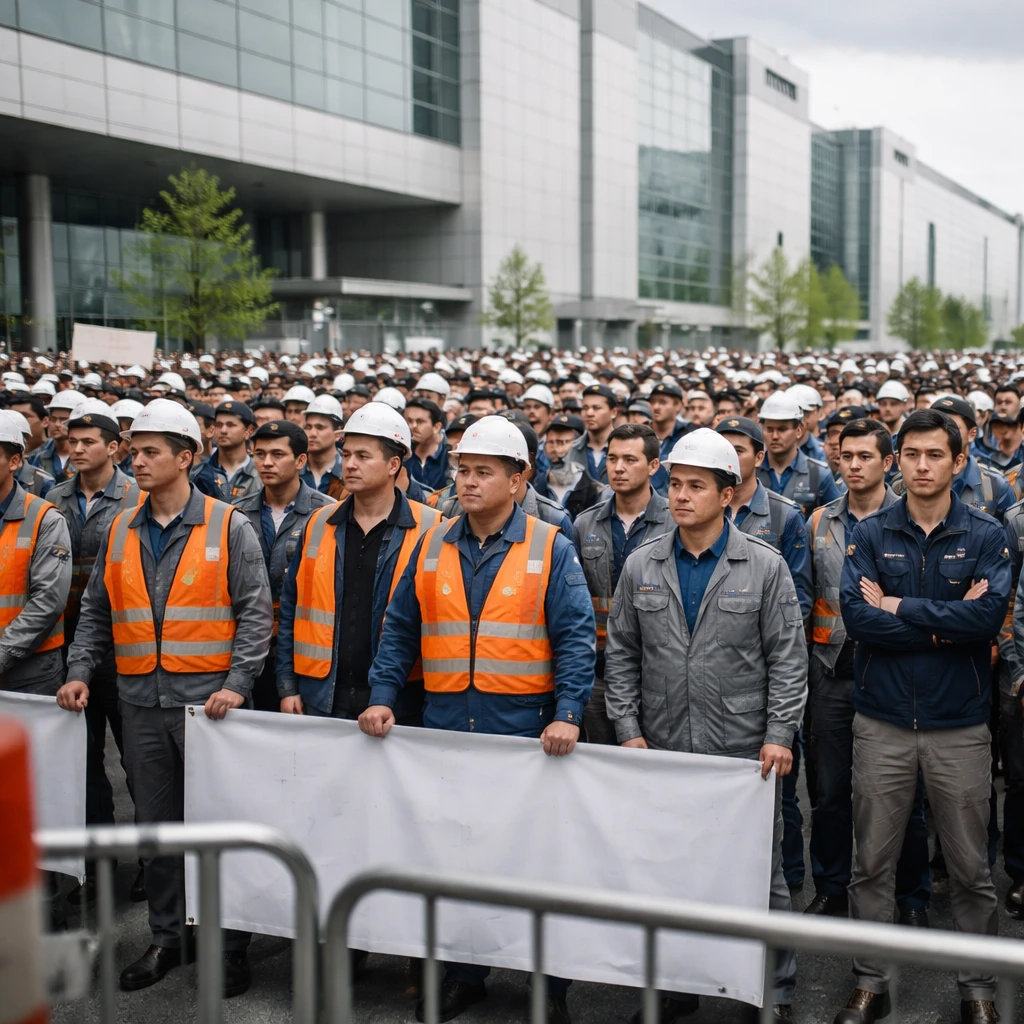
Samsung Electronics' largest labor union said on Wednesday it will carry out a planned general strike after negotiations with management failed to produce an agreement. The union announced: "The union will proceed with the legally scheduled general strike tomorrow as planned."
The stoppage is slated to involve almost 48,000 workers and is scheduled to run for 18 days. The core issues at the center of the dispute are disagreements over performance-based bonuses and other compensation matters.
Talks between union representatives and company management were conducted with mediation by South Korea's labor authorities in an effort to avoid a prolonged disruption at the world's largest memory chipmaker. According to the union's statement, management rejected a proposal that had been presented during those government-mediated negotiations, and the two sides were unable to narrow differences on several remaining issues.
Officials within the South Korean government have expressed concern that a lengthy strike at Samsung Electronics could have adverse effects on the country's export-driven economy. Semiconductors account for roughly 35% of South Korea's total exports, making the sector a significant component of national economic activity.
Financial markets reacted to the report of the breakdown in talks. Samsung's shares reversed earlier gains and fell nearly 4% following the announcement.
Context and implications
The planned walkout is concentrated on compensation structure - specifically performance-based bonuses - and broader pay issues. The involvement of South Korean labor authorities indicates an attempt to broker a settlement and limit the potential economic fallout. The union's decision to proceed after management declined the proposal signals that negotiations did not bridge remaining gaps.
Given the weight of semiconductors in national exports, disruptions at a major producer could ripple into export figures and related economic metrics. The immediate reaction in Samsung's share price illustrates investor sensitivity to operational interruptions at a firm that is a major force in the chip market.
What remains limited in public information
- The specific contents of the rejected proposal have not been disclosed.
- Details on contingency plans by management to mitigate operational disruption during the strike have not been provided.
- Further negotiations or additional mediation steps have not been publicly outlined beyond the statement that talks broke down after failing to narrow differences.