
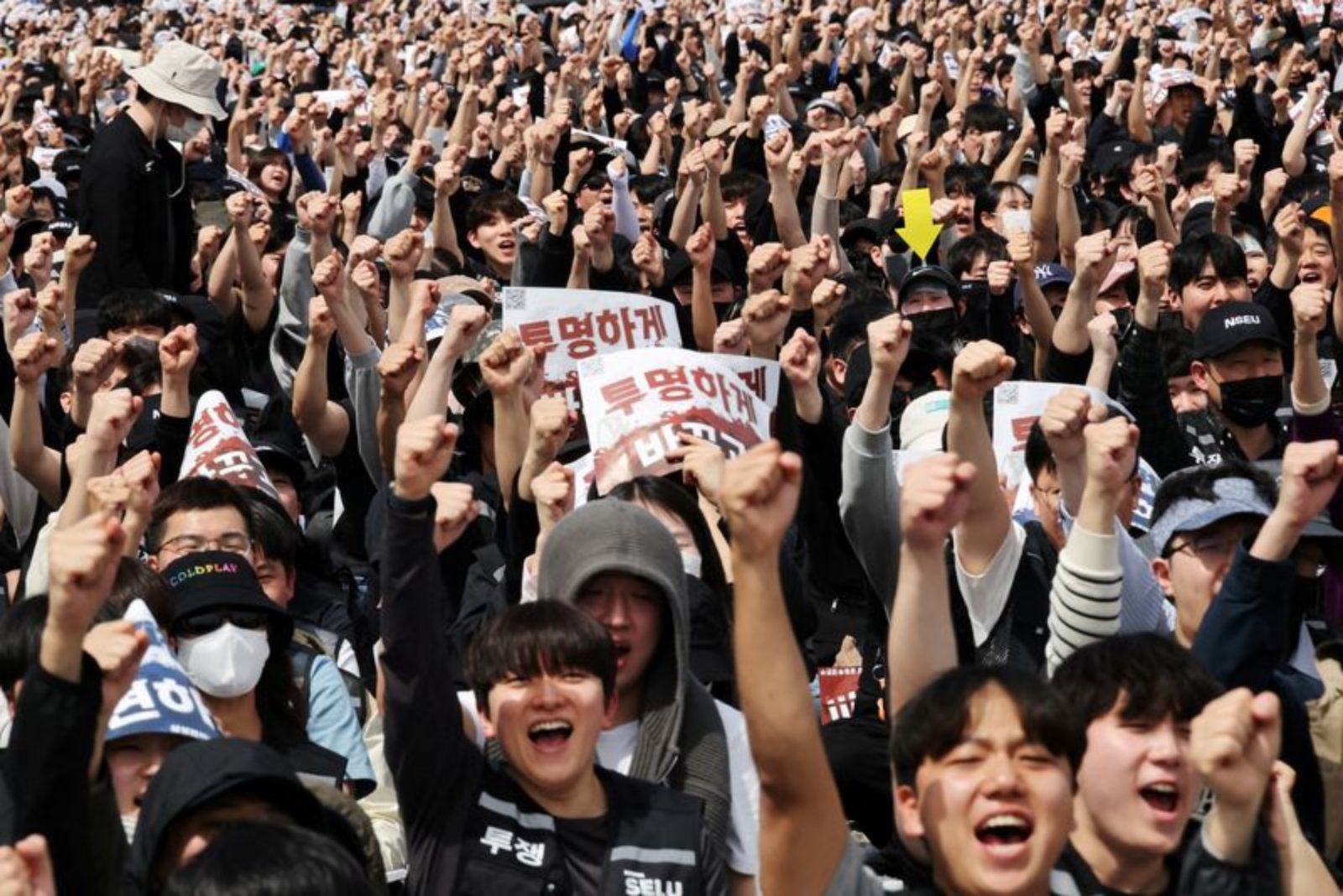
Samsung Electronics has reached a government-mediated agreement with its union that forestalls a major strike by memory chip employees and guarantees extraordinary special payments linked to semiconductor operating profit. The accord, ratified by union members on Wednesday, commits the company to allocating 10.5% of its semiconductor operating profit to special bonuses for chip workers, removes a prior cap on such payments, and applies across a 10-year span.
The pact gives some memory chip workers exceptionally large payments, with some set to receive total bonuses of $416,000. It also eliminated a previous limit that had restricted special bonuses tied to unit performance to 50% of a worker's salary. Union leaders say the deal was necessary to address a widening bonus gap with SK Hynix that had precipitated strong discontent among Samsung's chip workforce.
Why the agreement matters
The Samsung accord is notable for two interconnected reasons outlined by labour and corporate observers. First, it represents a substantial concession by a bellwether domestic company to a union demand for profit-linked rewards. Second, it formalizes in writing an arrangement that ties a fixed percentage of operating profit to worker bonuses - a formulation that, while seen previously in at least one other large company, remains rare among major South Korean corporations.
Legal scholar Kim Keechang warned that the pact could have broader consequences, saying: "It could start a new fire at other big companies in Korea. It might be only the beginning." That sentiment underscores how a single agreement at a flagship firm may alter bargaining expectations across industries.
Tension over the timing and recipients of profit participation
The mechanics of the deal have drawn attention from investors and officials because it ties payouts to operating profit rather than to net income after taxes. South Korea's president, Lee Jae Myung, expressed unease prior to the deal, noting that "To institutionally share a certain proportion of operating profit before taking out taxes, which can be called the public's common share - that is something even investors cannot do," and adding, "Even investors receive dividends from net income after taxes are paid, don’t they?"
Business groups voiced alarm as well. The Korea Enterprises Federation said the agreement reflects Samsung Electronics' "special circumstances and labour groups should not generalise it and spread excessive bonus demands across industry." That statement highlights corporate concerns that the pact could be used as a template for aggressive bonus claims elsewhere.
How the dispute unfolded and what was at stake
Samsung's willingness to accept the parameters of the deal followed intense pressure from its memory chip workforce over perceived pay disparities with SK Hynix. According to union accounts, workers were leaving Samsung for SK Hynix in significant numbers. Management calculations reportedly showed that without an agreement, 48,000 employees would have staged an 18-day strike.
Public reports indicate SK Hynix set aside 10% of operating profit for bonuses last year and altered its bonus cap, producing exceptionally large payouts for chip staff - media reporting suggested bonuses close to 3,000% of base salary for the past financial year under the new pay structure.
Samsung's settlement was described as less generous than SK Hynix's arrangement, but nevertheless represented a material upward shift in how labour at a leading device producer is compensated.
Demand ripple effects across firms and sectors
Labour leaders and other companies are already invoking the Samsung outcome in their negotiations. At internet firm Kakao and four affiliates, workers have threatened to strike unless management agrees to proposals that include apportioning 13%-15% of operating profit to bonuses. A labour commission is mediating those talks.
Telecoms firm LG Uplus and shipbuilder HD Hyundai Heavy Industries have both outlined demands that include allocating 30% or more of operating profit to performance compensation among other items. Negotiations at LG Uplus are in progress, while talks at HD Hyundai Heavy Industries are expected to begin next month.
At Samsung Biologics, workers walked off the job for five days earlier in the month, presenting demands that included allocating 20% of operating profit to performance bonuses. Management at Samsung Biologics has not accepted that demand, and the dispute continues with workers refusing overtime and holiday work.
Labour landscape and recent legal change
Labour activity in South Korea has risen against a backdrop of institutional shifts and historically strong union militancy compared with some regional peers. Government statistics show around 13% of the workforce was unionised in 2024, a rate slightly below the OECD average. However, unions in South Korea pursue industrial action more frequently than in some neighbouring economies, which is cited by some foreign businesses as a deterrent to investment.
Traditional union filings have ticked up this year; for example, there were 113 filings seeking dispute mediation in February compared with 105 in the same month a year earlier.
A recent change in law may amplify mobilisation. The so-called Yellow Envelope Act, which took effect in March, broadens legal protections for subcontractors and curbs some financial reprisals by employers against striking workers. The day the law took effect, about 400 subcontractor union groups representing a combined 81,600 members demanded wage negotiations with their management, according to the Korea Labor Institute. That action illustrated how new legal protections can translate quickly into bargaining pressure.
Subcontractors and partner-company workers as a new bargaining front
The Samsung deal may draw attention to subcontractor and partner-company compensation. After the agreement, the Federation of Korean Trade Unions noted that "Samsung Electronics’ growth and production are the result of many partner companies and workers working together" and called for measures to ensure that "the fruits of performance can be fairly distributed to partner-company workers."
Those comments signal that the distribution of earnings across supply chains and subcontractors could be subject to future negotiation demands - a development that could affect cost structures beyond the primary employers that dominate headlines.
What remains uncertain
Key unknowns persist about how widely similar profit-sharing arrangements will be adopted and whether other companies will match or resist such demands. Some firms and trade groups have argued the Samsung agreement is a product of that company's unique circumstances, urging that it not be generalized. But union leaders and other labour groups continue to press for comparable formulas linking a share of operating profit to employee bonuses.
At the same time, tension between investor expectations about earnings distribution - particularly the sequence of taxes and dividends - and union demands that tap operating profit before taxes remains a flashpoint. President Lee's comments reflect broader unease in policy and investor circles over institutionalizing such a mechanism.
Conclusion
Samsung's deal with its union resolves an immediate labour confrontation and secures substantial payouts for chip workers, but it also creates a precedent that other unions and workers are already citing. The combination of rising corporate profits tied to AI-driven demand in semiconductors, growing union assertiveness, and legal changes that strengthen subcontractor rights means that bargaining dynamics in South Korea are in flux. How firms, labour groups and policymakers respond in coming negotiations will determine whether this agreement is an isolated outcome or the start of a broader shift in how operating profits are shared across the economy.