
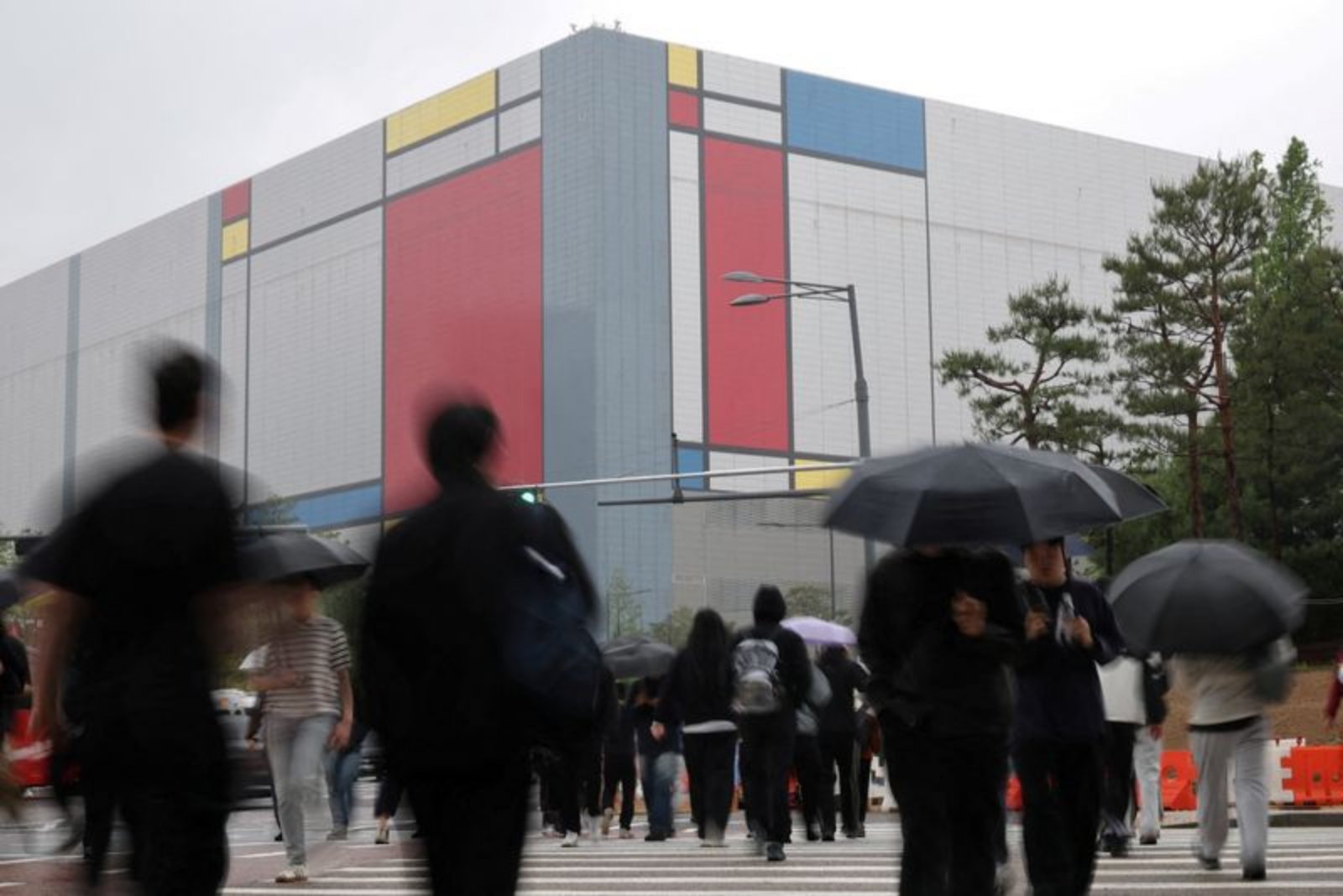
A tentative pay settlement that halted a potential strike at Samsung Electronics’ vast semiconductor complex in Pyeongtaek has been met with mixed reactions from workers, subcontractors and nearby businesses. The campus - the company’s largest semiconductor production site - has been at the center of intensified labor disputes as a boom in demand for chips tied to artificial intelligence has generated record profits and strengthened union calls for a larger share of gains.
For many in the surrounding area, the immediate prospect of no strike brought relief. Local businesses that rely on staff meals and corporate events said they expected a boost if higher pay translated into more company dinners and group spending. "If employees receive performance bonuses as a result of this general strike, I think restaurants near Samsung will benefit greatly, including through company dinners and group meals," said Lee Se-hee, who runs a fine dining restaurant in Pyeongtaek, a city of roughly 650,000 people.
At the same time, the settlement has underscored tensions inside the workforce. The agreement provisions mean some employees in the memory chip division will be in line to receive substantial performance bonuses - reported at around $416,000 for certain workers - which has alarmed staff in other divisions who fear being left behind.
One engineer who works in the foundry division, which focuses on logic chips, described the reaction among colleagues as disappointment and concern about talent flows. "It’s a huge disappointment," the engineer said, adding that the disparity could prompt moves between firms and internal transfers. "It looks like those who can switch to SK Hynix will keep applying, while others will try to transfer internally to the memory division." The engineer declined to be named because of the sensitivity of the matter.
The settlement has amplified comparisons with rival SK Hynix, where some employees reportedly received roughly three times the performance pay awarded at Samsung last year. That difference in pay levels helped fuel frustration and played a role in workers leaving Samsung for SK Hynix. Some memory division employees at Samsung were said to be content with the overall amount but less satisfied by the structure of the payout, in particular the company’s plan to deliver much of the performance bonuses in stock. "The memory colleagues seem to be satisfied with the total amount, but a bit disappointed because they were paid in stock," the foundry engineer said.
About 14,000 employees are based at the Pyeongtaek campus. Despite that scale, a local real estate agent interviewed in the city suggested a broad local economic boost from the bonuses was unlikely unless more staff relocated to Pyeongtaek or unless the payments were largely disbursed in cash rather than shares.
"For local subcontractors, this strike-and-bonus deal is like watching someone else’s feast," said Kim Suk-joon, 66, reflecting skepticism that the benefits would trickle down to smaller businesses in the area.
Some employees at contract chip manufacturing units said they intended to accept the deal even as they acknowledged it disproportionately favored the memory business. "We were all in the same position, so it feels a bit unfair that only the memory division is getting that much," said one such employee, who also asked not to be named.
Relief that the strike threat had been removed was a common reaction among subcontractor staff, though it was tempered by concerns about the financial cost of the agreement to the company. Jang Sung-hyun, 47, who works for a Samsung subcontractor, said he was glad a strike appeared to be averted but questioned the broader implications. "Weren’t they basically holding the public and companies hostage for the sake of their own performance bonuses?" he asked.
Within union channels, responses were mixed but included messages of support and appreciation for the union’s efforts amid pressure from both the company and the government to reach a resolution. On Selunion, an online union forum, one post read: "Some may be satisfied, and others may be unhappy, but you truly went through a lot. Thank you for your hard work."
The settlement at Pyeongtaek has thus provided a temporary reprieve from industrial action and assuaged nearby businesses worried about disruption. Yet it has also made visible existing divisions within the workforce and created questions about whether the benefits of a buoyant chip market will be broadly shared across different units and local economies.