
SEJONG, South Korea - May 20
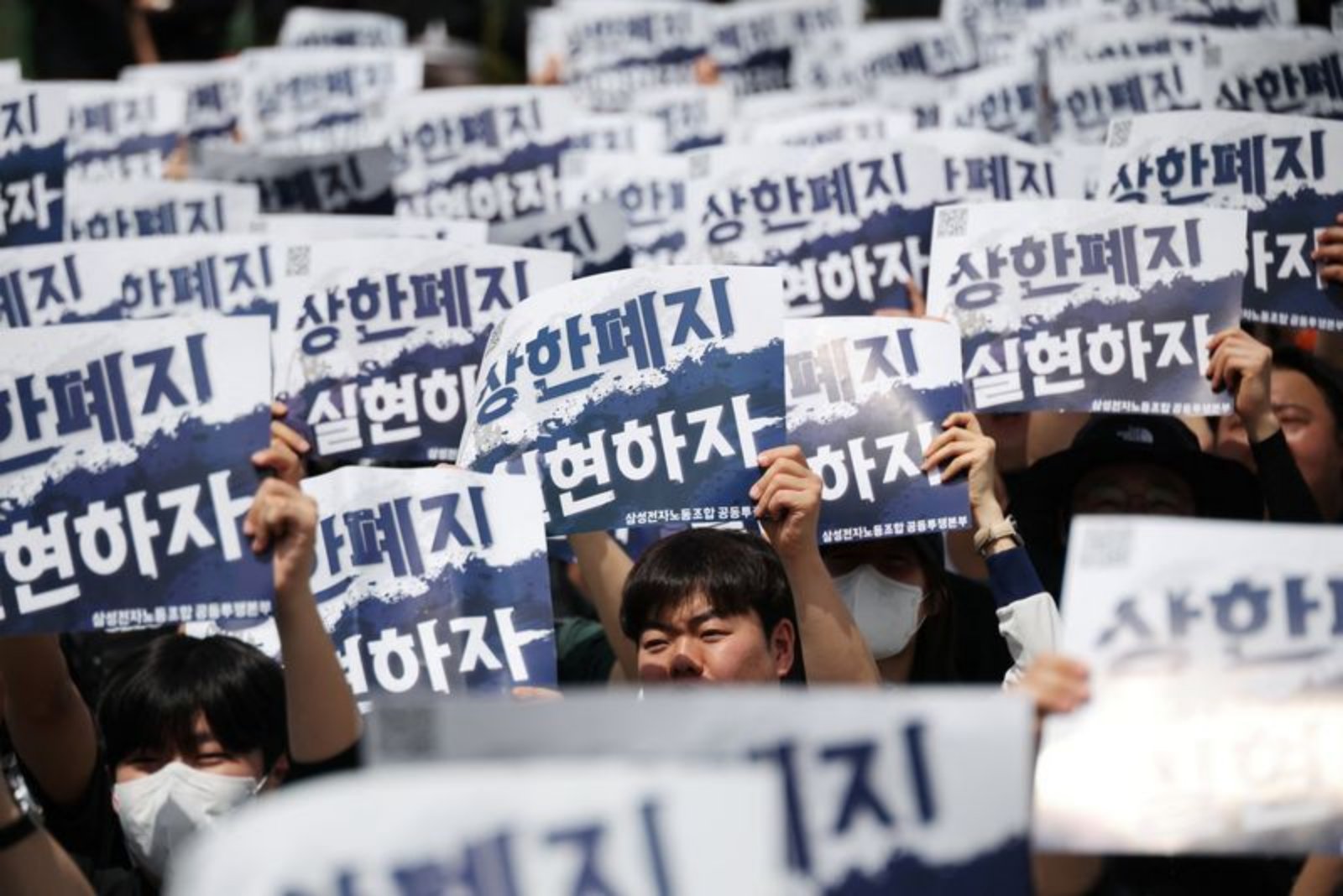
Samsung Electronics' management and its labour union failed to finalize an agreement on Wednesday over bonus payments, setting the stage for 48,000 workers to begin an 18-day strike on Thursday. The breakdown in talks came despite intense pressure from the government and business groups that had urged both sides to reach a settlement to avert industrial action.
Union negotiators had sought several changes to the company’s bonus framework. Their demands included removing a cap on bonuses that currently limits payments to 50% of annual salaries, directing 15% of annual operating profit to bonuses, and securing these adjustments in terms that extend beyond a single year.
Samsung responded in a statement saying the union’s demands were unacceptable and that acceding to them would have undermined the company’s fundamental principles. The company framed the proposals as inconsistent with its core policies and declined to accept the terms offered by union representatives.
Both sides had continued negotiations under significant external pressure in the hours before the strike was due to start, focused largely on resolving the dispute over bonus payments. With no agreement reached by Wednesday, the planned work stoppage will proceed as scheduled on Thursday.
Officials and business groups had urged a resolution in part because of concerns about the potential macroeconomic and sectoral fallout. The dispute and the imminent strike were described by industry observers in the talks as presenting a threat to the health of South Korea’s economy and as likely to disrupt the global supply of semiconductors.
The company-union impasse centers on compensation mechanics rather than other terms of employment spelled out in the discussions. The union’s package sought both to remove an existing percentage cap linked to annual salaries and to tie a specific portion of operating profits to employee bonuses, with a request that these changes be formalised for more than a single-year period. Management maintained that the proposals could not be accepted.
With negotiations halted and a large-scale strike imminent, stakeholders across affected sectors will be watching for operational interruptions and any further developments in talks between Samsung and its labour union.
Summary
Samsung and its union were unable to reach a deal on bonus payments. Management labeled the union's demands unacceptable. As a result, 48,000 workers are scheduled to begin an 18-day strike on Thursday, raising concerns about South Korea's economy and semiconductor supply chains.
Key points
- 48,000 Samsung employees are set to start an 18-day strike on Thursday.
- The union demanded removal of a 50% bonus cap, allocation of 15% of operating profit to bonuses, and multi-year formalisation of changes.
- The stalemate threatens South Korea's economic health and could disrupt global semiconductor supply.
Risks and uncertainties
- Planned strike may cause operational disruptions within Samsung’s manufacturing and supply chains, affecting the semiconductor sector.
- Prolonged industrial action could exert downward pressure on indicators tied to South Korea’s economic health.
- Negotiations remain unresolved; it is unclear whether further talks before Thursday could avert the strike.