
Talks between Samsung Electronics and its labour union were extended into late Tuesday evening, the head of the National Labor Relations Commission said, as officials stepped up efforts to prevent a large-scale strike that could begin on Thursday.
Park Su-keun, chair of the commission supervising the mediation, told reporters that both sides had made concessions but remained deadlocked on two central issues, and that mediation would continue until 10 p.m. Tuesday. The session had originally been scheduled to end at 7 p.m. (1000 GMT), Park said.
The dispute centres on bonus arrangements. The union is pressing for the removal of an existing bonus cap equal to 50% of annual salaries, a commitment to allocate 15% of annual operating profit to bonuses, and formal incorporation of those terms into workers' contracts. Management has proposed instead larger one-off bonuses for memory chip staff this year that would exceed payments made at SK Hynix, while retaining the existing bonus cap.
Union representatives said they were striving to devise a proposal that would satisfy members. Samsung declined to comment on the ongoing mediation.
Scale and timing of the potential action
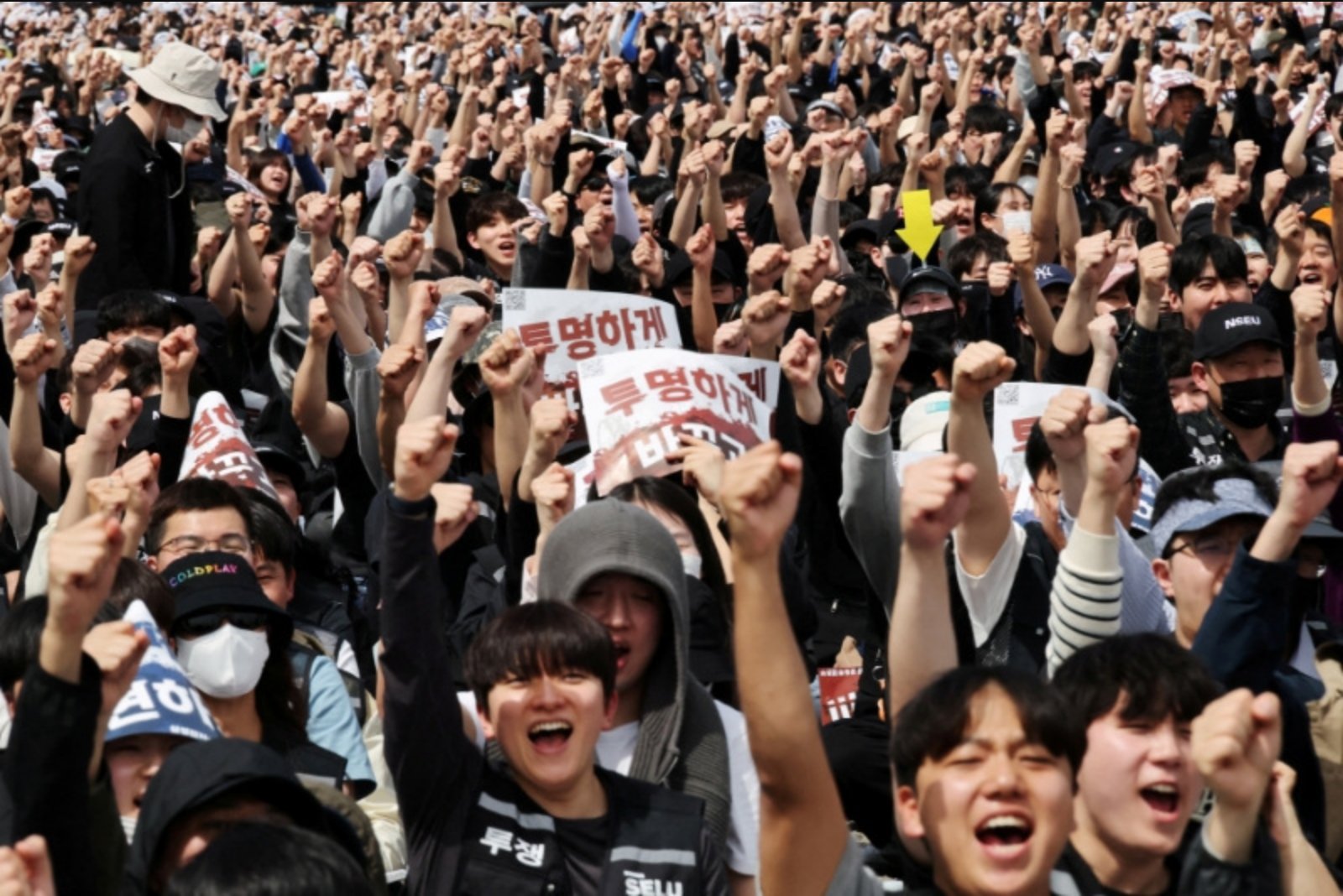
If the walkout proceeds, nearly 48,000 Samsung employees are expected to strike for 18 days beginning on Thursday. Observers and officials have described the possible stoppage as capable of producing significant domestic economic effects and global supply disruptions, because Samsung accounts for almost a quarter of South Korea's exports and is the world’s largest maker of memory chips.
Industry minister Kim Jung-kwan told parliament that citizens were understandably anxious about the ripple effects a strike of this size could create. South Korean business organizations have also publicly urged the union not to carry out the action.
Economic and supply-chain implications
An unnamed official from the central bank estimated a severe scenario in which the strike could shave 0.5 percentage points off a forecast 2.0% expansion for the economy this year. That estimate assumes roughly 30 trillion won of chip output would be lost and that production lines might take an additional "few weeks" to return to normal operations.
KB analyst Jeff Kim has estimated that an 18-day stoppage could reduce global DRAM supplies by 3% to 4% and NAND supplies by 2% to 3%, a level of disruption likely to push memory prices higher.
Investor reaction and broader concern
Shares of Samsung closed down 2% on Tuesday, trimming earlier declines after reports that the negotiating positions had inched closer. The stock was down 1.3% over the prior week. For many market participants the central concern is not only the immediate disruption but whether management will agree to embed larger bonus payouts into contracts, creating a permanent increase in labour costs.
"The point is how they negotiate the formalising of pay increases," said Lee Seung-yub, a portfolio manager at Seoul-based hedge fund Quad Investment Management.
Context inside the industry and labour market
The standoff marks the most serious clash between Samsung and its union since a pledge made in 2020 to move past the company’s history of suppressing labour organisation. The union has pointed to widening pay disparities with SK Hynix, which restructured its pay system last year and, the union says, provided bonuses last year more than three times those paid to Samsung staff. That divergence, the union argues, contributed to staff departures to SK Hynix and to rising union membership at Samsung.
SK Hynix has been credited in the dispute with gaining ground in supplying high-bandwidth memory used in AI accelerator units, a competitive advantage that the union cites when contrasting pay outcomes across employers.
Legal and operational precautions
A court on Monday partially granted Samsung’s request for an injunction designed to keep minimum staffing at certain production sites during any strike. Samsung said this court order requires 7,087 workers to remain on duty even if the union proceeds with industrial action.
Meanwhile, the government has threatened over the weekend to impose emergency arbitration. That mechanism would legally halt a strike for 30 days while authorities attempt to mediate the dispute, a step that has encouraged investor optimism that a lengthy stoppage might be averted.
What remains unsettled
Negotiators say two key topics remain unresolved, but mediators declined to provide detail on those sticking points. Both sides continue to engage in talks under the commission’s supervision as the deadline set by the union approaches.
Currency conversion in reporting: $1 = 1,505.9000 won.