
Royal Caribbean Cruises Ltd. shares fell in morning trading today after Mexican officials moved to halt the company’s high-profile Perfect Day Mexico project.
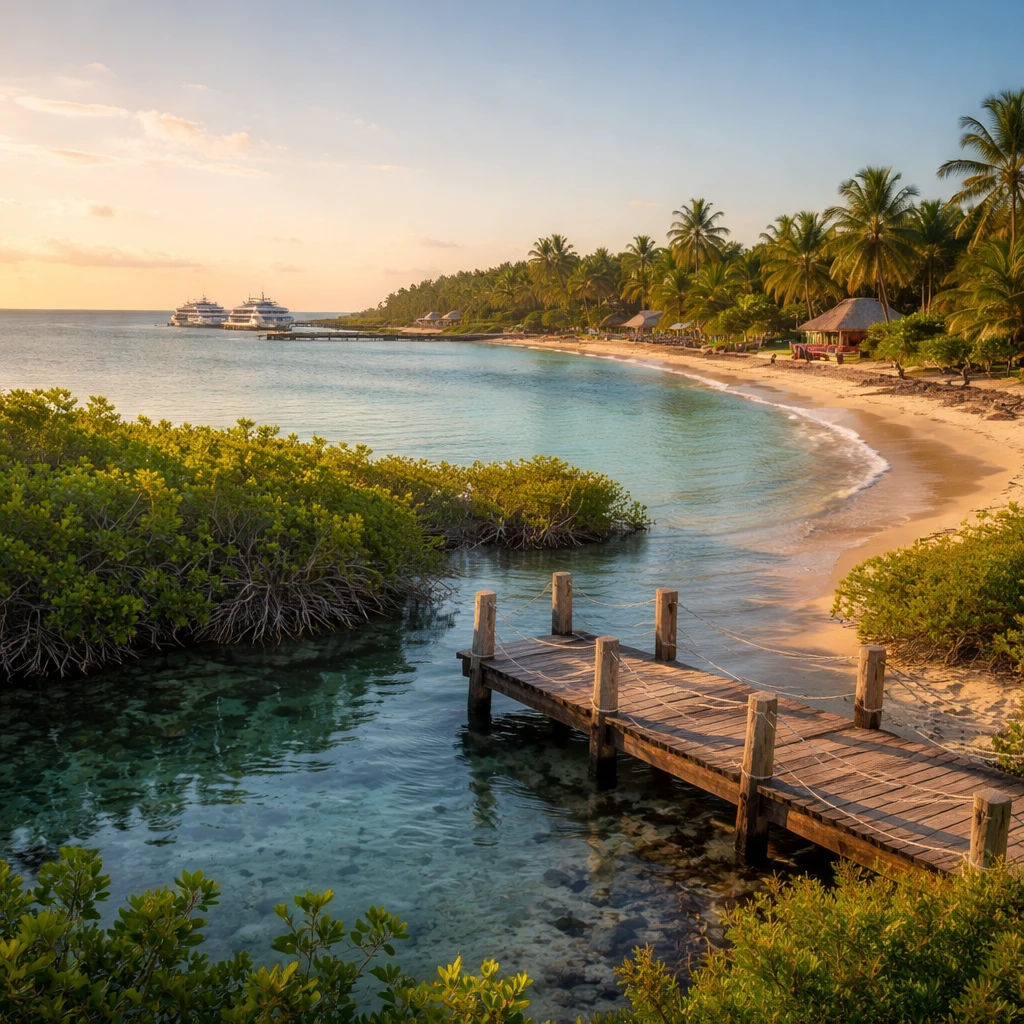
Mexico’s environmental ministry formally rejected the proposed private resort near the village of Mahahual on the Caribbean coast, citing opposition that had arisen from residents and environmental groups. Environment Minister Alicia Bárcena said at a press conference, "It is not going to be approved." The announcement came following public backlash and resulted in the government cancelling the plan during a press conference in Mexico City on May 19, 2026 - the evening before today’s trading session. As a result, the development news landed directly on morning traders.
The company had already committed approximately $292 million to purchase the cruise port and surrounding land for the project, and had set aside an additional $529 million for construction and development of the resort. The official cancellation therefore represents the loss of a significant destination asset that Royal Caribbean had been planning as part of its destination expansion strategy.
Bernstein SocGen responded to the cancellation by reiterating an Outperform rating on Royal Caribbean and maintaining a $355 price target. The firm said the company can likely recoup the $292 million land expenditure and could redirect those funds to alternative projects or to increased shareholder returns. Bernstein SocGen also noted that Perfect Day Mexico was not expected to contribute to earnings per share until 2028, and that the consensus estimate of $22 for fiscal year 2028 would not need to be reduced even if the Mexico project does not proceed.
Despite the analyst support, Royal Caribbean stock traded lower and reached a fresh 52-week low of $232.10 during the session. The decline was company-specific; the broader U.S. equity market moved higher on the same day, with the S&P 500 up 0.7%, the Dow Jones rising 0.7%, and the NASDAQ advancing 1.0%.
The cancellation deepens a difficult stretch for the cruise operator’s shares. Over the past month, the stock has dropped roughly 9%, and it is down about 19% over the past three months. Investors are weighing the financial and strategic implications of losing a planned destination against Royal Caribbean’s otherwise solid fundamentals, as reflected in the analyst commentary.
Beyond the immediate share-price reaction, the episode highlights the challenges cruise companies face when pursuing land-based destination projects in regions where environmental concerns and local resistance can affect permitting and approvals. The Mexican government’s decision removes a planned resort that had factored into Royal Caribbean’s longer-term destination plans, at least for the site near Mahahual.
Key points
- Royal Caribbean shares fell after Mexico’s environmental ministry formally blocked the Perfect Day Mexico project near Mahahual.
- The company had spent about $292 million to acquire the port and land and allocated $529 million for development costs.
- Analyst Bernstein SocGen kept an Outperform rating and a $355 price target, saying the land cost can likely be recovered and that 2028 EPS consensus of $22 does not need revision.
Risks and uncertainties
- Regulatory and permitting risk in destination projects - environmental reviews and local opposition can derail planned developments, impacting the leisure and cruise sectors.
- Company-specific execution risk - the financial exposure tied to land acquisition and pre-development spending could affect capital allocation decisions within the travel and tourism market.