
Rosenblatt's proprietary supply and demand model projects a steep expansion in production capacity for optical components used in data center AI hardware, but it does not foresee supply closing the gap with demand by 2030. The firm's analysis finds manufacturers are poised to increase production capacity by roughly 12 times between 2025 and 2030, while supply will remain about 50% short of demand through the end of the decade.
The study concentrates on makers of Electro-Absorption Modulated Lasers and Continuous Wave lasers that feed optical transceivers. Companies named in the analysis include Lumentum (LITE), Coherent (COHR), Broadcom (AVGO), Sumitomo, Mitsubishi, and Applied Optoelectronics (AAOI).
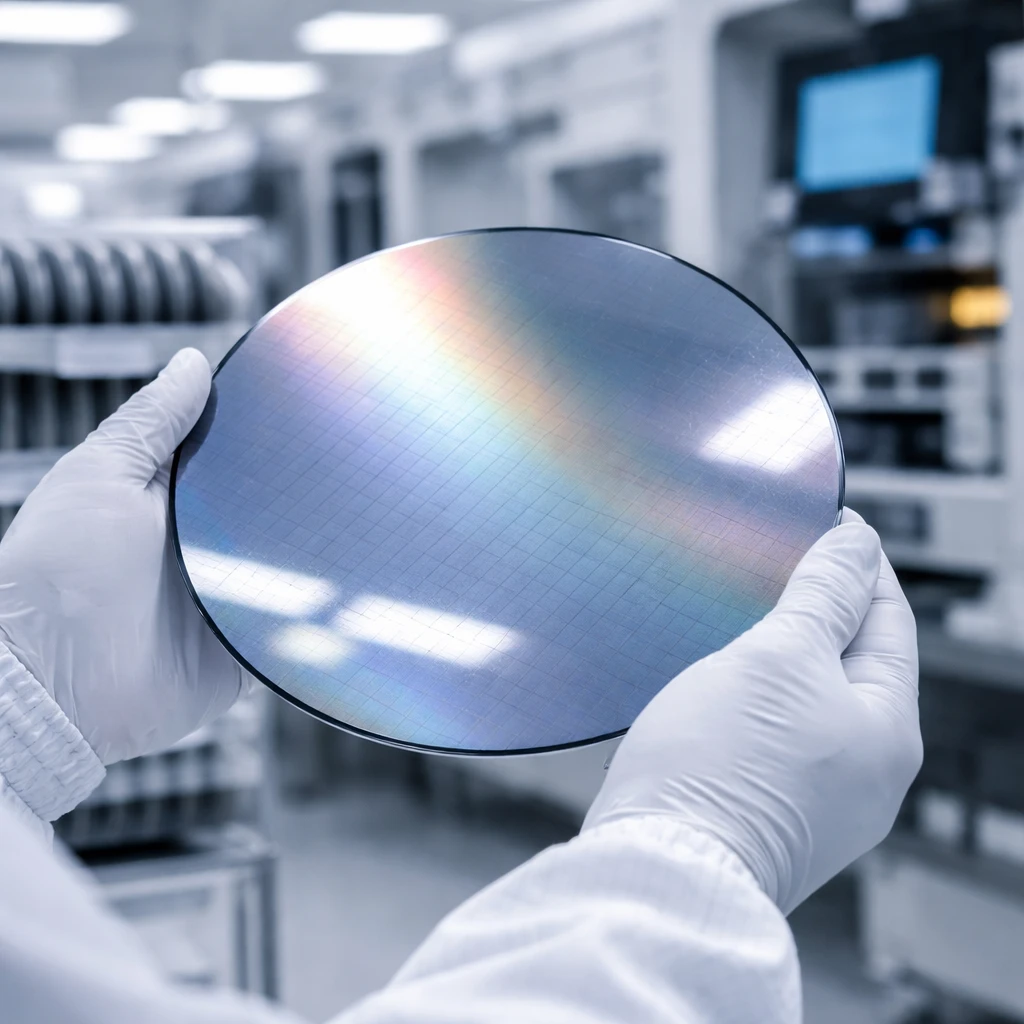
Rosenblatt emphasizes that these laser components are fabricated on Indium Phosphide wafers. The firm notes that a single 6-inch InP wafer costs thousands of dollars because indium is rare and the manufacturing process is complex. That unit cost is described as orders of magnitude higher than the more typical silicon 12-inch wafers used across computing. Rosenblatt also points out that most InP production today is performed on smaller 2-inch, 3-inch, or 4-inch wafers, although 6-inch production has increased recently.
Functionally, these optical parts are central to the distributed architecture of AI compute systems, enabling xPU clustering within and between data centers. Rosenblatt reports that supply of InP-based Datacom components was roughly 50% behind demand at the end of 2025.
In its base case, the firm assumes Co-Packaged Optics production will start to build in the second half of 2027 and that shipments will begin in 2028. The analysis calls attention to possible timing mismatches across several parts of the supply chain - including wafer supply, test and measurement capacity, digital signal processor availability, photonic integrated circuit production, and laser manufacturing capacity. Rosenblatt cautions that any slippage against current expectations would likely create buying opportunities in industry leaders.
Regarding nearer-term opportunities, Rosenblatt highlights Coherent as a name likely to see revenue acceleration and gross margin expansion as laser output on 6-inch wafers ramps and supports sales of 800G and 1.6T transceivers. The firm also identifies Applied Optoelectronics as positioned to expand market share toward nearly 10 percent from under 5 percent.
Key points
- Capacity is expected to expand about 12 times from 2025 to 2030 while supply remains roughly 50 percent below demand through 2030.
- High per-wafer costs for Indium Phosphide and the current reliance on smaller wafer sizes constrain supply-side economics and scale.
- Coherent and Applied Optoelectronics are highlighted as near-term beneficiaries with potential revenue and share gains.
Risks and uncertainties
- Timing risk for Co-Packaged Optics ramp - any delays to the expected 2027 production build and 2028 shipments could further widen the supply-demand gap.
- Supply chain constraints across wafers, test and measurement, DSPs, PICs, and laser manufacturing could impede delivery schedules and capacity realization.