
Stock Markets April 30, 2026 04:34 PM

Rivian’s 2026 Outlook Sees Deliveries Rising but Profitability Setback Persists

Company forecasts 62,000-67,000 vehicle deliveries while guiding to a multibillion-dollar adjusted EBITDA loss and substantial capex

By Ajmal Hussain
Share
Twitter Reddit Facebook LinkedIn
RIVN

Rivian issued its guidance for 2026, forecasting vehicle deliveries of 62,000 to 67,000 units while expecting adjusted EBITDA to show a loss between $2.10 billion and $1.80 billion. The company also plans capital expenditures of $1.95 billion to $2.05 billion. Gross profit contracted year over year, driven by a $100 million decline in automotive regulatory credit sales and a shift in product mix toward commercial vans, even as software and services revenue grew 49% year over year. Rivian has begun production of the R2 and secured a $1 billion investment from Volkswagen Group.

Rivian’s 2026 Outlook Sees Deliveries Rising but Profitability Setback Persists
RIVN
Summarize with
ChatGPT Perplexity Claude Grok Gemini

Key Points

  • Rivian forecasts 62,000 to 67,000 vehicle deliveries for 2026, signaling planned volume growth.
  • Adjusted EBITDA is expected to be a loss between $2.10 billion and $1.80 billion, indicating ongoing operating losses.
  • Capital expenditures are guided to $1.95 billion to $2.05 billion, reflecting continued investment in operations and product development.
  • Gross profit declined year over year, chiefly due to a $100 million drop in automotive regulatory credit sales and a shift in product mix toward commercial vans which reduced revenue per unit.

Rivian provided its financial and operational outlook for 2026 on Thursday, setting a delivery target of between 62,000 and 67,000 vehicles for the year. Alongside that delivery range, the electric vehicle maker projected adjusted EBITDA in a loss position, with a band from a $2.10 billion loss to a $1.80 billion loss. Capital spending was also guided to a range of $1.95 billion to $2.05 billion.

The company reported a year-over-year decline in gross profit. Management attributed the drop primarily to two factors: a $100 million decrease in automotive regulatory credit sales and changes in product mix. The latter effect was tied to commercial vans representing a larger share of unit sales, which coincided with a reduction in automotive revenue per unit.

Not all revenue streams weakened. Rivian’s software and services revenue expanded 49% compared with the prior year. The company said that growth was supported by higher activity in vehicle electrical architecture and software development services, together with increases in repair and maintenance work.

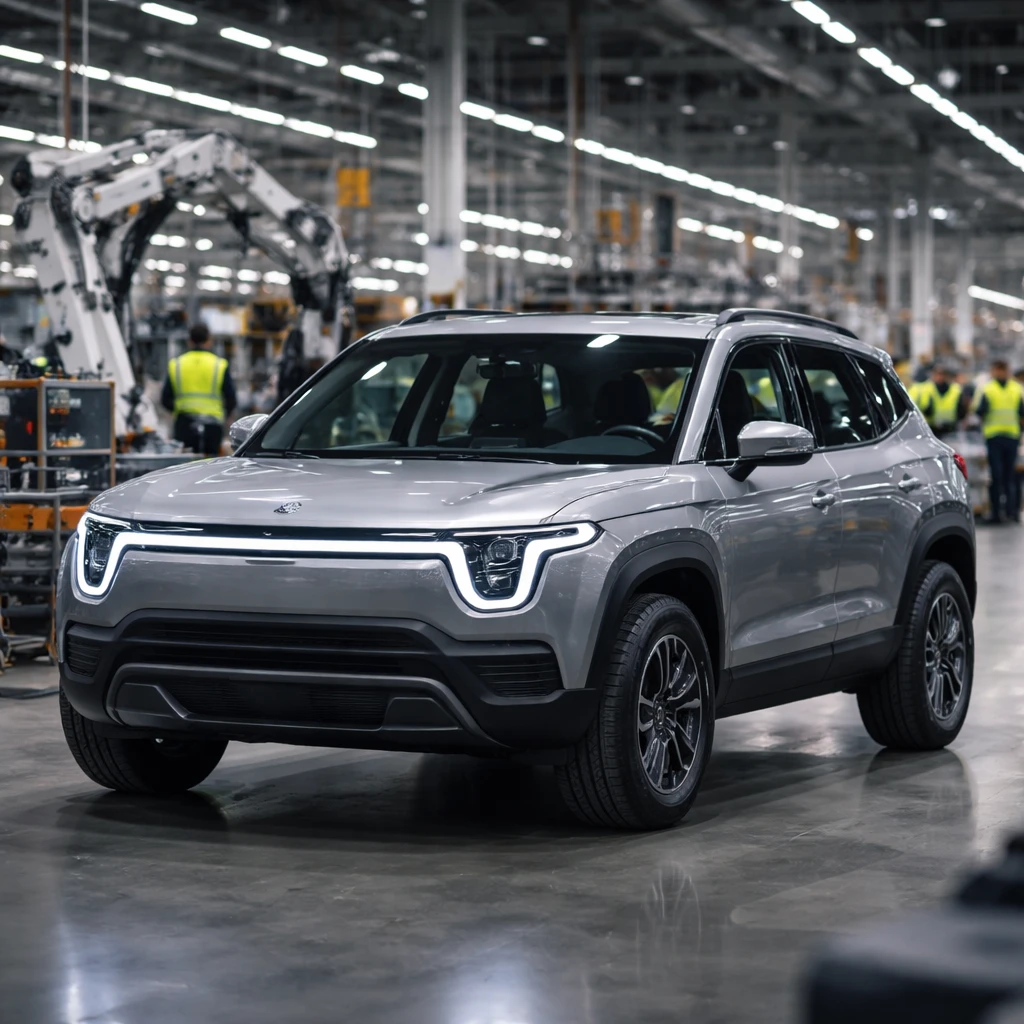
Operationally, Rivian has initiated production of its R2 vehicle. At the same time, the company announced it secured a $1 billion investment from Volkswagen Group.

The company’s guidance paints a picture of expanding volume expectations juxtaposed with continued pressure on profitability. The delivery target indicates planned growth in units shipped, while the adjusted EBITDA and capex ranges signal continued investment and a period of operating losses.


Context and implications

  • Deliveries: 62,000-67,000 units targeted for 2026, reflecting the company’s production and sales plans.
  • Profitability: Adjusted EBITDA is expected to remain negative in a band from -$2.10 billion to -$1.80 billion.
  • Capital allocation: Capital expenditures are projected between $1.95 billion and $2.05 billion, reflecting ongoing investment needs.
  • Revenue mix shifts: A larger share of commercial vans lowered automotive revenue per unit, while software and services grew 49% year over year.
  • Balance sheet & partnerships: Production of the R2 has started and Volkswagen Group provided a $1 billion investment.

Note: The information above is drawn from the company's 2026 guidance and reported year-over-year changes in revenue and profit metrics.

Risks

  • Decline in automotive regulatory credit sales - the $100 million reduction directly weighed on gross profit and could continue to pressure margins; this impacts the automotive and EV sectors.
  • Product mix shift toward commercial vans - a larger share of commercial van sales reduced automotive revenue per unit, creating headwinds for revenue metrics in the automotive sector.
  • Sustained adjusted EBITDA losses combined with substantial capex - an ongoing negative adjusted EBITDA in the billions alongside $1.95 billion to $2.05 billion in capital spending presents uncertainty for near-term profitability and cash deployment across automotive and related capital markets.

More from Stock Markets

Qantas’ 20-hour gamble: engineering comfort with light, meals and cabin design Jun 18, 2026 U.S. Officials Question Whether ASML’s Top EUV System Has Reached China Jun 18, 2026 Hyundai to Acquire Remainder of Boston Dynamics From SoftBank for $325 Million Jun 18, 2026 U.S. Futures Pull Back After Stocks Rally on Iran Deal and Chip Strength Jun 18, 2026 Hyundai to Acquire SoftBank’s Remaining Boston Dynamics Shares for $325 Million, Report Says Jun 18, 2026