
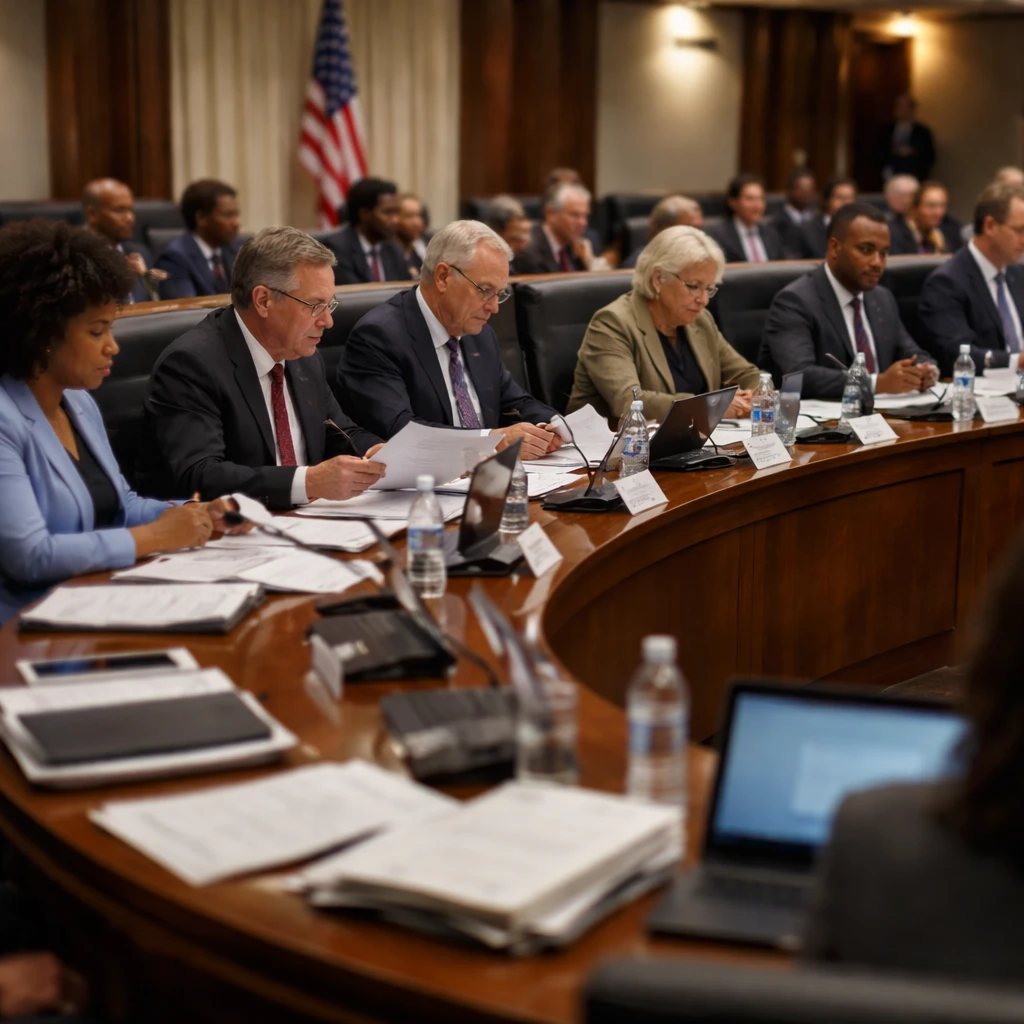
The American Bar Association’s policy-making body on Tuesday rejected a proposal to eliminate the organization’s diversity, equity and inclusion requirement for U.S. law schools, a decision that delays any immediate removal of the provision and may exacerbate tensions with the Trump administration.
By turning aside the proposal, the ABA’s governing assembly preserved the rule that requires law schools to demonstrate commitments to diversity in recruitment, admissions and student programming. That requirement has been a focal point of conflict since President Donald Trump returned to the White House and made dismantling DEI initiatives across government, the private sector and higher education a priority.
The vote also leaves unresolved questions about the ABA’s standing as the federally recognized accreditor for American law schools. Officials in the administration have signaled scrutiny of the ABA’s DEI policy. In April 2025, Trump signed an executive order directing U.S. Education Secretary Linda McMahon to consider whether to suspend or terminate the ABA’s status as the government’s official law school accreditor, citing what the order described as the organization’s unlawful DEI requirements as part of a broader effort to reform higher education accreditation.
Daniel Thies, chair of the ABA’s accreditation council, said in a statement that the council will take up the question of repealing the DEI rule when it meets later this month. The accreditation council is the body that makes the final determination on accreditation standards for law schools.
The DEI provision had already been suspended before a series of attempts to revise it. After multiple unsuccessful efforts, the accreditation council voted in May to eliminate the rule entirely. The council framed that move as necessary to protect the ABA’s federal accreditor status and to prevent Republican-controlled states from abandoning reliance on ABA accreditation in admitting lawyers to the profession.
In recent months, states including Texas, Florida and Alabama have taken steps to reduce the ABA’s role in their lawyer licensing procedures. Several other states are reported to be considering similar actions. Some of these state actions have specifically cited the ABA’s DEI rule as a factor motivating the change.
With the policy-making body rejecting the repeal Tuesday, the outcome now hinges on deliberations by the accreditation council when it convenes later this month. That meeting will determine whether the council follows through on its earlier vote to discard the DEI requirement or maintains the standard in the face of federal pressure and state-level shifts in accreditation reliance.