
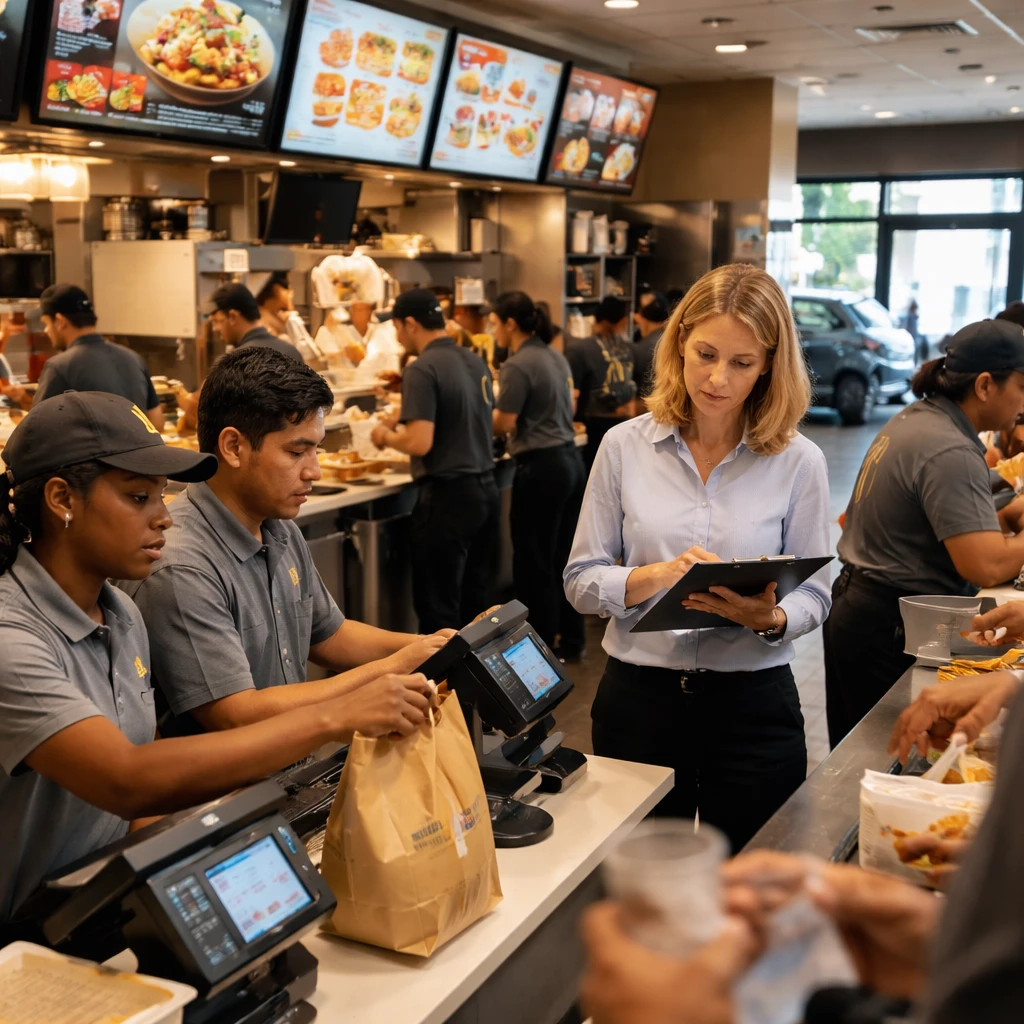
Aug 4 - McDonald’s announced a leadership change in its largest market on Tuesday, replacing the head of its U.S. division after the company reported U.S. sales growth that did not meet Wall Street expectations for the second quarter. Skye Anderson, a 26-year veteran of the company who had been serving as U.S. chief operating officer, will immediately assume the role of president of McDonald’s USA.
The move elevates Anderson to oversight of roughly 14,000 restaurants in the United States and places her at the center of rolling out McDonald’s turnaround plan known as "McDonald’s > NEXT." CEO Chris Kempczinski described Anderson on the earnings call as a "change agent" who could "unlock superior performance" in the U.S. market.
Joe Erlinger, who had led McDonald’s USA since 2019 after joining the company in 2002, will step down from the presidency but remain with the company as an advisor to aid the transition through early 2027, according to a company statement. Kempczinski praised Erlinger for navigating significant operational changes and for delivering advances in digital ordering and delivery during his tenure.
Why the change
The leadership swap followed McDonald’s disclosure that U.S. same-store sales rose 0.8% in the quarter, a result that came in below analysts’ forecasts. Management said the modest comp gain was driven primarily by an increase in the average amount spent per customer rather than by stronger traffic.
On the company earnings call, Kempczinski was blunt in attributing the shortfall to execution rather than to strategy. "We don’t have a strategy problem, we simply didn’t execute at the level we needed to in the second quarter," he said. He pointed to several executional issues that, in his view, blunted McDonald’s efforts to bring back lower-income customers who have scaled back eating out.
Kempczinski highlighted that a heavy promotions calendar - including tie-ins such as the "K-Pop Demon Hunters" campaign, new value meal offerings and FIFA-related promotions - had overwhelmed restaurant crews and contributed to longer customer wait times and dissatisfaction. "It’s tough to break through when you have that many messages out there," he said, adding that the company is "taking a really hard look at the calendar through the balance of the year."
The CEO also said it was an error to reduce digital discounts while simultaneously introducing a new under-$3 menu that did not generate sufficient incremental traffic. He attributed roughly two-thirds of the company’s sales shortfall to that "bad trade," and said correcting it will be a primary focus for Anderson over the next two quarters.
Market reaction and analyst commentary
Some on Wall Street interpreted the leadership change as an indication of impatience from the top. Analysts at Citi said the appointment signals management’s dissatisfaction with recent performance and could enable faster execution of initiatives designed to grow sales and profits. TD Cowen analysts noted they are eager to hear Anderson’s plan to reaccelerate customer traffic and to improve franchisee cash flow at the company’s investor meeting in September, citing her long tenure at McDonald’s.
McDonald’s said the leadership change follows a plan initiated earlier in the year. Anderson became U.S. division chief operating officer in April and prior to her U.S. roles she held finance positions, including serving as chief financial officer of McDonald’s Australia. She also led the company’s Global Business Services unit before returning to the U.S. organization in 2017.
Legacy issues remaining with the outgoing president
During Erlinger’s leadership, the U.S. division confronted several reputational and operational challenges. He worked to reassure consumers about food safety in the wake of a 2024 E. coli outbreak tied to McDonald’s burgers that was linked to one death and about 100 reported infections. In the same year he also publicly addressed viral claims about steep menu price increases that he said were inaccurate.
As Anderson takes the reins, the company has signaled that fixing the recent mix of marketing, menu and discounting decisions will be central to efforts to restore traffic and to improve outcomes for franchisees and restaurants. The next two quarters have been singled out as a critical window to correct the decisions Kempczinski described as a "bad trade."
What this means
Leadership changes in a company’s largest market underscore a management priority on executional discipline around promotions, menu design and the balance of digital incentives. Anderson steps into a role that combines operational responsibility for thousands of restaurants with the expectation of delivering quicker improvements in customer traffic and franchisee cash flow under the McDonald’s > NEXT turnaround framework.