
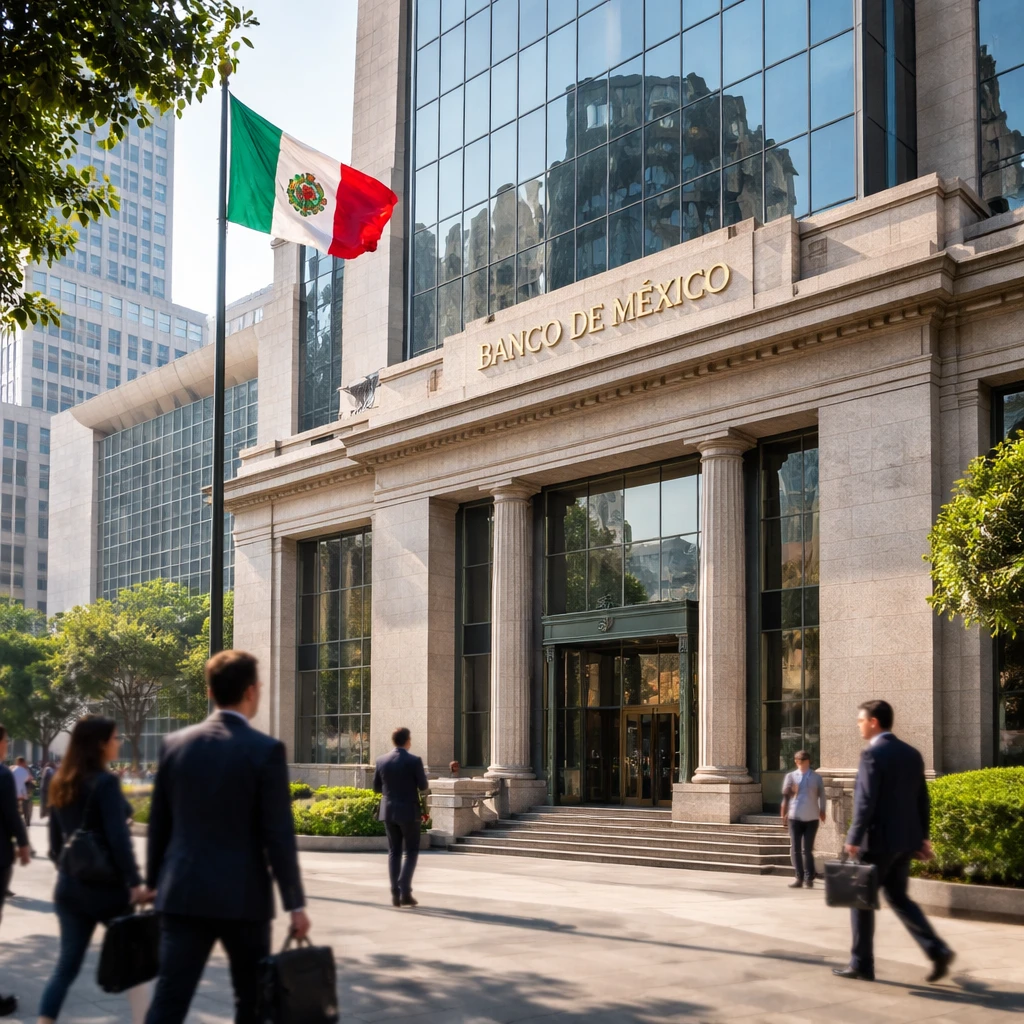
MEXICO CITY - A near-consensus among surveyed analysts points to Mexico's central bank keeping its benchmark interest rate at 6.50% at its next policy decision on Thursday. The expectation of a continued pause follows the stance Banxico adopted in June after a lengthy period of rate cuts.
The poll covered 35 analysts. Of those, 34 projected the central bank would maintain the current policy rate, while one analyst expected a 25-basis-point reduction.
Longer-term outlook from respondents
Respondents were split on how long the central bank will keep rates unchanged. The median forecast from a subset of 28 analysts sees the policy rate anchored at 6.50% through the end of 2026. A similar majority - 26 analysts - projected the same rate persisting through the end of 2027. These responses underline expectations for a prolonged pause rather than an imminent move in either direction.
Inflation and growth signals
Survey participants pointed to mixed data that complicate near-term policy decisions. Headline inflation eased in the first half of July to its lowest reading in more than five years and sat close to the midpoint of the central bank's 3% target range. At the same time, the core inflation index edged higher, suggesting underlying price pressures have not uniformly cooled.
On the growth front, gross domestic product expanded by 1.5% in the second quarter after a contraction in the first quarter. Analysts noted that part of the rebound appeared linked to temporary factors, including the World Cup, which may limit its implications for sustained momentum.
Forecasts and official projections
Reflecting the data and their outlooks, analysts modestly raised their 2026 growth forecast to 1.2% from 1.1%. The finance ministry's projection remains materially higher, unchanged at a range between 1.8% and 2.8%.
Implications for markets
The poll's results suggest that market participants should expect a period of policy stability from Banxico, with the timing and scale of any future adjustment remaining uncertain given the mixed inflation and growth indicators.
Clear summary
Most analysts in a recent 35-person poll expect Mexico's central bank to hold its policy rate at 6.50% on Thursday and keep it at that level through 2026 - and for many, through 2027 - as authorities weigh mixed inflation readings and a Q2 GDP rebound partly attributed to temporary factors.
Key points
- 34 of 35 analysts forecast a hold at 6.50% in the next decision; one expects a 25-basis-point cut - impacts interest-rate sensitive sectors such as banking, consumer credit, and housing.
- The median forecast from 28 analysts predicts the rate will stay at 6.50% through end-2026; 26 analysts expect the same through end-2027 - relevant for corporate borrowing costs and investment planning.
- Headline inflation eased to its weakest in over five years while core inflation rose slightly; GDP grew 1.5% in Q2 but was helped by temporary factors including the World Cup.
Risks and uncertainties
- Persistence of core inflation - if underlying price pressures continue to rise, monetary policy could face pressure to tighten again, affecting fixed-income and inflation-sensitive assets.
- Sustainability of growth - the Q2 rebound may prove temporary, and if activity softens again it could alter the policy outlook, with consequences for corporate earnings in domestic-facing sectors.
- Timing and scale of the next move - wide divergence in analyst views leaves uncertainty for financial markets that price expectations of future rate changes.