
Overview
Clorox (CLX) is drawing attention with a 5.0% dividend yield and nearly half a century of consecutive increases, yet the headline yield conceals a critical mismatch between payout and cash generation. The company’s annualized dividend payment of $563 million outstrips its levered free cash flow, which stands at $380 million, meaning the company is distributing more cash than it currently generates from operations.
Price and valuation snapshot
CLX is trading at $104.68, up 6.53% on the day, with a market capitalization of $11.88 billion. The stock’s dividend per share is $4.96, producing a 5.0% dividend yield. Free cash flow (FCF) yield sits at 3.0%, and the company’s calculated fair value upside is effectively flat at -0.3%. The recent rally has lifted shares off a 52-week low of $84.70, but the stock remains 19% below its 52-week high of $128.90, indicating that the market has not fully priced in a turnaround.
Dividend mechanics and coverage
Clorox’s streak of 49 consecutive annual dividend increases places it one year shy of Dividend King status, underscoring a strong commitment to returning cash to shareholders. The current annualized payout of $4.96 per share equates to roughly $563 million assuming about 113.5 million shares outstanding.
Yet, with levered FCF at $380 million, dividend coverage falls below 0.7x. In dividend analysis, a coverage ratio under 1.0x is viewed as a warning sign because it implies the dividend exceeds cash generated by the business. The company is effectively making up part of its dividend through non-operational means — such as drawing on liquidity, increasing leverage, or managing assets — rather than pure cash flow from operations.
Operating performance and margin context
Top-line trends point to pressure: revenue has declined from $7.39 billion to $6.72 billion over the past four fiscal years. The most recent quarter showed a domestic sales decline of approximately 3%, with the Household segment falling about 11% in that period. Gross margin is reported at 42.3%, while net income margin is 11.4% — margins that reflect the current profitability profile but do not by themselves resolve the cash generation gap.
Balance sheet and liquidity signals
Liquidity metrics add to the concern. The current ratio is 0.7x, indicating short-term liabilities exceed liquid assets and constraining financial flexibility. Return on equity is reported at 285.6%, but that figure is materially distorted by negative book equity tied to elevated leverage, so it should not be interpreted as a clean measure of operating efficiency.
Analyst views and headwinds
Analyst price targets vary: J.P. Morgan at $127, Barclays at $118 and Evercore ISI at $140. Despite those outliers, the consensus upside is -1.3% from current levels, suggesting limited room for upside in aggregate. Six analysts have revised earnings expectations downward recently. Additional cost pressure is noted in the form of tariff-related headwinds, which are estimated to add roughly $100 million to the company’s cost of goods sold.
Bull and bear considerations
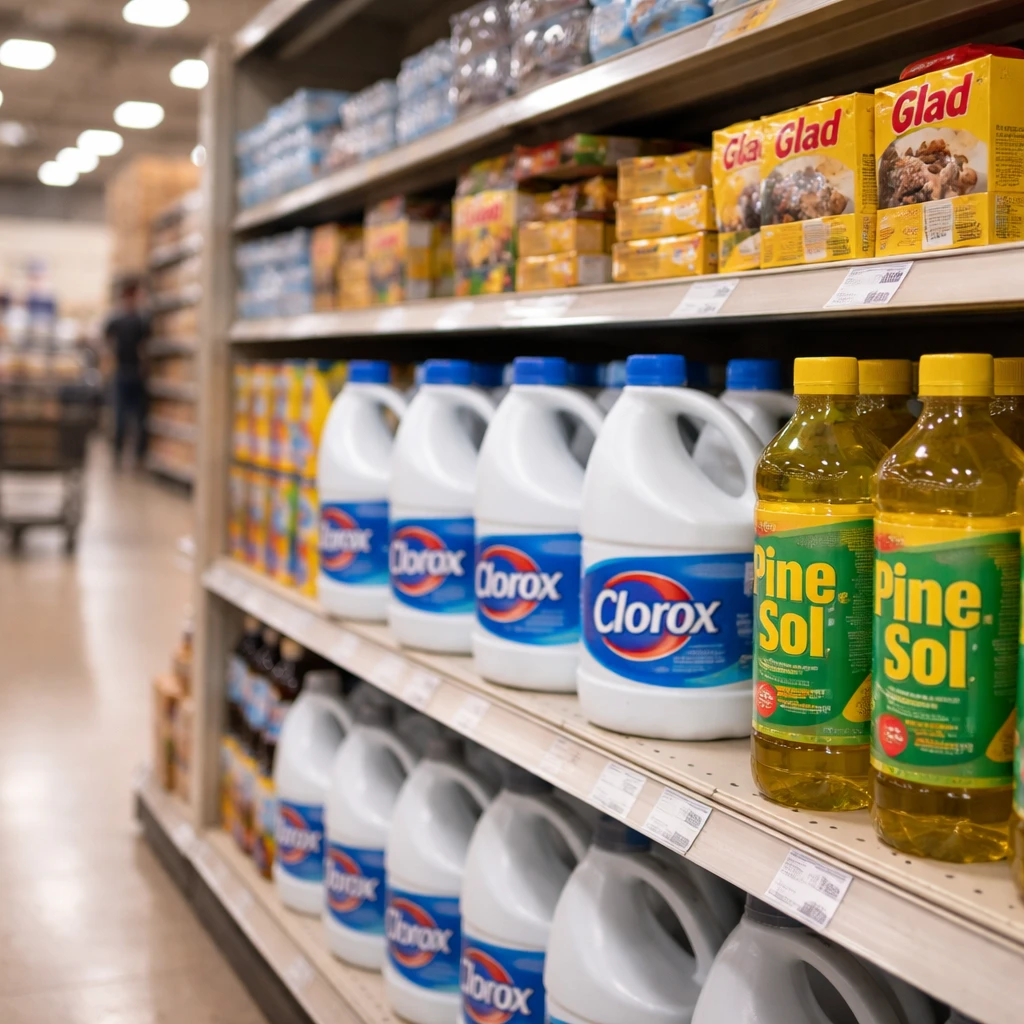
Supporters of the stock point to Clorox’s near-Dividend King pedigree and established consumer brands such as Clorox, Pine-Sol, and Glad, which provide pricing power and brand equity. If product innovation accelerates in the second half and tariff costs are absorbed, cash generation could improve and move closer to covering the dividend.
Conversely, critics highlight the key red flag: a 5% dividend that is not covered by levered free cash flow. Declining revenue, downward earnings revisions, and constrained liquidity heighten the risk that the company might have to pause or reduce the payout if cash flow does not recover. Such an event would likely prompt income-focused investors to reassess their positions.
Assessment
At the current quote of $104.68 and a fair value estimate of $104.34, CLX is priced near perfection on valuation metrics, implying investors are paying primarily for the dividend track record rather than for an imminent business inflection. The most important variable to monitor is free cash flow: a recovery toward $500 million or higher in forthcoming quarters would materially strengthen the case for dividend sustainability. Until then, the divergence between payout and cash generation makes the dividend a watch item rather than a clear-cut opportunity.
Note - All figures and estimates in this analysis are taken from reported metrics and cited analyst targets; no additional assumptions have been introduced.