
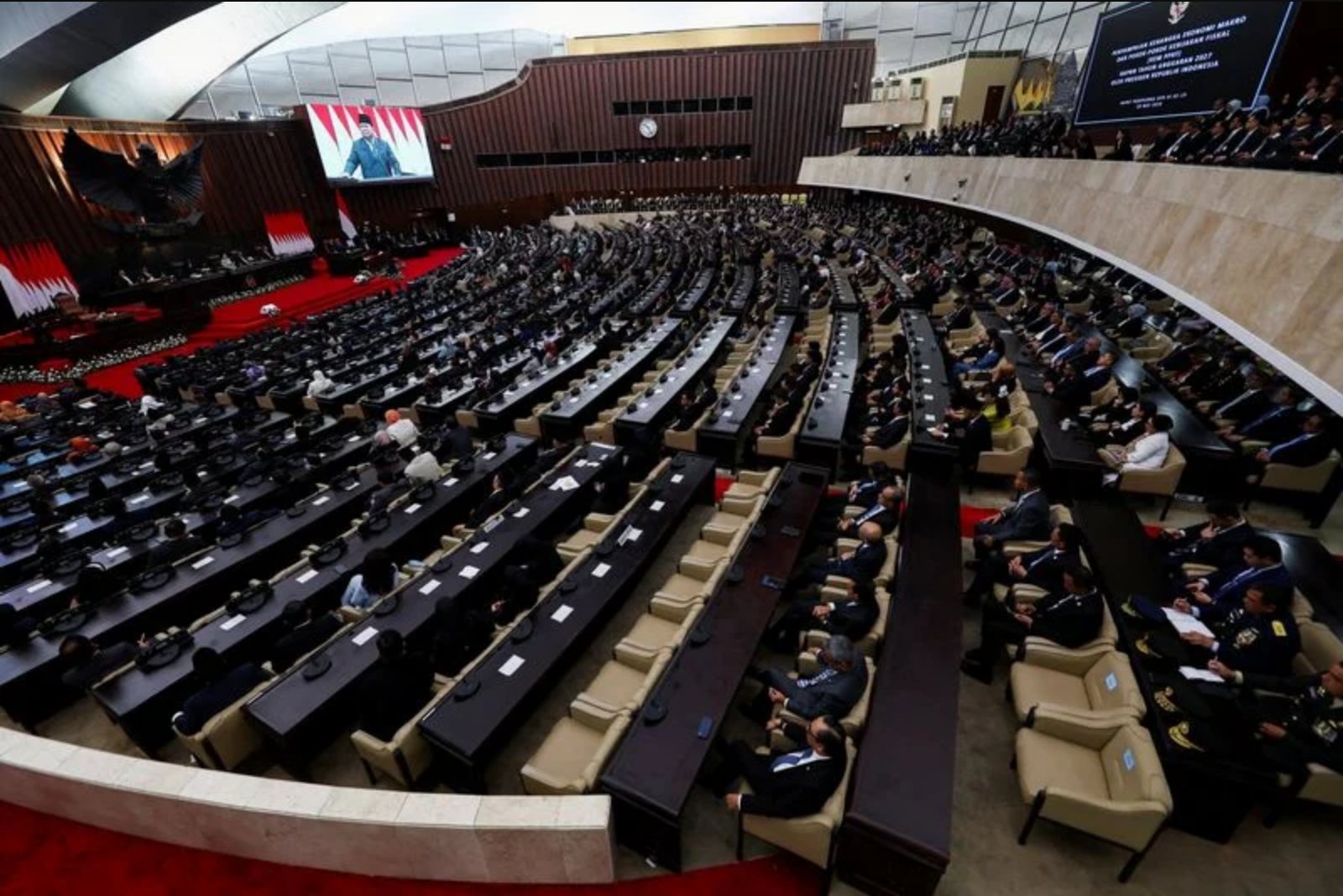
JAKARTA, June 4 - Indonesia’s parliament on Thursday approved extensive legislation that places new weight on Bank Indonesia’s role in supporting economic growth while also expanding the ability of lawmakers to scrutinize independent financial regulators and the central bank.
Deputy speaker Sufmi Dasco Ahmad, who presided over Thursday’s plenary session, said the bill was passed by acclamation with backing from all parties. The full text of the law has not been released publicly.
Investors have expressed heightened concern that the measure could open the door to political interference in the central bank. Those worries have been amplified by President Prabowo Subianto’s commitment to an ambitious growth agenda, including a stated target of 8% economic expansion during his term.
Speaking at a hearing with parliament’s finance commission on Wednesday, Finance Minister Purbaya Yudhi Sadewa said that current legislation would be expanded to require the central bank to implement policies that "that create an economic environment conducive to real sector growth and job creation".
Given the dominant position of Prabowo’s coalition in parliament, passage of the bill was largely a procedural step. The coalition controls more than 80% of the legislature, and the largest party outside the alliance has declared it is not an opposition party.
Market indicators have reflected growing investor caution toward Indonesia. Credit rating agencies Moody’s and Fitch earlier this year downgraded their outlooks on Indonesia to negative from stable, citing declines in policymaking credibility and predictability. The rupiah has weakened by more than 7% against the U.S. dollar so far this year and on Thursday fell to a record low of 18,045 per dollar.
Equity markets have also been affected: the national stock market has plunged by more than 30% year to date, leaving the benchmark index among the weakest performers in emerging Asia. Observers note that promoting sustainable economic growth is already part of Bank Indonesia’s mandate, alongside its responsibilities for price and foreign exchange stability.
The bill’s passage marks a significant shift in the statutory emphasis placed on the central bank, while concurrently formalizing an expanded role for parliament in evaluating regulators. With the legislation not yet public, the precise legal changes and their operational implications for Bank Indonesia will depend on the published text and subsequent implementing measures.
What this means: The law strengthens the central bank’s growth remit and increases parliamentary oversight. It has heightened investor unease about potential political influence on monetary policy at a time when credit outlooks and currency performance have already deteriorated.