
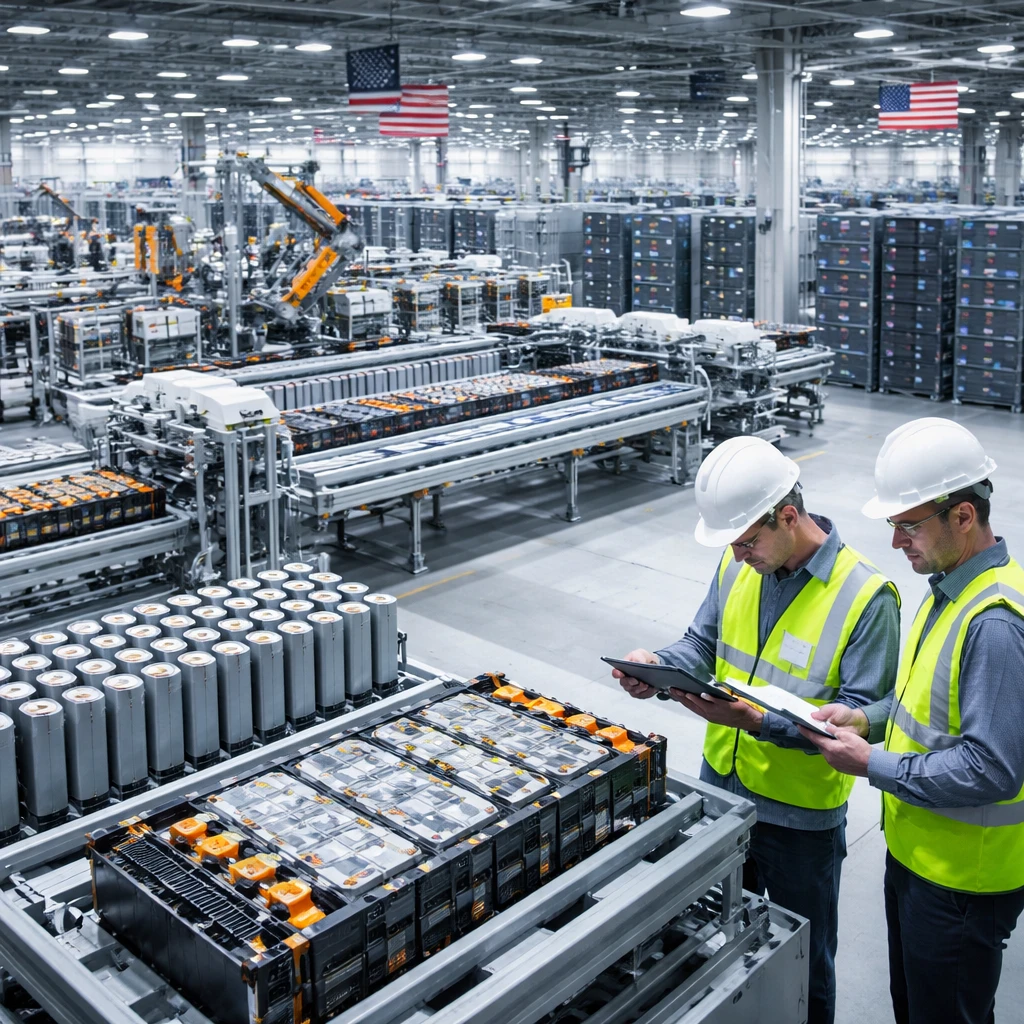
Panasonic is building toward a more localized U.S. supply chain for its energy storage systems as it readies a Kansas facility to produce battery cells, CEO Yuki Kusumi said on Tuesday.
"Since most of our customers are in the U.S. for these energy storage systems, we think it makes sense to complete the supply chain as much as possible within the U.S.," Kusumi said during a roundtable interview in Tokyo.
Earlier this month the company disclosed plans to start mass production of battery cells intended for data center applications at the Kansas plant operated by its energy unit in the financial year ending March 2029. That facility currently manufactures batteries for Tesla.
Industry participants, including automakers and battery makers, are repurposing some battery factories to produce energy storage systems to satisfy growing power needs associated with artificial intelligence workloads, the company said, noting that this shift is occurring as the U.S. electric vehicle market softens.
Kusumi was explicit that Panasonic will not pursue manufacturing lithium iron phosphate, or LFP, chemistry. He said LFP batteries are less appropriate for Panasonic's targeted use case - distributed systems that manage peak power demand at individual servers - and that LFP is better suited to large, centralized backup applications.
The article noted that LFP is commonly used in energy storage systems because it is less costly than the nickel-rich chemistries more frequently employed for electric vehicle batteries in North America.
On supply-chain relations with China, Kusumi stated Panasonic is not encountering difficulties obtaining supplies despite elevated tensions between Beijing and Tokyo. The comment followed a recent action in which China added 20 Japanese companies to a dual-use export control list this week; Panasonic was not among the companies named.
Context and implications
Panasonic's push to localize supply for energy storage systems aligns its manufacturing footprint with customer concentration in the United States. The move comes as the company transitions part of its Kansas plant from existing battery production - including units supplied to Tesla - toward mass-producing cells for data center energy storage by the fiscal year ending March 2029.
By focusing on chemistries other than LFP and emphasizing distributed power management at the server level, Panasonic is positioning its product strategy away from lower-cost, centralized backup solutions typically served by LFP.
While geopolitical frictions have prompted export control actions affecting some Japanese firms, Kusumi said Panasonic is not currently impeded in securing Chinese supplies and was not listed among the 20 companies recently added to China's dual-use controls.