
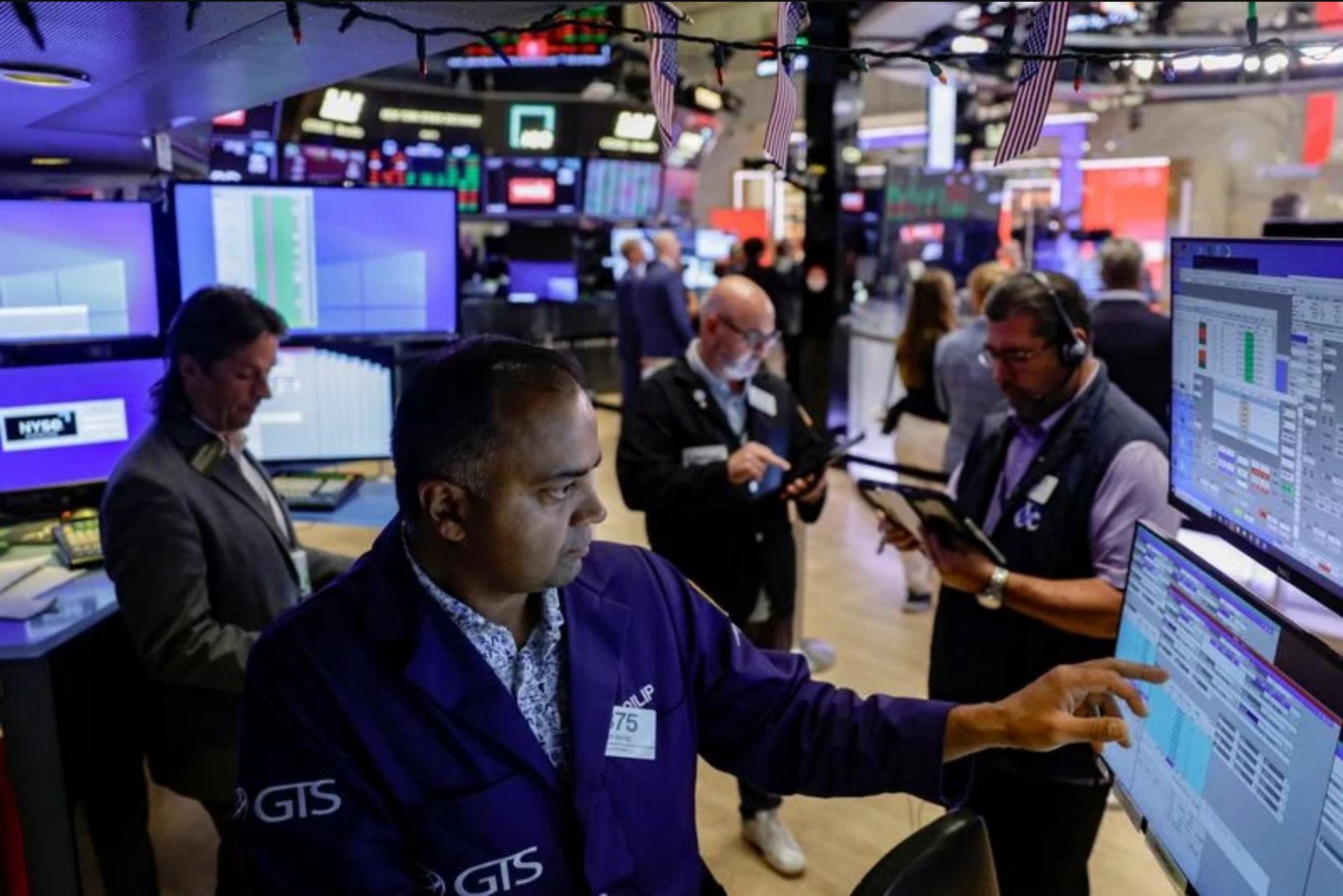
Global markets slid into the typical summer slowdown this week, but an undercurrent of bond market anxiety continued to dictate much of the financial narrative. Relatively benign updates to U.S. consumer and producer price gauges for the month provided temporary relief to Treasury yields and trimmed immediate expectations for an imminent Federal Reserve policy move.
After the two inflation reports landed below the most worrying scenarios, the futures market pared back the probability of a September rate hike to roughly one-in-three - down from what had been close to a coin toss prior to the data. That easing, together with what market participants described as decent demand at roughly $125 billion of new Treasury issuance this week, allowed yields to retrace most of their recent strength. The two-year Treasury yield, a sensitive indicator of near-term rate expectations, fell to its lowest level in about a month.
Debt sales and still-elevated long rates
Despite the week’s calming tone, some strains in the debt market persisted. The Treasury sold new 10-year notes at what amounted to the highest auction yield in 19 years, and 30-year bond auctions printed at levels not seen in roughly a quarter-century. At the same time, mortgage costs remain elevated, with the average 30-year fixed mortgage rate running near 6.7%.
Those auction prints and high mortgage rates emphasize that, while short-term repricing has moved in Treasury’s favor this week, borrowing costs for longer durations and household mortgage burdens are still historically strained. That divergence leaves the macro backdrop vulnerable to further moves should data or events change the market’s calculus.
Energy prices, maritime flows and inflation persistence
Energy costs, a major component of headline inflation dynamics, did not recede as some had hoped. Brent crude probed the $90-per-barrel level this week, and average U.S. retail gasoline prices remained above $4 per gallon. The enduring strength in oil comes amid continuing conflict-related disruptions: Iran continues to assert control over the Strait of Hormuz, sporadic attacks have continued in the Gulf and Red Sea, and the United States said it could sustain a blockade on Iranian ports indefinitely.
Notably, transits through Hormuz fell this week and indicators suggest less crude may be exiting the Gulf than official tallies imply. If energy was the only source of inflationary pressure, investors might be tempted to dismiss it as a near-term spike. But the Federal Reserve targets the personal consumption expenditures measure, and the mapping of recent price data into that series shows persistence.
The Cleveland Fed's so-called inflation "nowcaster" places PCE inflation at about 3.7% for both July and August, with core PCE at roughly 3.3%. Those readings are well above the Fed's 2% objective and, as noted this year, both measures have been north of 3% through the year to date. That persistence complicates the policy outlook - even where monthly consumer and producer prints appear to be moving in a more favorable direction.
Policy tensions: doves, hawks and political noise
Within the Fed, the debate over the right policy stance remains vivid. Softer price data give dovish officials reasons to hope that tariff-related goods price increases will soon roll out of inflation measures, that subsequent downward revisions to PCE figures could materialize, that the labor market will soften and that productivity gains from AI could alleviate price pressures.
At the same time, officials on the hawkish side point to still-loose financial conditions, rising corporate leverage, localized product tightness in technology sectors, a falling unemployment rate and concerns about the Fed's credibility in returning inflation to target. Those concerns were voiced publicly: the Cleveland Fed president, who voted to raise rates at the last meeting, argued the Fed must act to achieve its target and questioned whether a three- to four-year timeline to reach the 2% goal would be acceptable. Another senior regional Fed official indicated she would be ready to support a move sooner rather than later.
Complicating the central bank's internal debate is a political episode that injected additional strain. Near the end of last week, the president sent a letter to a Fed governor demanding she clear her name over disputed mortgage fraud allegations or face dismissal. That demand came after a Supreme Court decision in June establishing that a president could not remove a Fed governor without evidence of wrongdoing, but the timing of the correspondence has been widely interpreted as intensifying pressure on the central bank and increasing concerns about its institutional independence.
International considerations: Japan and central bank interplay
Another factor shadowing U.S. debt markets is a potential change in Japanese policy posture. There were reports during the week that the Bank of Japan may raise rates next month and potentially quicken the pace of tightening thereafter. If Tokyo instead pursues extensive yen-support operations that require selling foreign assets, that could imply additional supply pressures in U.S. Treasuries.
This thread quieted somewhat after recent coordinated action between Washington and Tokyo to stabilize the yen, but pressure remains for Japanese authorities to follow up with domestic policy moves. The interaction between Japanese currency and bond strategies and U.S. debt markets remains an important consideration for global fixed-income investors.
Equities: AI earnings, record highs and IPO speculation
Risk assets, by contrast, enjoyed a firmer tone. U.S. equity benchmarks recaptured record highs this week as aggregate second-quarter earnings growth for S&P 500 companies topped 50% year-on-year and reached 23% in Europe. As in prior quarters, firms at the core of the AI ecosystem were among the most notable outperformers.
Shares of both CoreWeave and Super Micro Computer jumped roughly 20% the day after each reported earnings that underscored the scale of corporate investment into AI infrastructure. With major indexes in strong form and volatility subdued, speculation about pending AI-related public listings intensified.
One of the more dramatic market narratives involved private AI companies and their potential valuations. Investors backing one such AI firm are reportedly pressing for an initial public offering in October with hopes of achieving a valuation as high as $2 trillion. If such a valuation were to materialize, it would eclipse the market value of some recently listed technology names and draw significant attention to the size of investor appetite for AI exposure.
Global growth and sectoral shifts
Outside the United States, Britain offered an unexpectedly bright data point with a stronger-than-expected GDP print for June. Quarterly figures showed Britain recorded the fastest growth among G7 economies for a second straight quarter this year, with the Office for National Statistics reporting annualized growth of 2% through the first half. The information and communications sector alone contributed nearly half of the 0.4% gain in the second quarter, highlighting the international reach of the technology and AI investment cycle.
What markets will watch next
Absent fresh developments in the Gulf, the coming days are likely to see markets drift further into the summer lull. High-profile calendar points - including the Federal Reserve’s annual Jackson Hole symposium and major corporate earnings such as Nvidia’s - are not due until the following week. Until those events arrive, investors will scrutinize the minutes of the Fed’s most recent split decision meeting and a slate of U.S. economic releases covering industry output, business surveys, housing indicators, Chinese macro prints and European inflation data.
Markets will be measuring each new datapoint against persistent PCE-based inflation readings, the stability of Treasury demand at upcoming auctions, any changes in energy and shipping flows through key chokepoints and developments in central bank policy abroad that could spill back into U.S. borrowing costs.
In short, this week provided a pause in bond market nervousness, but it was only that - a pause. Elevated long-term borrowing rates at auctions, oil prices buoyed by Gulf tensions, PCE measures that remain above the Fed's target, and political interference in central bank affairs ensure policy uncertainty and market vulnerability remain part of the landscape.