
Oil strengthened on Tuesday as market optimism about a near-term U.S.-Iran peace agreement cooled following new U.S. military strikes in the Middle East. The strikes, carried out on Monday in southern Iran against targets that U.S. forces said included vessels attempting to lay mines and missile launch sites, were described by U.S. officials as defensive actions.
At the same time, talks continued in Doha where Iran’s top negotiator and its foreign minister were meeting with Qatar’s prime minister to discuss a potential deal with the United States to end the conflict, according to an official briefed on the visit. Both Washington and Tehran had previously downplayed hopes for an imminent breakthrough.
Brent futures climbed by more than 1% in early Asian trade to $97.32 a barrel, reflecting the renewed supply-risk premium attached to the region. U.S. West Texas Intermediate crude was slightly higher than Monday’s last traded price but remained 5.5% below Friday’s close. There was no settlement on Monday because of the U.S. Memorial Day holiday.
"I’m a bit sceptical... We keep being told there’s a deal that’s near, but what does the deal look like? That’s what’s really important. When’s the Strait of Hormuz going to open... There’s a lot we don’t know," said Joseph Capurso, a strategist at Commonwealth Bank of Australia.
Reports quoted by a Japanese newspaper suggested both parties were discussing a plan to reopen the Strait of Hormuz about 30 days after a deal to end hostilities is reached. Even so, the timing and mechanics of any agreement remained unclear as the discussions proceeded.
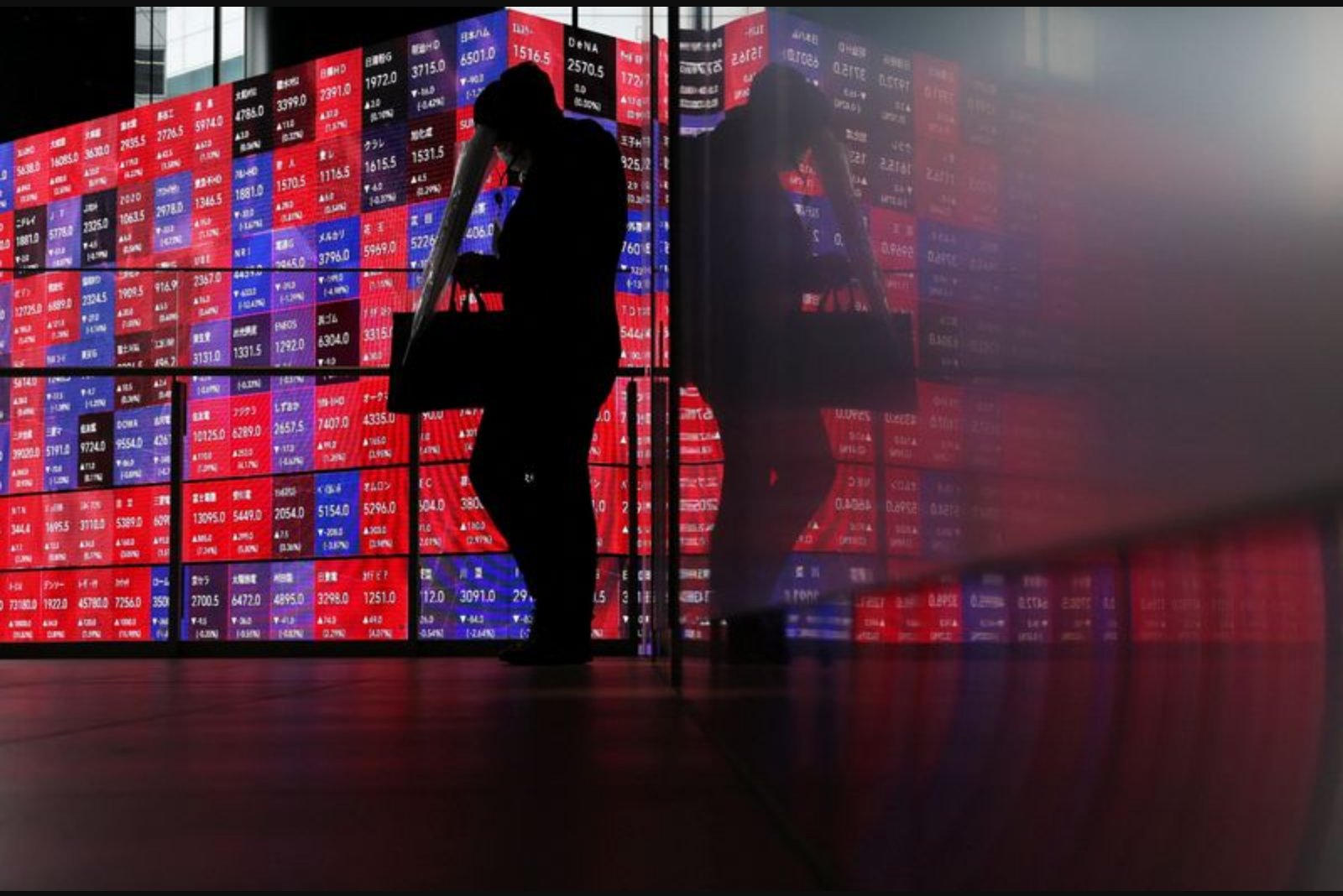
Stock markets showed a mixed response to the shifting geopolitical picture. MSCI’s broadest index of Asia-Pacific shares outside Japan advanced 0.8%, while Japan’s Nikkei slipped 0.2%. In U.S. futures trade, Nasdaq futures were trading about 0.9% higher after trimming earlier gains, and S&P 500 futures were up 0.68%.
European futures movements were varied: EUROSTOXX 50 futures eased 0.36%, FTSE futures added 0.4%, and DAX futures lost 0.43%.
"The market wants to believe that it’s all going to end soon, because the war not ending is quite bad for the world economy. The world economy’s had these buffers of running down inventories, but you can’t keep running down inventories," Capurso added, highlighting economic vulnerability if hostilities continue.
In currencies, the U.S. dollar steadied on renewed safe-haven demand but remained below last week’s six-week peak. The euro fell to $1.1636, while sterling eased to $1.3498. The dollar was flat against the yen at 158.95.
Bond markets were largely steady after last week’s rout, which had been driven by concerns that higher energy prices for longer could reinvigorate inflation and prompt further rate hikes across developed and emerging markets. The yield on the two-year U.S. Treasury note was little changed at 4.0612%, while the 10-year yield moved down to 4.5024%.
"We are likely to see periodic yield retracements on occasions when geopolitical risks subside, but inflation and fiscal risks are likely to be more sustained," said Eric Robertsen, Standard Chartered’s head of global research and chief strategist. "Commodity supply dislocations will take months to resolve, and fiscal support measures are likely to drive a sustained deterioration in sovereign balance sheets - which will also require increased borrowing in an environment of higher funding costs."
On the commodities front, spot gold eased 0.5% to $4,545.90 an ounce.
The market reaction highlighted a careful balancing act: traders and investors were pricing in the possibility of an eventual de-escalation, but near-term military activity and the uncertain contours of any deal kept a risk premium in place for energy and affected investor appetite across equities, currencies, and fixed income.
Trading volumes and positioning are likely to remain sensitive to updates from Doha and any further military actions in the region. For now, the market appears to be waiting for more concrete details about the composition and timeline of any U.S.-Iran agreement before committing to a sustained directional move.