
Observable Space said it has closed a $90 million Series A financing round and won a $94 million Indefinite Delivery, Indefinite Quantity award from the U.S. Space Force. Lux Capital led the financing, with co-leads Upfront Ventures, Detroit Venture Partners, Island Green Capital, and RTX Ventures. Additional participation came from BRV Capital, Fathom Fund and Venrex.
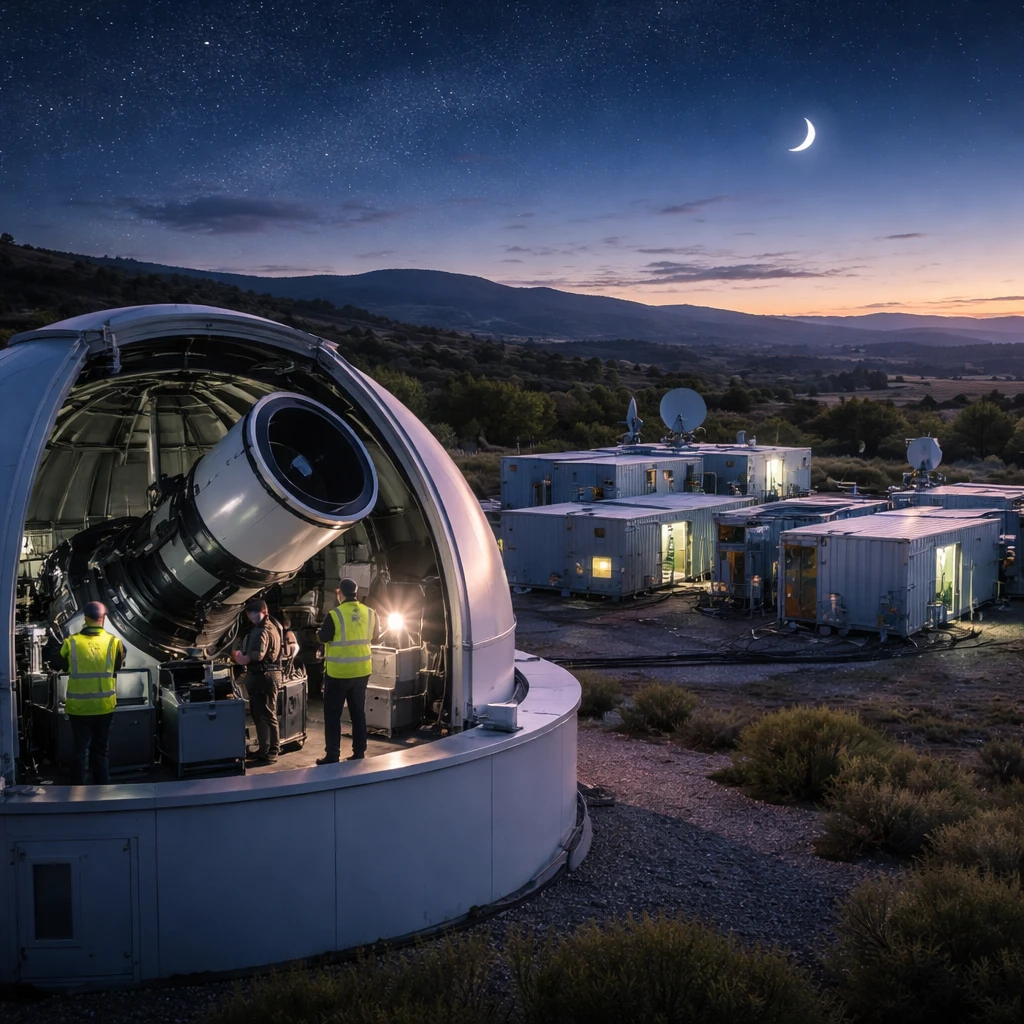
The Space Force award is associated with the Department of War’s Accelerate the Procurement and Fielding of Innovative Technologies program and is aimed at enhancing Space Domain Awareness through expeditionary, off-grid optical ground sensing stations. Under the IDIQ, Observable Space received $22 million in initial task orders intended to scale distributed optical infrastructure for national security. The company said its Advanced Telescope Optics Mobility System uses American-made commercial platforms to augment existing government Space Domain Awareness systems.
Observable Space manufactures high-throughput laser communications ground stations, ground-based optical sensing systems, and in-space optical payloads at facilities located in Detroit and Los Angeles. The company plans to launch its first in-space imaging payload this year: a 200mm, 3-aperture multi-spectral imager called Iguana. Observable Space describes the Iguana system as having an 8-week lead time and being designed for on-orbit space domain awareness as well as rendezvous and proximity operations.
On the sensing and operations side, Observable Space operates a globally distributed observation network of more than 40 ground sites. That network tracks targets across low Earth orbit, medium Earth orbit, geostationary orbit, cis-lunar orbits, and further afield. According to the company, its platform has executed 2.6 million automated tasks, identified over 20 million targets, and completed 84,000 hours of continuous orbital monitoring since the platform’s inception.
The company said it will deploy additional 1 to 1.8 meter class telescopes globally this year to improve its resolved imagery capabilities. Observable Space is also expanding its manufacturing presence in Michigan and entering European markets through a partnership with Baader Planetarium.
Alongside its government and commercial sensing efforts, Observable Space has introduced new consumer telescope models. The Delta Rho 280 and FSCT8 are being marketed toward advanced amateur astronomers, educational institutions, and research users.
Observable Space will appear at Detroit’s Reindustrialize Summit in June, participating alongside the Space Force and Detroit Venture Partners.
Funding and contract details
- Series A: $90 million, led by Lux Capital with multiple co-leads and participants.
- Space Force award: $94 million IDIQ under the Department of War’s Accelerate the Procurement and Fielding of Innovative Technologies program.
- Initial task orders: $22 million allocated to scale distributed optical infrastructure for national security.
Product, operations and expansion
- Manufacturing and operations in Detroit and Los Angeles producing ground stations, sensing systems, and in-space payloads.
- First in-space imaging payload, Iguana: a 200mm, 3-aperture multi-spectral imager with an 8-week lead time planned for launch this year.
- Over 40 ground sites in a global observation network; platform metrics include 2.6 million automated tasks, more than 20 million targets identified, and 84,000 hours of continuous orbital monitoring.
- Planned deployment this year of additional 1 to 1.8 meter class telescopes to enhance resolved imagery capabilities.
- Manufacturing expansion in Michigan and European market entry via a Baader Planetarium partnership.
- New consumer telescopes: Delta Rho 280 and FSCT8, aimed at advanced amateurs, educational and research users.
Context and implications
The financing and the IDIQ award together provide Observable Space with capital for product and infrastructure scaling while tying the company to a government procurement program focused on augmenting Space Domain Awareness capabilities. Observable Space’s combination of ground systems, in-space payloads, and a distributed observation network positions it as a provider across both commercial and national security use cases.