
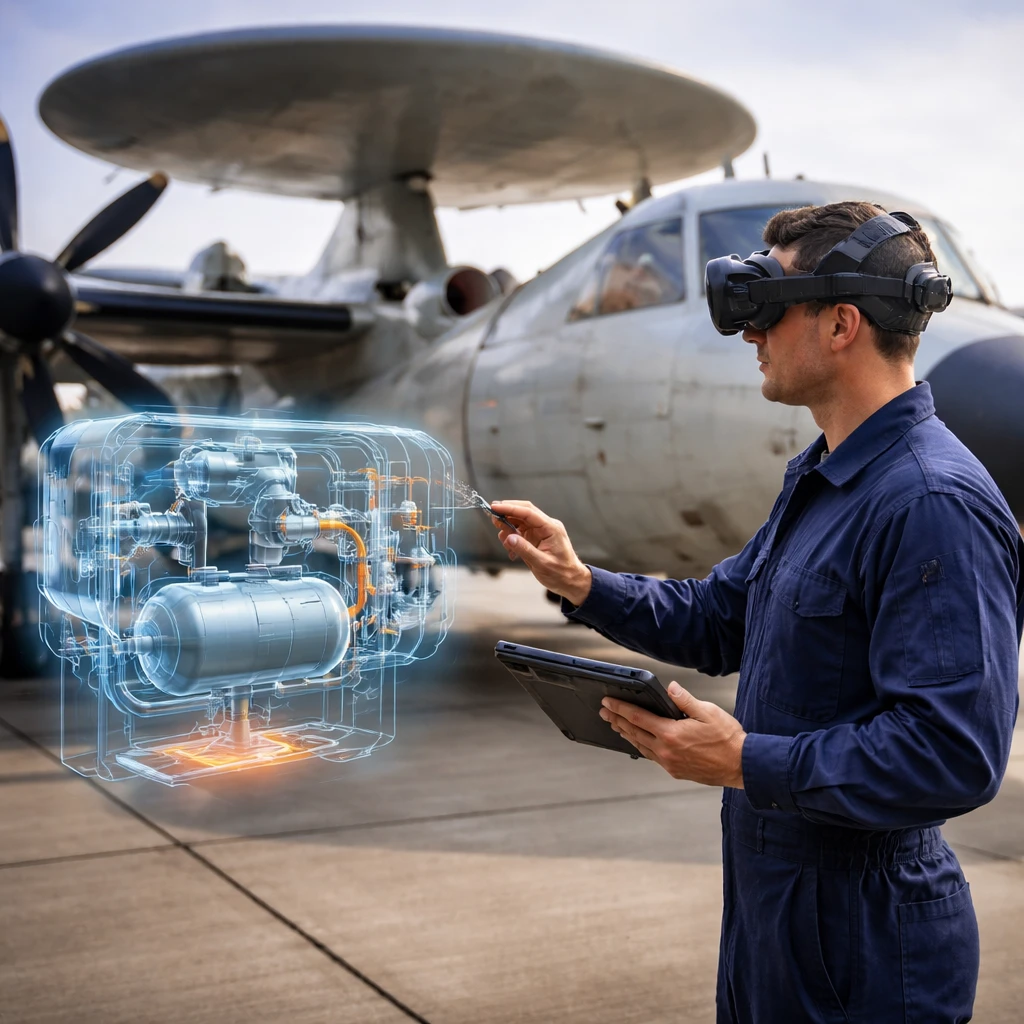
Northrop Grumman Corporation is expanding the use of mixed reality and machine learning to support maintainers working on the E-2D Advanced Hawkeye, the carrier-based airborne command platform that relies on a 360-degree radar to provide situational awareness for joint and coalition operations.
The company developed an augmented reality application named Armor that integrates AR with predictive and fleet analytics to present animated, step-by-step visual instructions to maintainers. These instructions can be delivered on tablets or through AR goggles, enabling technicians to virtually inspect the aircraft interior and pinpoint likely problem areas.
"Armor can reduce training and labor time, keeping the aircraft operational in hours instead of weeks," said Kenney Crooks, Northrop Grumman fellow, product support.
In parallel, Northrop Grumman is using virtual reality training that places maintenance personnel inside a 360-degree digital replica of the aircraft. The VR scenarios let trainees manipulate components that are otherwise difficult to reach or expensive to move for hands-on practice. The company reports that early results from VR training show improved task performance and repair-time reductions of up to 75%, with trainees reporting higher confidence after completing simulated maintenance exercises.
Complementing AR and VR is a machine learning tool called the Learning Intelligence Tools Ecosystem, or LITE. Developed by engineering teams in Melbourne, Florida and a data analytics group in Redondo Beach, California, LITE is designed to help maintainers diagnose root causes of failures. According to Northrop Grumman, LITE cut maintenance rework for the radar pressurization and cooling system by 67%, saving weeks that would otherwise be spent on testing.
Beyond the E-2D program, the company reports deploying more than 1,000 AR solutions across its portfolio. Those deployments support visual work instructions and facility layout planning and extend sustainment advances made for the E-2D to other platforms, including the F-35 Lightning II and the B-2 Spirit.
Key Points
- Armor uses AR plus predictive and fleet analytics to guide maintainers with animated, visual instructions delivered via tablet or AR goggles.
- VR training provides immersive, 360-degree scenarios that improve task performance and can reduce repair times by up to 75%.
- LITE, a machine learning tool from teams in Melbourne, Florida and Redondo Beach, California, reduced rework in the radar pressurization and cooling system by 67%, saving weeks of testing.
Risks and Uncertainties
- The article reports early VR results and company-provided metrics; outcomes may vary across different maintenance tasks and platforms - affecting defense sustainment and aerospace operations.
- Implementation scale and integration across programs could present logistical or adoption challenges not detailed in the report - relevant to defense contractors and military logistics planners.