
Stock Markets May 28, 2026 05:09 PM

Nikon Seeks Market Share in Lithography by Competing on Price Against ASML

New CEO says lower-priced systems can still be profitable as Nikon looks to broaden customer base beyond major chip orders

By Hana Yamamoto ASML

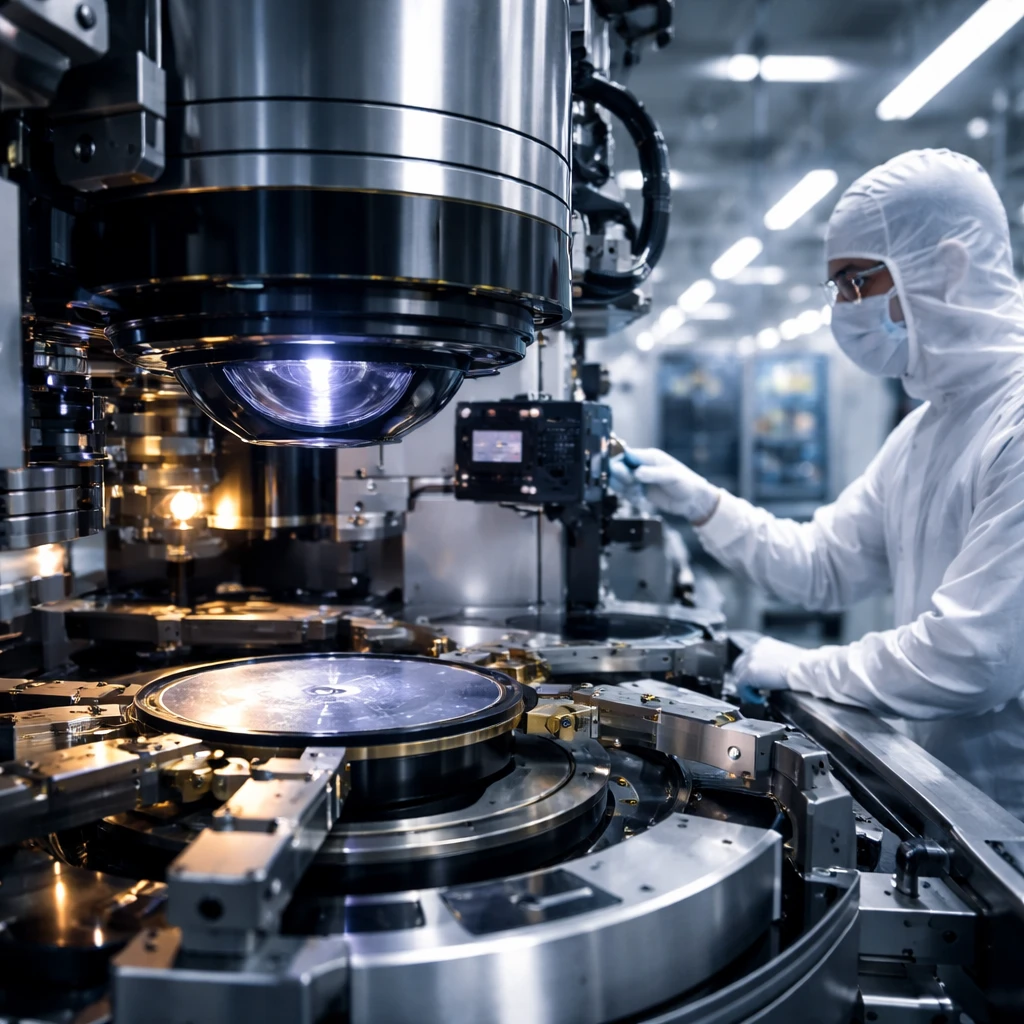
Nikon's new president, Yasuhiro Ohmura, signaled an effort to regain ground in semiconductor photolithography by offering equipment at lower prices than market leader ASML, which controls more than 80% of the market. Nikon plans to reduce dependence on large customers such as Intel while continuing development of systems for non-ultra-fine geometries.

Nikon Seeks Market Share in Lithography by Competing on Price Against ASML
ASML

Key Points

  • Nikon's CEO Yasuhiro Ohmura says the company will offer lithography equipment at lower prices than ASML while still targeting profitability - sectors impacted: semiconductor equipment, capital goods.
  • Nikon intends to diversify away from dependence on large customers like Intel - sectors impacted: semiconductor manufacturing, corporate supply chains.
  • Nikon retains strength in non-ultra-fine geometry markets, including image sensors and power semiconductors, using KrF lasers and i-line technology - sectors impacted: consumer electronics, automotive, power devices.

Nikon is repositioning its semiconductor lithography business by targeting ASML on price, the Japanese optics and imaging company said through remarks made by its new president and CEO, Yasuhiro Ohmura, to Nikkei News. The company aims to offer lower-cost photolithography tools while maintaining profitability in the segment.

Ohmura told Nikkei that even when systems are priced below ASML's levels, there remains meaningful profit to be earned in lithography equipment. Nikon also indicated a strategic intent to reduce reliance on large, concentrated orders from customers such as Intel and to diversify its revenue base.

Nikon has a long history in photolithography. The firm entered the market in the 1960s and by the 1980s was a global leader, during a period when Japanese companies collectively held about 70% of the worldwide lithography market. In 1982 Nikon expanded its international footprint by establishing Nikon Precision Inc. in Silicon Valley.

Market dynamics shifted in the 1990s with the rise of ASML. The Dutch company gained a dominant position by developing collaborative global supply chains, a departure from Nikon's more vertically integrated manufacturing model. ASML later advanced extreme ultraviolet, or EUV, technology more quickly than Nikon.

Despite those shifts, Nikon retains strength in areas outside the most advanced node technologies. The company continues to develop equipment aimed at high-resolution packaging and holds a solid share in segments that do not require ultra-fine geometries. Nikon's offerings in these product areas include systems using KrF lasers and i-line technology, which remain relevant for image sensors and power semiconductors.

The company’s stated approach combines lower pricing with targeted product development, positioning Nikon to compete where advanced EUV capability is not the primary requirement. Management’s comments indicate a dual focus on preserving margins while broadening customer relationships beyond a small set of large buyers.


Contextual note - ASML currently controls more than 80% of the lithography market, a position Nikon is explicitly aiming to challenge by competing on cost and focusing on specific segments of semiconductor production.

Risks

  • ASML's existing market dominance - ASML holds more than 80% of the lithography market, which may limit Nikon's ability to regain market share - impacts semiconductor equipment and capital goods sectors.
  • Nikon's slower adoption of EUV technology in the past may constrain competition in the most advanced node segments - impacts advanced semiconductor manufacturing.
  • Reliance on shifting customer relationships introduces revenue uncertainty as Nikon seeks to reduce dependence on major orders such as those from Intel - impacts company revenue stability and semiconductor supply chains.

More from Stock Markets

S&P Global Upholds Fast-Entry Rules Ahead of SpaceX Public Debut Jun 4, 2026 Insperity Shares Climb After CEO Buys 233,000 Shares Jun 4, 2026 SpaceX Signals Firmness on $135 IPO Price as Roadshow Begins Jun 4, 2026 CME Chief Warns CFTC Approval of Perpetual Crypto Futures Could Create Systemic Risk Jun 4, 2026 AmperCap Raises $125 Million in NASDAQ Listing as It Targets U.S.-Mexico Middle-Market Deals Jun 4, 2026