
Stock Markets June 6, 2026 11:19 AM

Musk to Address ASML Staff Virtually on Terafab Ambitions

SpaceX-Tesla chip venture to be the focus as ASML invited Musk to present on AI, robotics and next-generation semiconductor production

By Maya Rios
Share
Twitter Reddit Facebook LinkedIn
ASML TSLA TSM SPCX

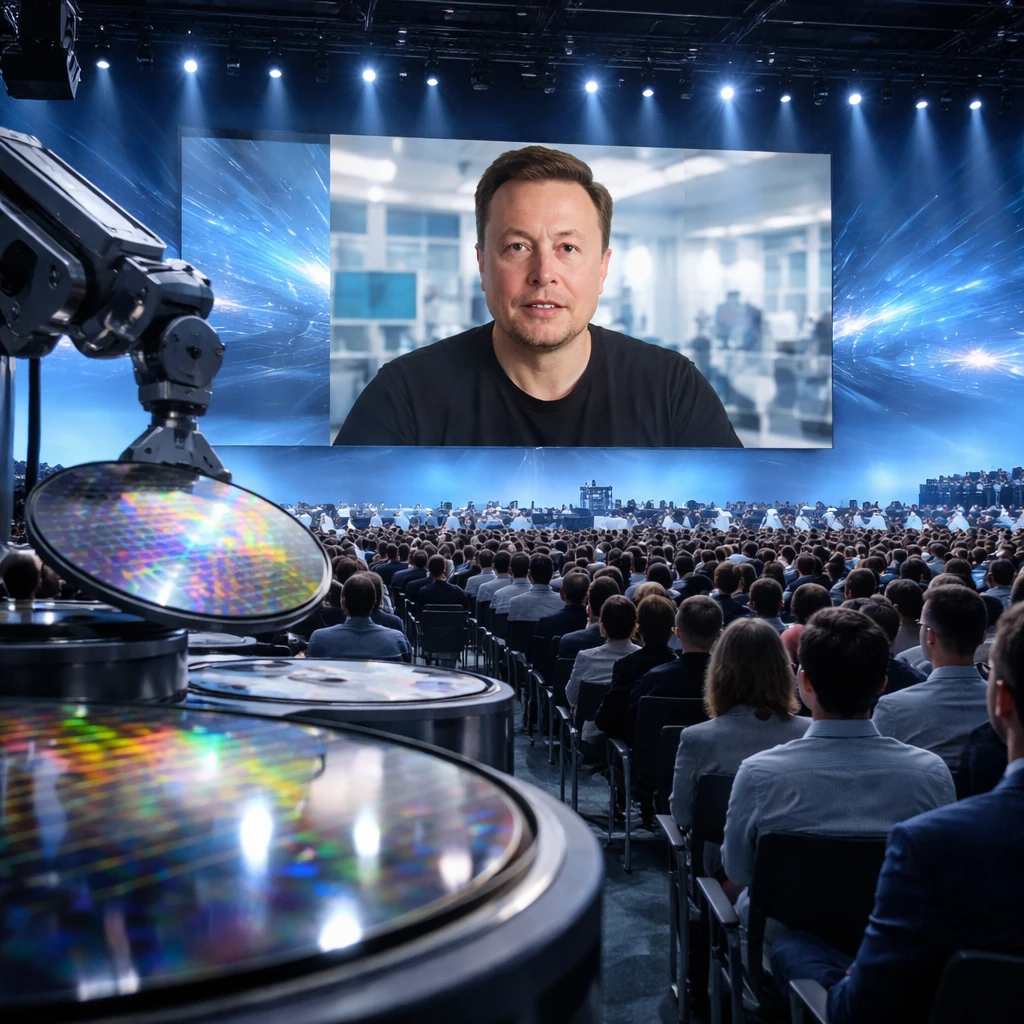
Elon Musk will speak remotely at a private ASML technology conference to outline Terafab, the SpaceX-Tesla chip venture that plans a U.S. factory with an estimated minimum cost of $55 billion. ASML invited him to discuss the project’s goals, including producing 2-nanometer chips and supporting a terawatt of computing power per year, and to explain how the wider semiconductor ecosystem would participate.

Musk to Address ASML Staff Virtually on Terafab Ambitions
ASML TSLA TSM SPCX
Summarize with
ChatGPT Perplexity Claude Grok Gemini

Key Points

  • Elon Musk will appear virtually at a private ASML technology conference to present Terafab to ASML employees.
  • Terafab is a SpaceX-Tesla joint venture planning a U.S. chip factory with an estimated cost of at least $55 billion, aiming to produce 2-nanometer chips and support a terawatt of computing power per year.
  • ASML, the sole producer of the most advanced lithography machines, is positioned as a collaborator in the venture and supplies major foundries such as TSMC and Samsung; the firm has seen increased value amid rising AI-related demand.

Elon Musk is scheduled to appear virtually at a closed ASML employee technology conference to discuss Terafab, the joint chip-making venture between SpaceX and Tesla, according to reporting cited by the company. ASML extended the invitation to provide employees with a direct briefing on the project and Musk’s broader vision for semiconductors tied to artificial intelligence, robotics and space-based data centers.

Terafab, unveiled in March, is billed by its founders as a large-scale effort to produce cutting-edge chips. The venture has announced plans for a U.S. factory with a price tag of at least $55 billion. At the ASML event Musk will describe the initiative’s objectives across several technology areas and discuss the intersection of AI, robotics, space applications and semiconductor manufacturing, a company spokesperson said.

One stated technical aim for the proposed facility is the production of 2-nanometer chips, placing the project at the leading edge of current fabrication capabilities. Musk has set a long-term target for the program to back computing capacity on the order of a terawatt per year, according to the information released by the company.

ASML occupies a distinct position in the semiconductor supply chain as the sole manufacturer of the most advanced photolithography equipment required to fabricate the chips used in demanding AI workloads. The firm supplies major foundries, including Taiwan Semiconductor Manufacturing Co. and Samsung Electronics, and has seen values rise as demand for the company’s machines is driven by increased spending on AI.

Through Terafab, Musk’s team aims to compete with established foundry leaders and to scale production beyond the prevailing industry volumes. ASML’s spokesperson said the venture has already started to integrate into the broader semiconductor ecosystem and that multiple companies, ASML included, will collaborate on the program.

The invitation for Musk to address ASML staff is framed as an internal, closed session focused on explaining the Terafab concept and its technical and strategic ambitions. The public details that have been disclosed include the joint ownership by SpaceX and Tesla, the planned U.S. factory costing at least $55 billion, the 2-nanometer target for the chips and the terawatt-per-year computing goal.


Market snippets: Trading references in the reporting included price-change indicators alongside the involved firms, reflecting market movements concurrent with the coverage.

Risks

  • Execution and scale risk for a factory with an estimated minimum cost of $55 billion - impacts capital-intensive sectors including semiconductor manufacturing and equipment suppliers.
  • Uncertainty about achieving targeted production technology and capacity (2-nanometer chips and a terawatt-per-year computing goal) - affects foundries, chip designers and AI infrastructure providers.
  • Reliance on coordination across multiple industry players, including ASML and other suppliers - introduces supply-chain and collaboration risks for the broader semiconductor ecosystem.

More from Stock Markets

Analyst Moves This Week: Value Plays, Activist Triggers and Tech-Driven Upside Jun 7, 2026 Morgan Stanley Identifies Four Emerging Revenue Streams That Could Reframe Meta’s AI Investment Case Jun 6, 2026 Frasers Group Weighs £500m Offer for Metrocentre as Property Buying Spree Continues Jun 6, 2026 FDA Grants Orphan Drug Status to Merck’s Pembrolizumab for Neuroendocrine Prostate Cancer Jun 6, 2026 Finnair Weighs Starlink and Amazon's Leo for Cabin Connectivity Upgrade Jun 6, 2026