
Stock Markets May 29, 2026 09:09 AM

Mixed April Output from Japanese Automakers Yields Modest Year-on-Year Gain

Global vehicle production edges up 1% as domestic output rises but overseas volumes slip; parts sector viewed as neutral by Morgan Stanley

By Ajmal Hussain

Japanese automakers produced 1.96 million vehicles worldwide in April 2026, a 1% increase from April 2025, driven by an 8% rise in domestic output to 651,000 units while overseas production fell 2% to 1.31 million. Morgan Stanley characterizes the implications for auto parts suppliers as neutral, noting current resilience in domestic supplier earnings despite sharp declines in Middle East exports and flagging risks from potential logistics interruptions affecting naphtha-based resin supplies.

Mixed April Output from Japanese Automakers Yields Modest Year-on-Year Gain

Key Points

  • Total global vehicle production by Japanese manufacturers in April 2026 was 1.96 million units, up 1% year-on-year; domestic output rose 8% to 651,000 while overseas production fell 2% to 1.31 million.
  • Morgan Stanley views the impact on the auto parts industry as neutral, observing that domestic supplier earnings remain firm despite a sharp drop in exports to the Middle East.
  • Individual automaker results were mixed: Toyota +2%, Honda -1%, Nissan -5%, SUBARU -9%, Suzuki +11%, Mazda +4%, Mitsubishi Motors +1% - highlighting divergent regional and model-level dynamics that affect suppliers and manufacturing services.

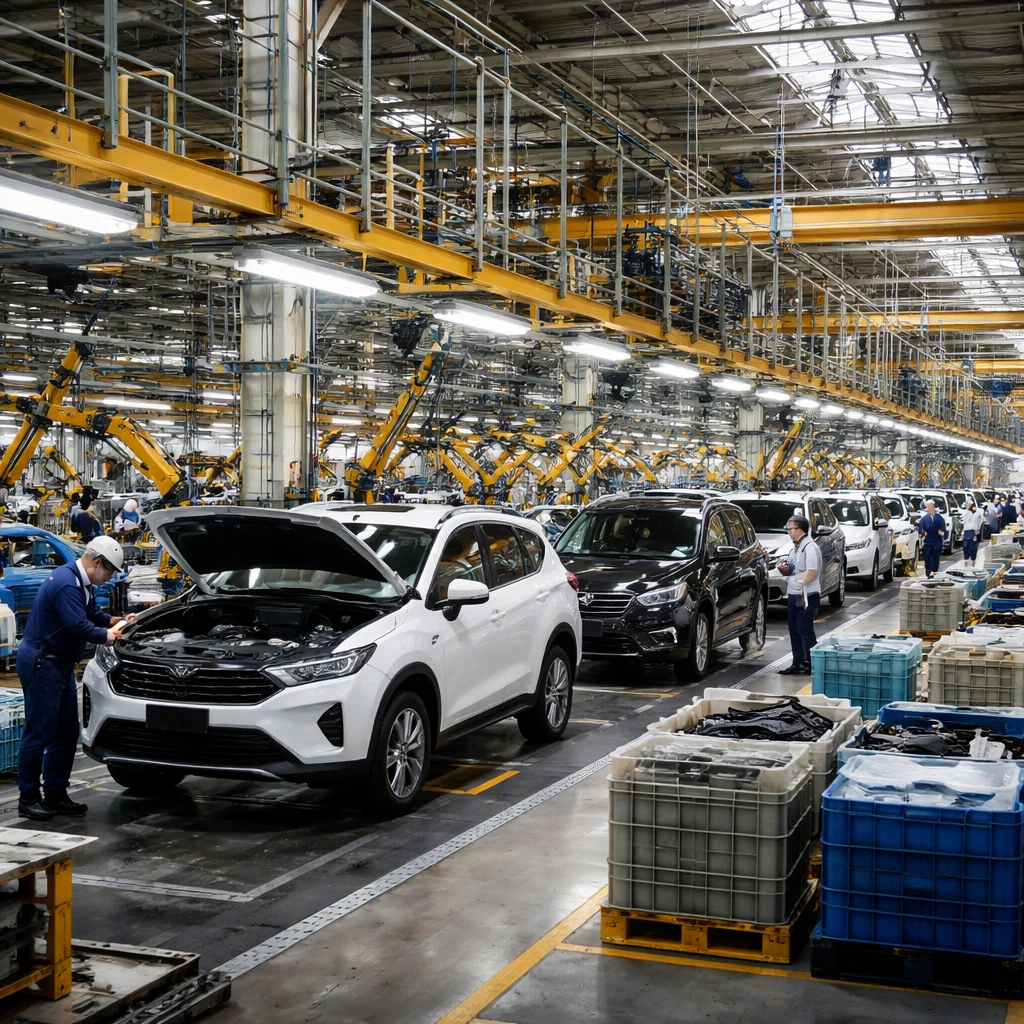
Japanese carmakers turned out 1.96 million vehicles globally in April 2026, representing a 1% increase from the same month a year earlier, according to analysis by Morgan Stanley.

Production inside Japan rose to 651,000 units, an 8% year-on-year gain. By contrast, production at facilities outside Japan declined to 1.31 million vehicles, a 2% drop versus April 2025.

Morgan Stanley framed the short-term implications for the auto parts sector as neutral. The firm highlighted that although exports to the Middle East contracted sharply, those declines have so far had a limited effect on Japanese domestic production volumes. Earnings for parts suppliers operating in Japan remain broadly intact at present, the analysis said.

That said, the bank flagged potential vulnerabilities. It noted that a logistics disruption that impeded deliveries of naphtha-based resin materials could constrain automobile production, a development that would have downstream consequences for parts manufacturers and related supply-chain services.

Performance varied across individual automakers in April. Toyota recorded a 2% increase in global production year-on-year. Honda's output fell 1%, Nissan's dropped 5% and SUBARU's production fell 9%. Suzuki posted the strongest gain among the named manufacturers with an 11% rise. Mazda's production increased 4%, and Mitsubishi Motors saw a 1% uptick.

Separate data in the Morgan Stanley note pointed to meaningful declines in Chinese production at both Honda and Nissan, with both experiencing double-digit falls. The firm suggested this raises the possibility that parts suppliers' Chinese operations may need to consider further measures, including fixed-cost reductions, if the trend persists.

Overall, Morgan Stanley's read is that the current mix of domestic resilience and overseas softness produces a neutral near-term outlook for parts suppliers, while calling attention to supply-chain sensitivities tied to specific chemical inputs and regional production patterns.


Note: All figures and assessments in this report reflect Morgan Stanley's analysis and the automaker production data cited for April 2026.

Risks

  • Logistics disruptions affecting supplies of naphtha-based resin materials could constrain automobile production - this would directly impact the auto manufacturing and auto-parts sectors.
  • Sustained double-digit declines in Chinese production for Honda and Nissan could force parts suppliers in China to implement additional cost measures, affecting manufacturing operations and regional supplier margins.
  • Sharp falls in exports to the Middle East, if prolonged, could eventually weigh on domestic production or supplier earnings despite limited impact so far; this affects export logistics, trading firms, and parts manufacturers.

More from Stock Markets

Boeing Examining Faster 737 Output, Evaluating Supplier Capacity to Approach Airbus Levels Jun 4, 2026 MOEX slips as mining, oil & gas and power names weigh on market Jun 4, 2026 Walmart rolls Subway into its 30-minute express delivery program as e-commerce competition intensifies Jun 4, 2026 Merlin Shares Rally After C-130J Program Clears Critical Design Review Jun 4, 2026 S&P Lowers Wabash National Credit Rating, Cites Weak Cash Flow and Tightening Liquidity Jun 4, 2026