
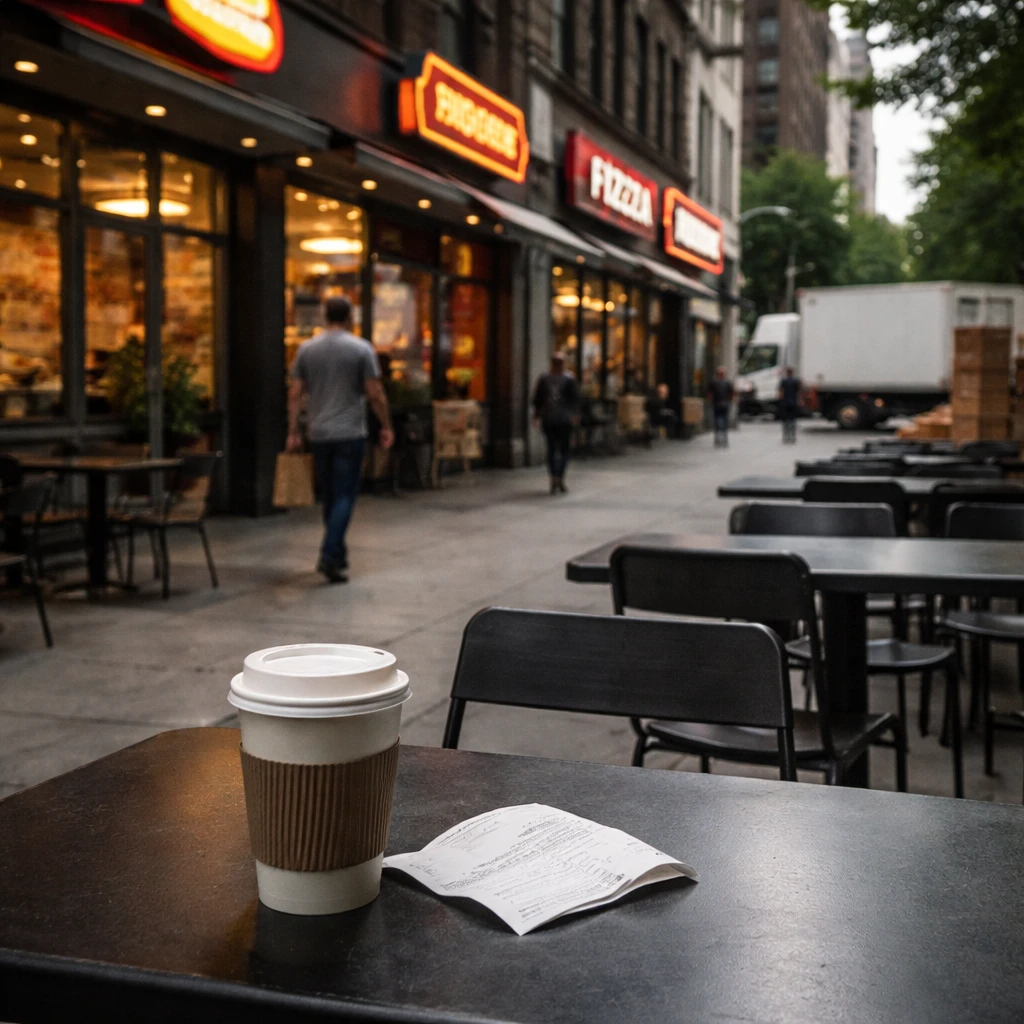
Jefferies analyst Andy Barish, citing Placer foot-traffic data, reported that restaurant visits in the United States eased further in May. The decline was concentrated in the quick-service segment, where sequential traffic fell by about 250 basis points from April.
Category-level breakdowns showed varied performance: burger restaurants registered a slide of about 200 basis points, chicken concepts experienced a sharper decrease of roughly 520 basis points, while pizza traffic was essentially flat, edging up about 25 basis points.
Despite weaker traffic, industry same-store sales ticked higher in May, rising 30 basis points month-over-month to reach 1.8%. Jefferies attributes the sales gain to larger average checks, which were up about 70 basis points and partially offset a 30-basis-point decline in traffic during the month.
The Placer data was used by Jefferies to assess implications for foodservice suppliers. For Lamb Weston, the firm estimated fourth-quarter weighted traffic declined roughly 396 basis points versus the third quarter. That follows a report from the company that quick-service restaurant traffic in North America grew about 1% in the third quarter, a noted milestone as the first increase since late fiscal 2024.
Jefferies expects Lamb Weston’s implied traffic to be down in the low single digits year-over-year in the fourth quarter. Despite that traffic headwind, Jefferies continues to project solid North America volume growth for Lamb Weston in the quarter, citing customer wins, retention, and an extra week of sales as supporting factors.
Internationally, Lamb Weston faces tougher conditions, with Europe highlighted as particularly challenging. The company curtailed a production line in the Netherlands at the start of the fourth quarter and has recently announced a facility closure. Jefferies also flagged geopolitical risk in the Middle East, noting the conflict there represents a high single-digit percentage of the company’s international segment volume and therefore poses additional volume risk.
Jefferies reviewed traffic trends at other suppliers as well. For Mizkan America, weighted traffic across April and May in the fourth quarter declined about 221 basis points compared to the third quarter. Within branded operators, Chick-fil-A traffic fell about 508 basis points versus the third quarter, while YUM brands saw a softening of about 219 basis points.
Reflecting its assessment, Jefferies maintained a buy rating on Lamb Weston with a $55 price target. The firm based that valuation on a multiple of about 10 times Lamb Weston’s 24-month forward EBITDA.
The data points and company-specific details outlined by Jefferies highlight a mixed consumer and supplier picture: higher checks are propping up same-store sales while unit traffic trends show continued pressure in several quick-service segments and for some foodservice suppliers, particularly in international markets.