
State authorities have certified a union that will represent app-based ride-share drivers in Massachusetts, a development labor leaders and officials described as the first officially recognized organization of its kind in the United States.
The App Drivers Union received formal certification from the Massachusetts Department of Labor Relations on Friday to act on behalf of nearly 70,000 ride-share drivers who operate as independent contractors in the state. The certification comes after a November 2024 ballot measure approved by voters set up a new legal structure enabling drivers for companies such as Uber and Lyft to organize and pursue collective bargaining over pay and benefits.
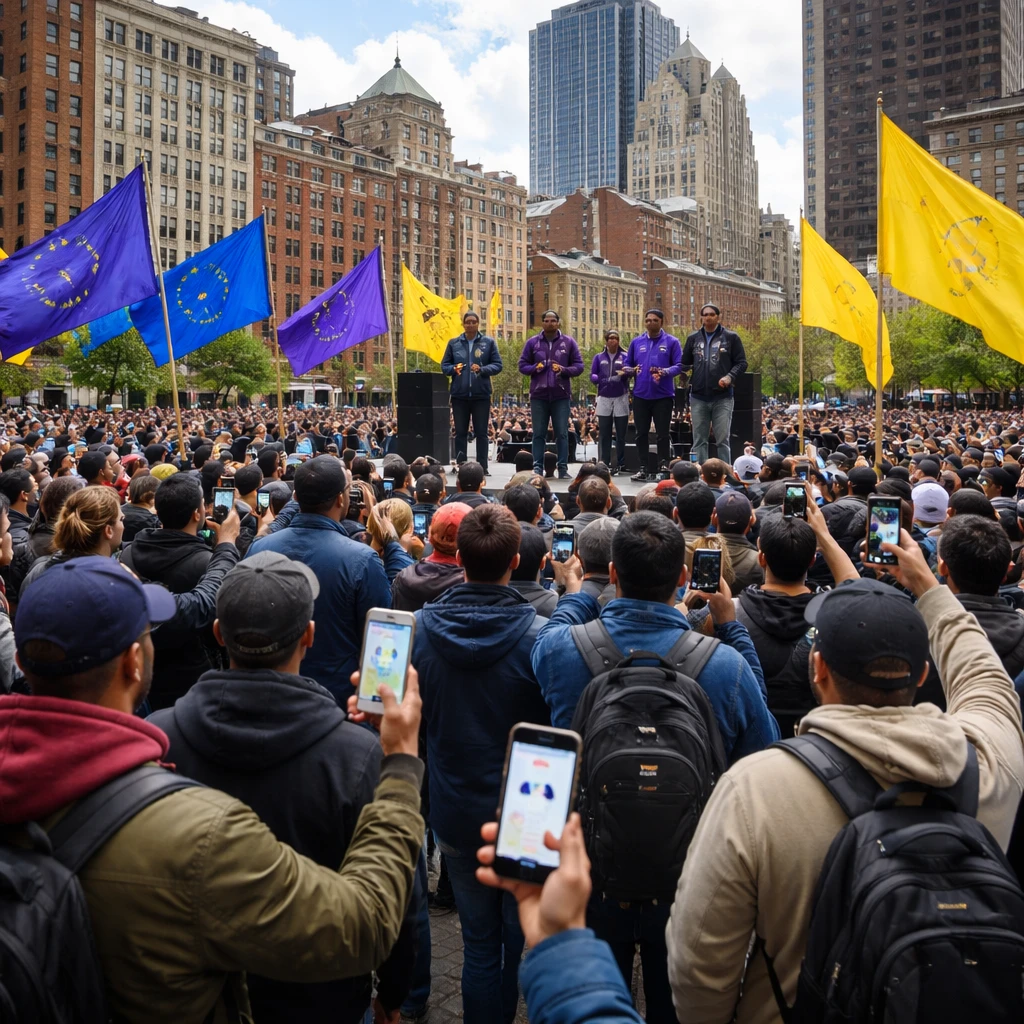
At a rally in Boston on Tuesday attended by drivers and labor activists, Massachusetts Governor Maura Healey said the development was a potential turning point for ride-share workers nationally. "It changes the game for ride-share workers across this country," she said.
The state-level path to unionization addressed a longstanding legal gap: drivers for Uber and Lyft do not have the right to organize under the National Labor Relations Act, federal legislation that applies only to traditional employees. Under the new Massachusetts statute, drivers could form a union after supporters collected signatures from at least 25% of active drivers in the state - a threshold the organizers achieved.
Union organizers secured backing from established labor groups. The App Drivers Union is supported by 32BJ SEIU, an affiliate of the Service Employees International Union, and the International Association of Machinists and Aerospace Workers. At the Tuesday rally, IAM President Brian Bryant said, "The workers who built these billion-dollar corporations deserve a union contract and a seat at the table." Union leaders held up the Massachusetts certification as a significant win as similar organizing efforts expand elsewhere.
Outside Massachusetts, state-level legislative activity has moved forward in some places. The article notes that California granted ride-share drivers the right to unionize under legislation signed into law in October by Governor Gavin Newsom, and that comparable legislation is pending in Illinois.
Lyft issued a statement saying the company intends to participate in the Massachusetts process in good faith. "Lyft does well when drivers do well, and we’ll stay focused on helping drivers succeed while keeping rideshare affordable and dependable for everyone who counts on it," the company said. Uber did not respond to a request for comment.
The certification also follows legal action by state officials. In the months leading up to the 2024 vote, Massachusetts Attorney General Andrea Joy Campbell reached a settlement with Uber and Lyft that required a $32.50 hourly minimum pay standard for drivers in the state and a $175 million payment to resolve claims that the companies had improperly treated drivers as independent contractors rather than employees under state law.
Labor leaders presented the Massachusetts outcome as a milestone in broader organizing efforts. The state law’s signature threshold and the newly certified union provide a framework that differs from federal labor law, enabling independent contractors in Massachusetts to seek a recognized collective voice despite the limitations of the National Labor Relations Act.
For drivers, the certification opens a process to negotiate terms through a union structure supported by major national labor organizations. For companies and the broader transportation and gig economy sectors, the development highlights a shifting regulatory and organizing landscape that could influence similar efforts elsewhere, including states considering legislation or following the precedent of California’s law.
Key points
- The App Drivers Union was certified by the Massachusetts Department of Labor Relations to represent nearly 70,000 independent contractor ride-share drivers in the state.
- The certification follows a November 2024 ballot measure that established a new state-level framework allowing drivers to organize after collecting signatures from at least 25% of active drivers.
- The union is backed by 32BJ SEIU and the International Association of Machinists and Aerospace Workers; the certification follows a settlement requiring a $32.50 hourly minimum and a $175 million payment from Uber and Lyft.
Risks and uncertainties
- Federal labor law does not grant ride-share drivers the right to organize under the National Labor Relations Act, creating a legal distinction that could complicate organizing efforts outside state-specific frameworks - this affects labor and platform-based gig economy sectors.
- Legislative and regulatory responses vary by state; while California has enacted a law granting unionization rights and Illinois has pending legislation, differences across states create uncertainty for companies and drivers operating multi-state platforms - impacting transportation and regulatory sectors.
- Responses from major platform companies remain uneven; Lyft has said it will engage in good faith while Uber did not comment, leaving uncertainty about how negotiations and implementation might proceed - affecting investors and stakeholders in mobility services.