
Asian markets opened the trading day under pressure on Thursday as a new flare-up in hostilities between the U.S. and Iran weighed on risk appetite. MSCI’s broad index of Asia-Pacific shares outside Japan fell 0.8%, while S&P 500 e-mini futures eased 0.4% ahead of the U.S. session.
Market moves were broad-based. Korean equities resumed trading following a holiday with a 2% decline at the open, and Japan’s Nikkei 225 was down 1.3%.
"Financial markets shifted back into a risk-off mode as the U.S. and Iran exchanged fire again," analysts at Westpac said in a research note, capturing the shift in investor tone.
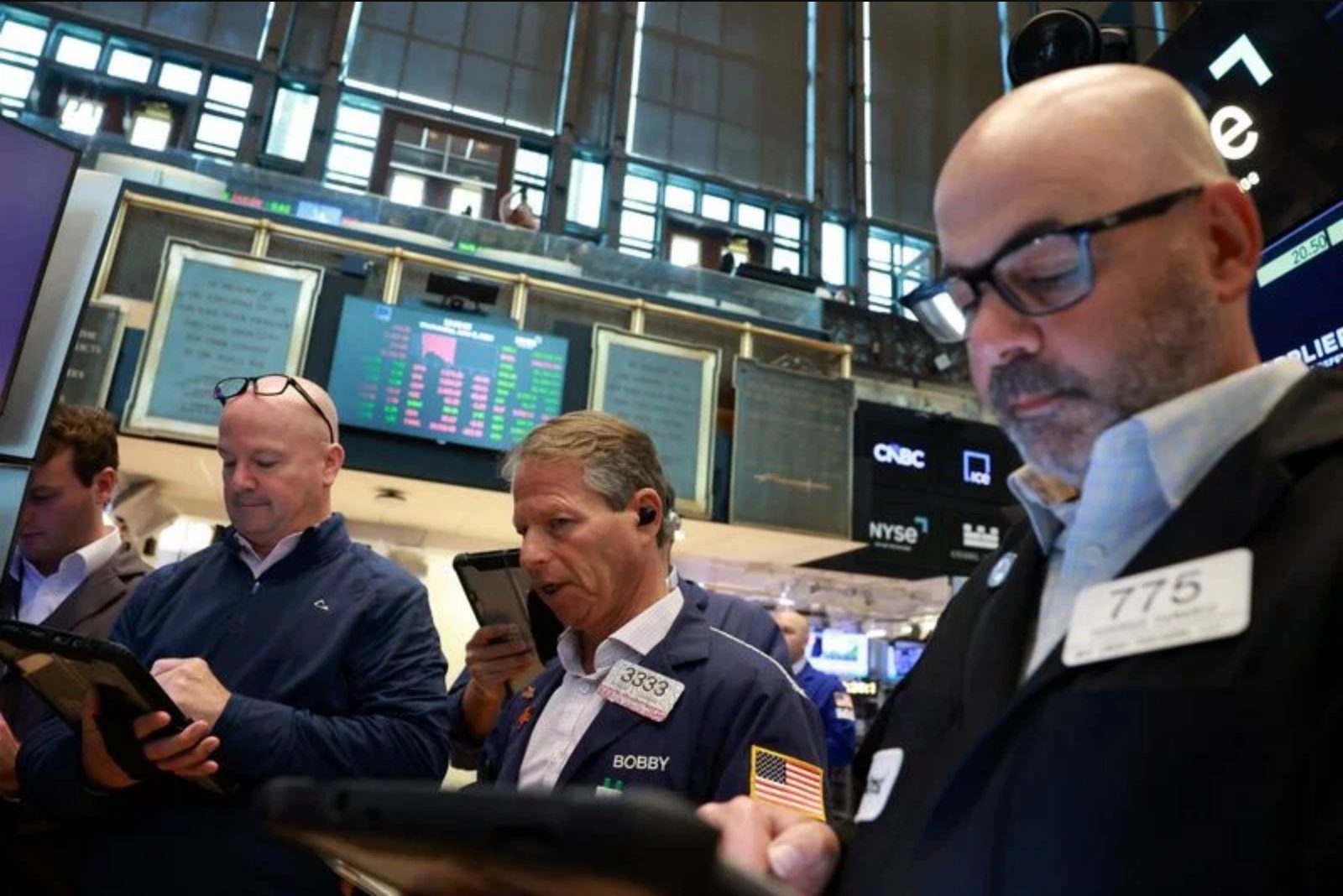
Wall Street had dropped overnight, with the S&P 500 falling 0.7% as oil prices climbed roughly 2% on renewed conflict in the Middle East and limited progress in talks between Tehran and Washington. Traders largely set aside a stronger-than-expected U.S. ISM services sector PMI for May, which rose as businesses reportedly pre-emptively placed orders and rebuilt inventories in anticipation of shortages and higher prices linked to the war.
Brent crude futures were 0.7% lower at $97.12 a barrel as trading resumed on Thursday following an agreement between Lebanon and Israel to implement a ceasefire. That ceasefire is conditional on a full halt to fire from the Iran-aligned Hezbollah militia and the withdrawal of its operatives from the South Litani Sector. The two sides had reached a ceasefire agreement last month, though hostilities had persisted.
The U.S. political response added another layer of uncertainty. The Republican-led House of Representatives approved a war powers resolution intended to block President Donald Trump from continuing the conflict against Iran. The measure is largely symbolic at this stage: it must still pass the Senate and would require a two-thirds majority in both chambers to override an expected presidential veto.
Mixed comments from market watchers underscored the fragile backdrop. Analysts at ING noted that "Geopolitics continue to drive volatility and as conflicting signals dampen hopes for a quick solution to the conflict," which helped explain the cautious tone across asset classes.
Individual corporate news also influenced trading. Broadcom shares plunged more than 13% in after-hours trading after the company missed Wall Street expectations for second-quarter revenue and left a prior 2027 sales forecast unchanged - a rare indication that the AI chipmaker may be losing momentum.
In currencies, the yen weakened modestly. The yen was down 0.1% at 159.945 per dollar after remarks from Bank of Japan Governor Kazuo Ueda saying the central bank must weigh the pros and cons of raising interest rates if inflationary risks outweigh downside risks to the economy - comments that the market interpreted as increasing the likelihood of a rate hike this month.
The U.S. dollar index, which tracks the greenback against a basket of six currencies, held near 99.45 after a three-day rally that pushed the currency to its strongest point since April 7. Meanwhile, the yield on the U.S. 10-year Treasury edged down 0.4 basis point to 4.485%.
Safe-haven and digital assets moved in opposite directions. Gold rose 0.5% to $4,455.71, remaining inside the trading range it has occupied since mid-last month. Bitcoin fell 1.3% to $64,047.39, while ether climbed 1.8% to $1,810.83.
The combination of geopolitical tension, mixed economic signals and company-specific disappointments left investors in a wait-and-see mode as markets absorbed fresh developments.