
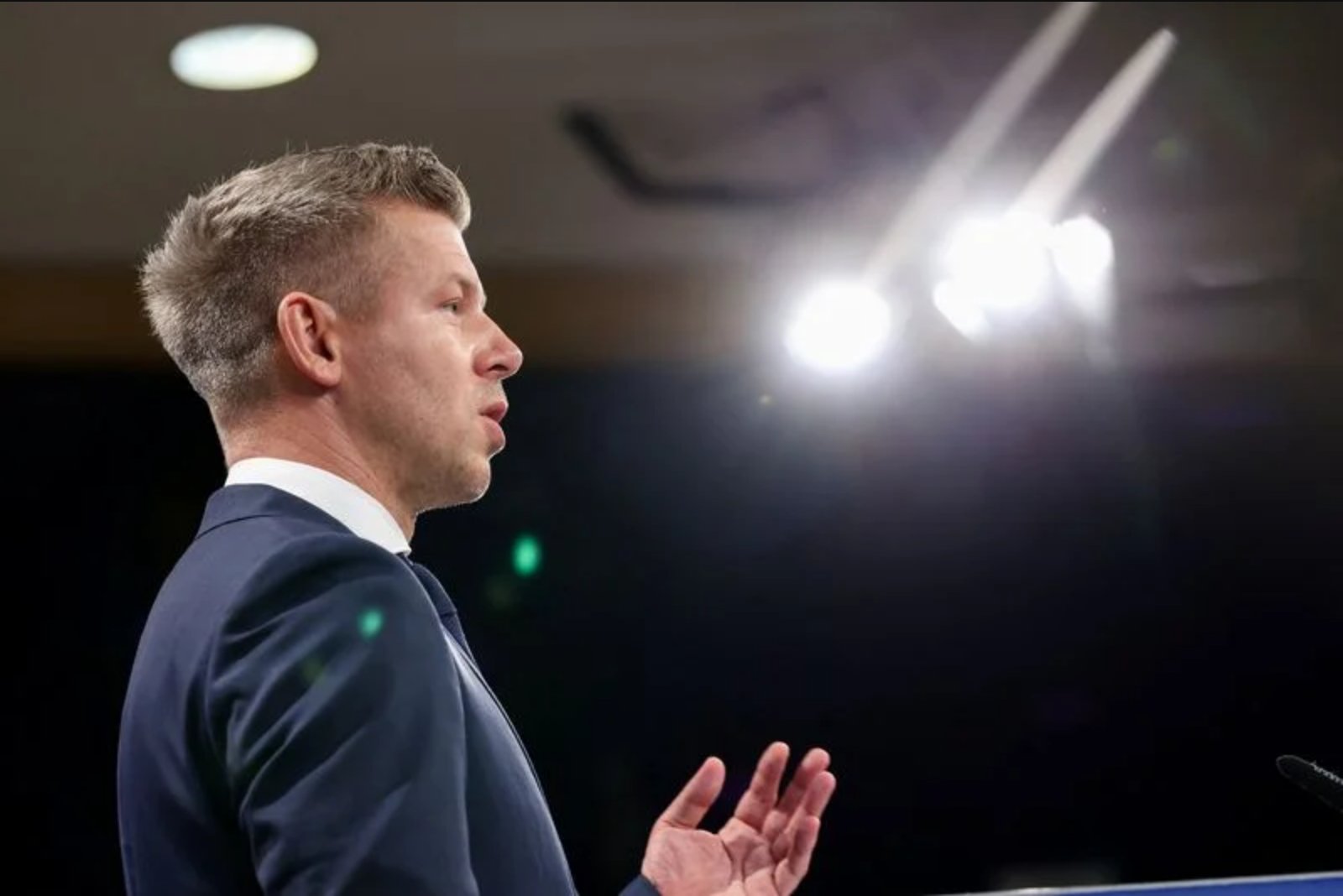
Hungarian Prime Minister Peter Magyar said on Monday that his government will begin legal steps to dismiss President Tamas Sulyok if the president continues to decline calls to resign. The move follows a change of government in April, when Magyar's centre-right Tisza party defeated the long-ruling nationalist administration led by Viktor Orban.
Magyar has signaled his intention to remove several officials who were appointed by Orban during his 16 years in power, including the largely ceremonial head of state. He has repeatedly pressed Sulyok - who was elected in early 2024 by lawmakers from Orban's Fidesz party - to step down, arguing the president has not represented national unity on major issues and has acted in the interests of Orban and his government.
Sulyok has consistently refused to resign. After a meeting between the two men on Monday, Magyar said: "I have told the president that if he maintains his stance and does not resign, I will inform... Tisza's lawmakers about our legislative proposals today and we will immediately start the necessary procedures." Magyar added that the legislative process would take about a month.
In his remarks after the meeting, Magyar said the process would target what he described as those who took part in "dismantling the rule of law and democracy" during Orban's tenure, using language that framed the effort as an effort to remove "puppets" installed by the previous government. He also said the government would rely on its two-thirds parliamentary majority to amend the constitution to force Sulyok from office, but provided no further procedural details.
Sulyok, a 70-year-old former lawyer, reiterated his refusal to step down. He wrote on his Facebook page that "the constitutional crisis that will follow (the legal action promised by Magyar) is going to deepen the division in society and will harm the international reputation of Hungary's democracy."
Orban's Fidesz party responded by accusing Magyar, 45, of issuing an "unlawful ultimatum," and said Sulyok was carrying out a lawful mandate that runs until 2029 and therefore could not be removed from office. Sulyok previously served as head of Hungary's top court, a position to which he was also elected by Fidesz in 2016.
Although the presidency in Hungary is largely ceremonial, the office carries certain procedural powers. The president can refer legislation back to parliament for reconsideration or send laws to the Constitutional Court, actions that could slow or obstruct the government’s reform programme. That institutional role is central to the standoff between Magyar and Sulyok.
Note: The information in this report is based on statements and developments made public during the meeting and subsequent announcements by the parties involved.