
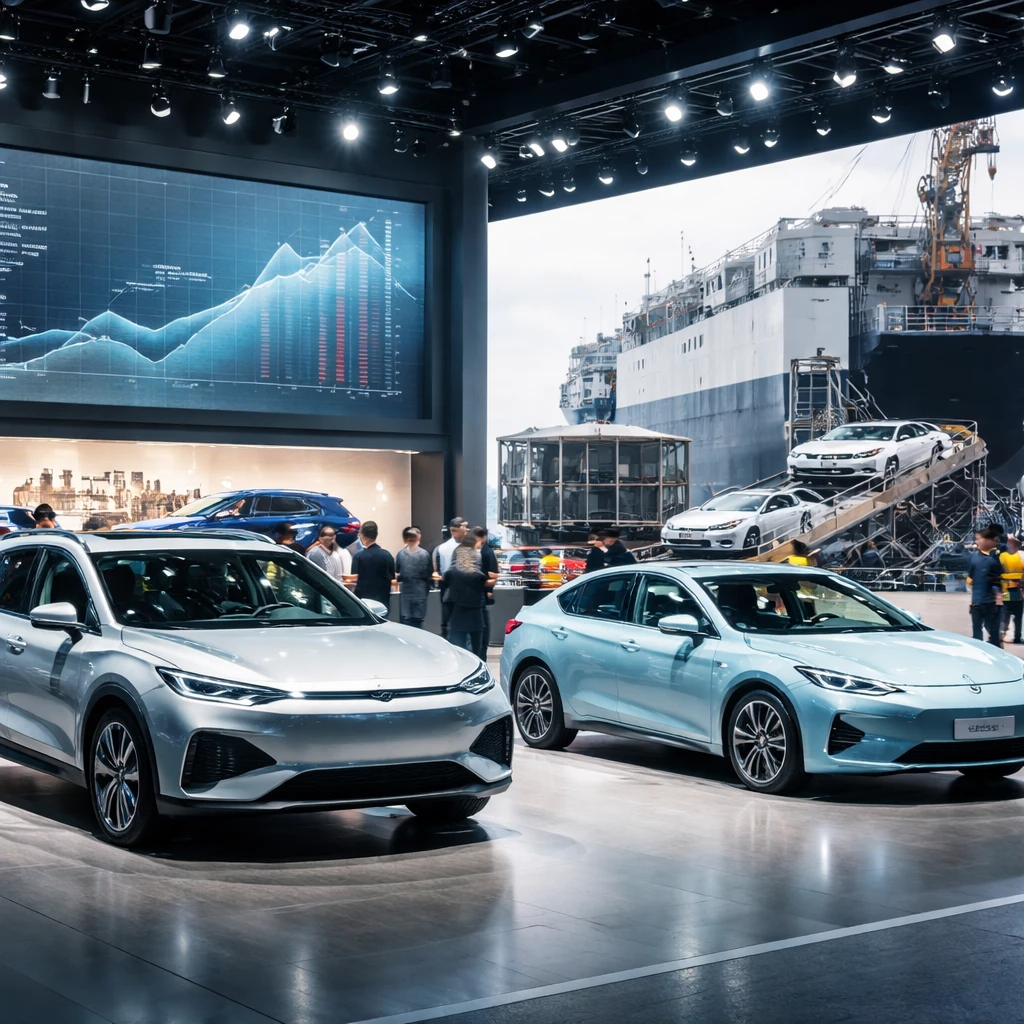
Macquarie analysts cited preliminary data indicating China’s new energy vehicle retail sales contracted 7.5% year-over-year in May 2026, totaling 950,000 units. That decline represents a modest deterioration from April, when sales were down 6.9% year-over-year. At the same time, NEVs accounted for 63% of retail auto sales in May, reflecting steady penetration of electrified vehicles despite the year-on-year volume decline.
Overseas demand continued to underpin growth for China’s mass-market electric vehicle makers. BYD reported export volumes that jumped 80% year-on-year in May. Geely also recorded a substantial international uplift, with overseas sales increasing 184% over the same month.
BYD’s domestic performance showed signs of sequential recovery, with monthly domestic sales rising 19% following the Beijing Auto Show. The company has announced plans to roll out Flash Charging technology along with enhanced smart driving capabilities in forthcoming models, moves which it presents as part of its product roadmap.
Geely’s portfolio brands also posted differing trajectories. Combined sales for Zeekr and Lynk rose 18% year-on-year, led by the Zeekr 9X and 8X models. By contrast, sales for Geely’s Galaxy brand eased, with a 10% month-on-month decline reported.
Among the premium electric vehicle manufacturers, NIO delivered the strongest gains in May. Deliveries climbed 62% year-on-year and 28% month-on-month. NIO has commenced deliveries of its Onvo L80 and the updated L90 models, and the company intends to begin ES9 deliveries in June.
XPeng’s sales were broadly steady, increasing 4% month-on-month in May. Li Auto recorded a 2% month-on-month decline in May deliveries; company management flagged ongoing pressure on product mix and margins as a continued operational challenge.
Macquarie noted that, even where volumes showed sequential improvement, rising input costs are exerting pressure on margins across the Chinese EV industry. In its ranking of manufacturers, the firm places Geely at the top among Chinese EV makers, followed by BYD, NIO, XPeng and Li Auto.
Contextual notes
The preliminary May figures portray an industry in which electrification penetration continues to increase at the retail level even as year-on-year unit volumes dip. Export expansion appears to be an important offset for several mass-market brands, while premium players show divergent delivery trajectories. Margin pressure from higher input costs remains a common theme across companies.