
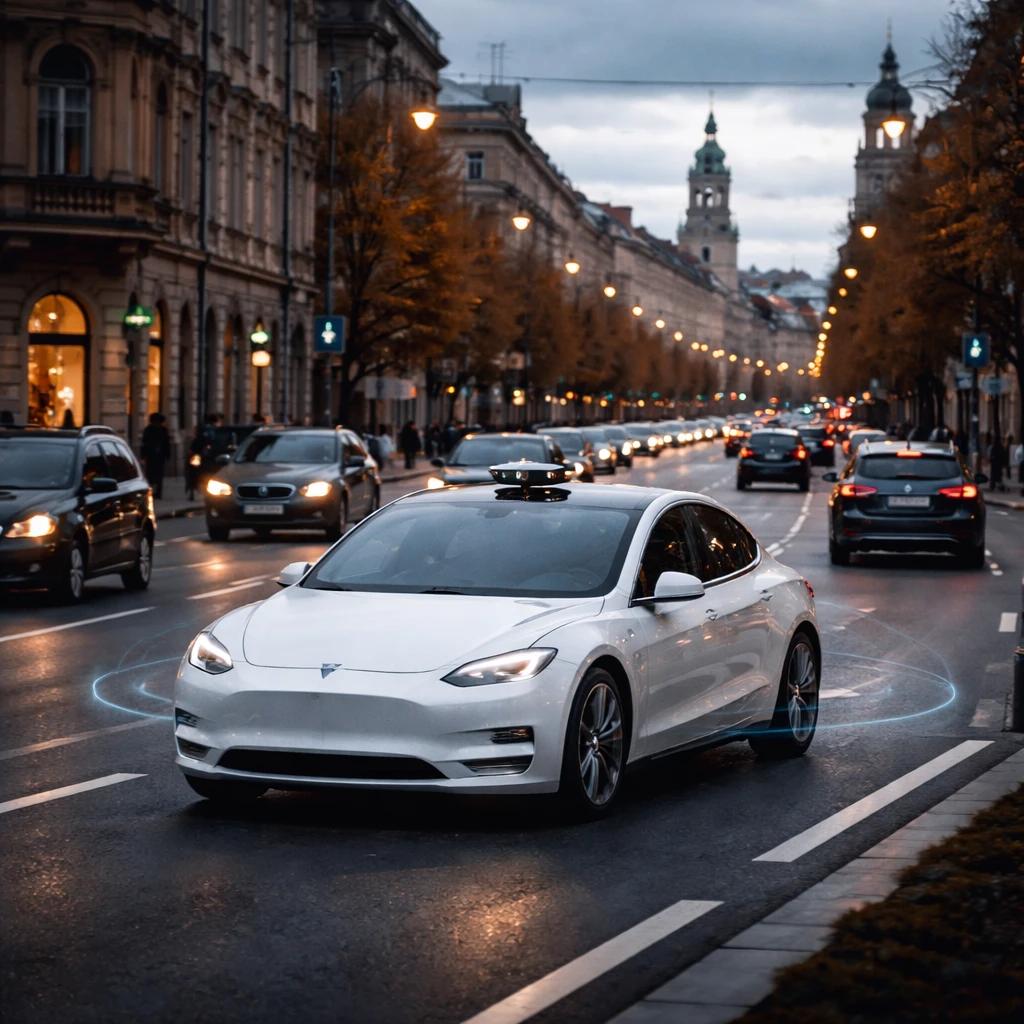
Tesla Inc announced on Wednesday that its Full Self-Driving (Supervised) driver assistance software is being deployed in Lithuania, following recognition by Lithuanian authorities of a Dutch certification that approved the system for use on public roads.
The Dutch vehicle regulator RDW granted provisional approval for the technology on April 10. The Lithuanian Transport Safety Administration has confirmed Lithuania will accept the RDW certification, allowing Tesla to make the software available to drivers in that country.
RDW is actively seeking broader acceptance of the system across the European Union, but member states are able to individually recognize the Dutch authorization and permit local deployment. That framework has enabled Lithuania to authorize the rollout without a separate national approval process.
Belgium had been expected to be the next country to follow the Netherlands. An authorization review was underway in the Flanders region, where one Tesla vehicle has been conducting tests of Full Self-Driving on public roads.
Prior to granting its provisional approval, RDW carried out more than 1.5 years of testing of the system, using both a dedicated test track and public road trials. Tesla has also performed tests of the software in several other European countries over the past year.
Tesla CEO Elon Musk has publicly expressed confidence that the EU will approve Full Self-Driving in the near future. At the same time, regulators in a number of Nordic countries have voiced skepticism about the technology.
Summary
Lithuania has accepted the Netherlands' provisional approval of Tesla's Full Self-Driving (Supervised) software, becoming the second European nation to allow the system on public roads. The Dutch regulator RDW granted the authorization on April 10 after more than 1.5 years of testing, and RDW is pursuing wider EU recognition while other member states may opt to accept the Dutch certification independently.
Key points
- RDW granted provisional approval for Tesla's Full Self-Driving on April 10, following over 1.5 years of testing on a test track and public roads.
- Lithuania recognized the Dutch certification, enabling the rollout of the Supervised FSD software in that country.
- Belgium's Flanders region was undergoing an authorization process where one Tesla vehicle has been testing FSD on public roads; RDW is seeking EU-wide acceptance but member states may individually accept the Dutch approval.
Risks and uncertainties
- Acceptance of the RDW certification across all EU member states is not guaranteed - RDW is pursuing EU-wide recognition, but individual states make their own decisions.
- Regulatory skepticism exists in parts of Europe - regulators in several Nordic countries have expressed doubts about the technology.
- The authorization status in other countries remains in flux - testing and authorization processes are ongoing in regions such as Flanders, Belgium.