
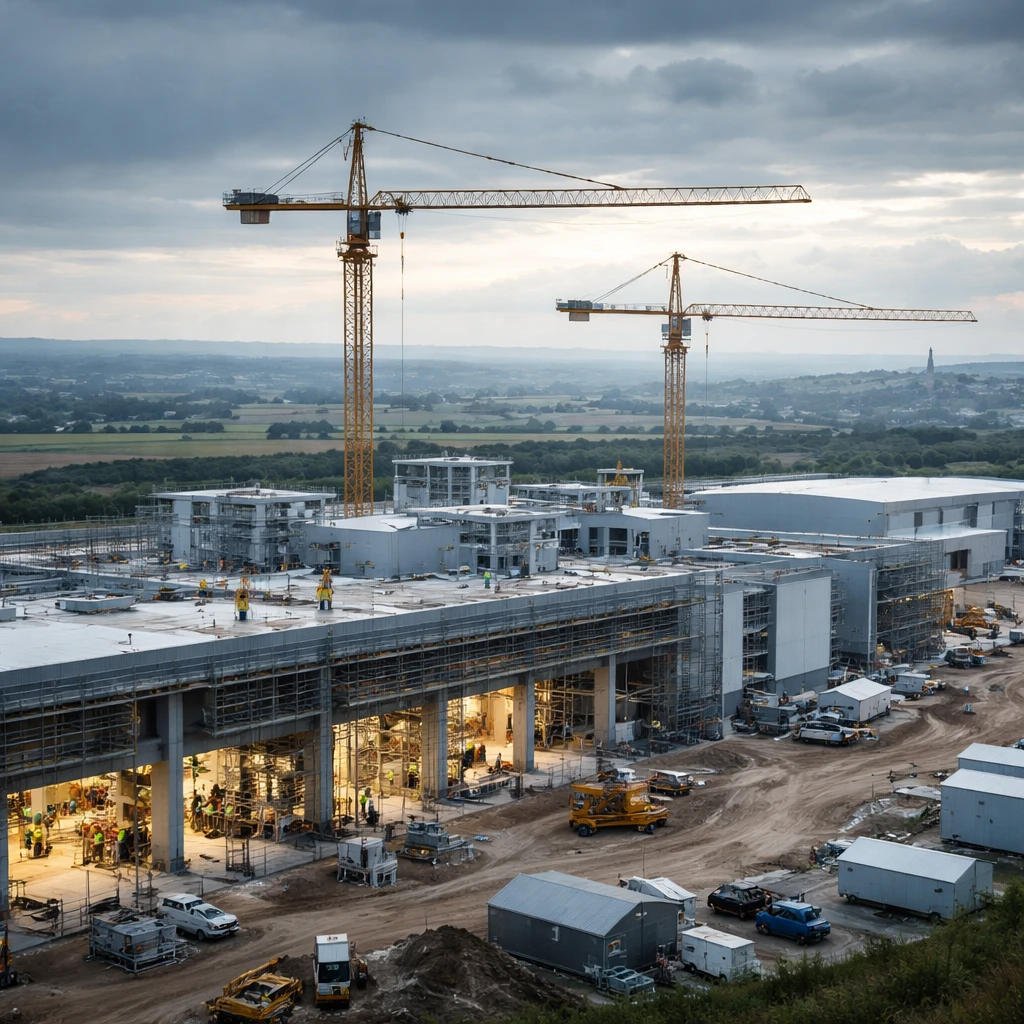
Eli Lilly and Company said Wednesday it will scale back the remaining investment planned for its Alzey, Germany, production complex, cutting $1.5 billion from the project and effectively halving the remaining planned capital expenditure for the site.
The Indianapolis-based drugmaker said the decision reduces the broader $2.5 billion development plan in Alzey and removes a substantial share of the approximately 1,000 jobs that had been anticipated as part of the original build-out. Interior fit-out work at the facility is continuing and the company has already hired 300 employees, ensuring the site will be brought into operation in its current form.
In its statement, Lilly said it has suspended decisions to add more capacity and that any resumption of expansion would depend on a return of ‘‘stable and predictable economic conditions’’ in Germany. The company described the proposed healthcare changes as rendering investments in jobs and production sites impossible to quantify and called the measures a breach of trust.
German lawmakers are slated to vote on the healthcare proposals this summer. The reforms are designed to lower pharmaceutical costs by reducing drug prices in the country, a factor Lilly cited as central to its reassessment of the Alzey investment.
Other industry participants have voiced similar concerns. BioNTech SE said that its future investment decisions in Germany will in part hinge on whether policymakers establish a framework that is attractive to drugmakers. Separately, Boehringer Ingelheim GmbH previously canceled planned investments totaling c900 million at sites in Germany, citing unpredictability in the pharmaceutical environment.
The company emphasized that while interior work and initial staffing are progressing, the larger capacity expansion has been put on hold. Lilly framed the step as a response to regulatory and economic uncertainty tied directly to the proposed pricing measures, rather than to operational issues at the Alzey plant itself.
The development shifts the immediate employment outlook tied to the project and defers decisions on further capital deployment until the political and economic signals from Germany are clearer.