
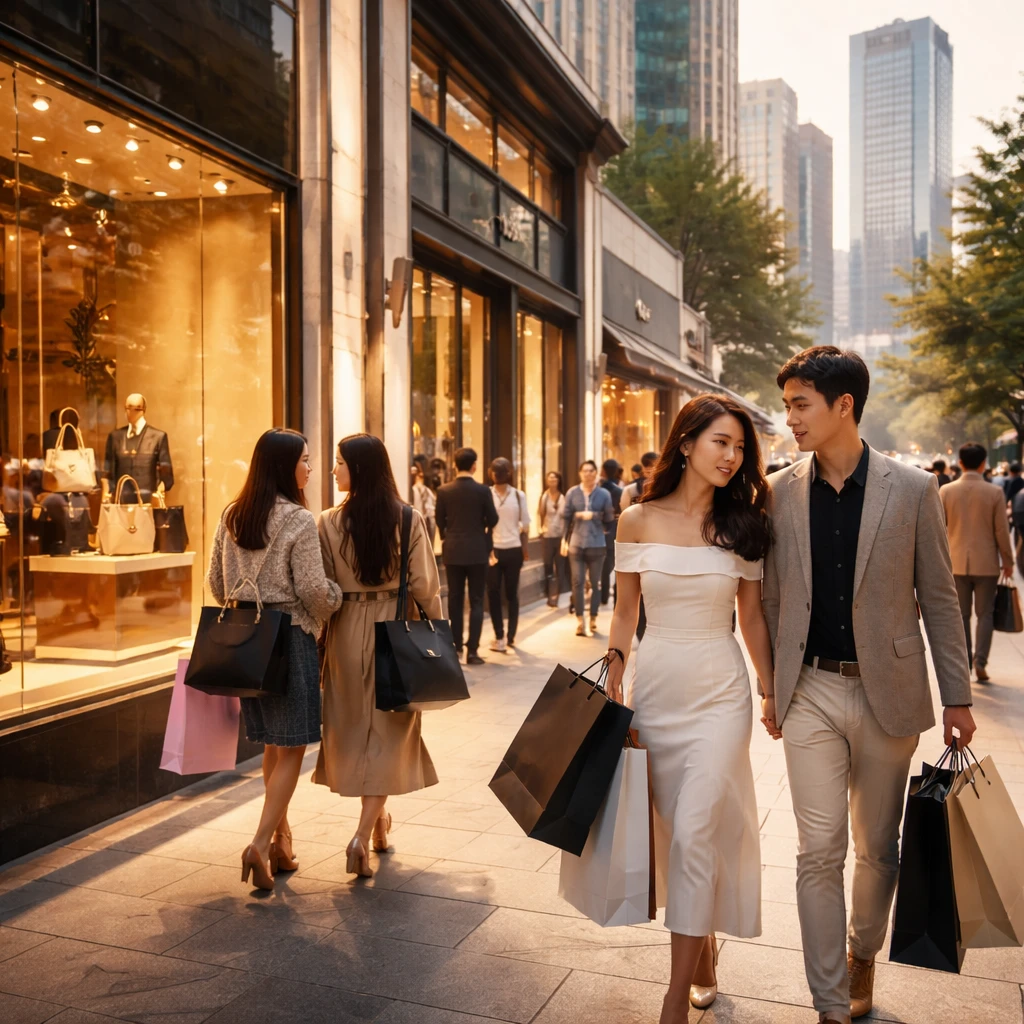
South Korea’s recent boom in semiconductors and the wealth it is generating are emerging as a notable support for demand in the global luxury sector, according to UBS. The bank has identified a set of high-end fashion and accessories brands that could benefit if Korean consumer spending continues to strengthen.
UBS says evidence is accumulating that the country’s artificial intelligence-driven surge in semiconductor activity is spilling over into the wider economy. A labour agreement at a major chipmaker, Samsung Electronics, will deliver average bonus payments to chip workers of roughly $340,000. Those payouts both bolster household purchasing power and averted a strike that might otherwise have disrupted global chip production.
The bank emphasises South Korea’s outsized importance for luxury groups. For many of the major houses, Korean consumers represent a mid- to high-single-digit share of sales. UBS also describes the typical Korean shopper as fashion-forward and influential across the Asian region - attributes that make Korean demand a useful indicator of regional luxury trends.
Recent commercial signals appear to back up UBS’s view. Department-store operators have reported robust sales gains, and management commentary from several luxury names during earnings season has been more constructive. UBS links these improvements to a set of factors it views as reinforcing consumer spending in Korea: a powerful wealth effect from a surging local equity market, large semiconductor-industry bonus payments, rising tourism from China, and a weaker Korean won that has made luxury prices more competitive for domestic buyers.
UBS’s analysis identifies brands with relatively high sales exposure to South Korea. Moncler tops the list, with about 10% of sales tied to the market, followed by Prada at roughly 9%, and Herms and Burberry at around 8%. Other groups called out by the bank include Salvatore Ferragamo SpA, Kering, Richemont and LVMH.
Despite the encouraging signs, UBS urges caution. Demand is not uniform across all luxury segments - wallet-heavy categories such as watches and jewellery seem to be benefiting more directly from improving consumer wealth than softer luxury categories. That pattern suggests gains may be concentrated rather than broad-based across every product line.
On valuations, UBS notes that luxury-sector multiples look more attractive after a recent sharp de-rating that was driven by worries about geopolitical uncertainty and Chinese demand. Luxury equities still trade at a premium to the broader European market - roughly a 48% premium - but that gap sits below long-term averages. The bank says there is room for a possible re-rating of luxury shares if the observed improvements in demand persist.
Market context and takeaway
- South Korea's semiconductor-led wealth gains and large bonus payments are supporting consumer spending in the luxury segment.
- Moncler, Prada, Herms and Burberry are among the brands with notable exposure to Korean shoppers, according to UBS estimates.
- Valuations in the luxury sector have softened relative to long-term norms, leaving potential upside if demand trends continue.