
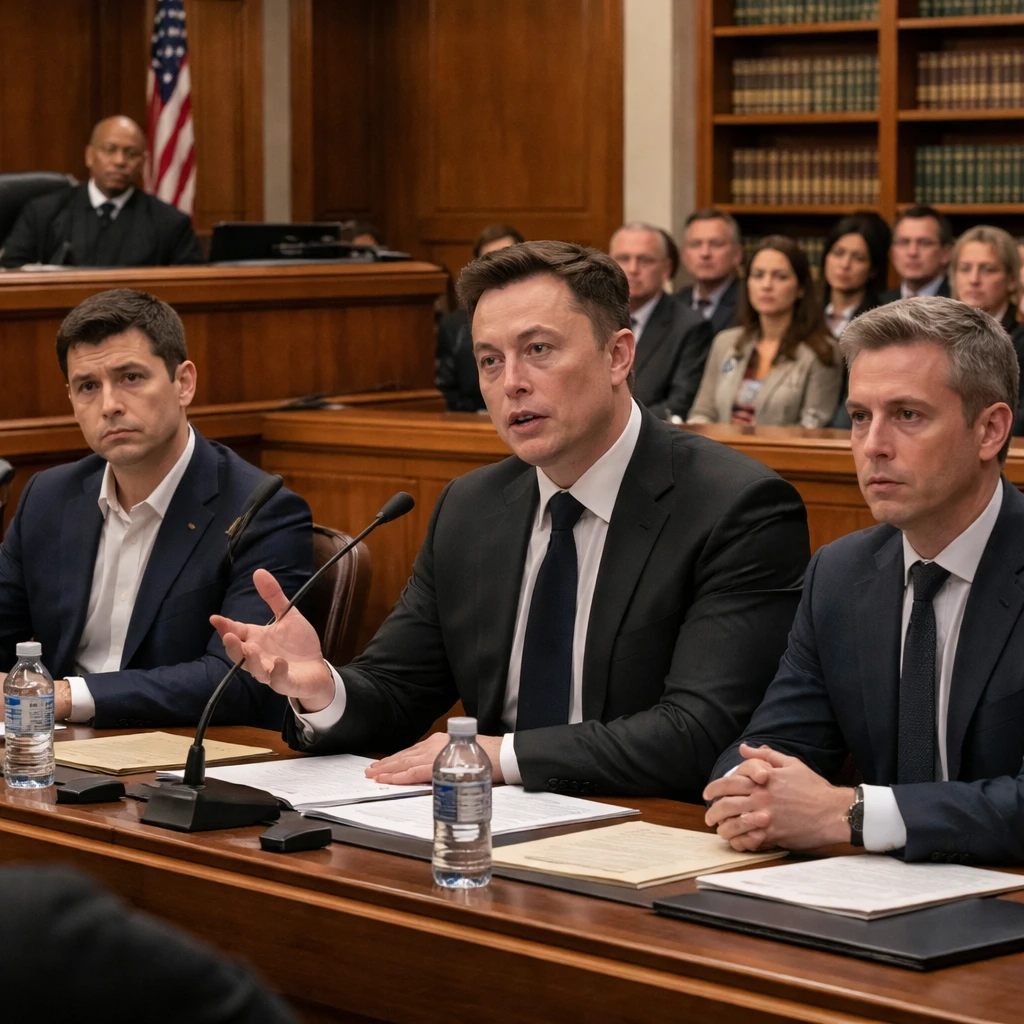
A jury on Monday rejected Elon Musk’s claim that OpenAI’s top executives violated a pledge to keep the maker of ChatGPT structured as a nonprofit focused on benefiting humanity. The verdict came at the close of a three-week trial in which Musk sought about $150 billion in damages from OpenAI and Microsoft - damages he said should go to OpenAI’s nonprofit - and pressed for the removal of CEO Sam Altman and President Greg Brockman.
Jurors concluded Musk had waited too long to bring the suit. The OpenAI defendants had told the court Musk had known about plans to create a for-profit arm years earlier and therefore was bound by a three-year statute of limitations that expired before his August 2024 complaint. Their position was that Musk’s awareness of OpenAI’s financing needs and growth plans meant he should have filed by August 2021, a point emphasized by defense lawyer Sarah Eddy.
Old claims and the statute of limitations
The defense framed the dispute as a timing issue, arguing that Musk was aware well in advance of OpenAI’s shift toward a structure that would accommodate outside investment. That awareness, OpenAI’s lawyers said, triggered the clock on his ability to sue. On Monday the jury unanimously sided with the defendants, bringing the trial to an end and denying Musk’s demand for compensation and leadership changes.
Charity versus for-profit
Musk repeatedly characterized OpenAI during his testimony as a charity created specifically to serve humanity rather than individual interests. He testified that he had deliberately chosen not to form a for-profit company, saying that transforming a charitable institution into a profit-seeking entity would be improper. "It was specifically meant to be for a charity that does not benefit any individual person. I could’ve started it as a for-profit and I specifically chose not to," he told the court, and later cautioned, "If we make it OK to loot a charity, the entire foundation of charitable giving in America will be destroyed."
OpenAI’s side disputed the premise that the organization was being "stolen." Instead, they argued the company’s evolution reflected financing realities familiar to its leaders and investors, and that Musk’s claims miscast the motives behind operational changes.
Conflict over control
A central theme of the defense was that Musk sought control of OpenAI, rather than simply defending the nonprofit mission. "What he cares about is Elon Musk being on top," William Savitt, lawyer for OpenAI and Altman, told jurors in opening statements, asserting the litigation was driven by Musk’s dissatisfaction with not getting his way.
Altman recounted Musk once asking for a 90% stake in OpenAI and proposing to merge the organization with Tesla as a way to provide the large-scale funding he said was necessary. The concept of merging with Tesla was presented as one of several proposals Musk raised to supply the capital OpenAI would need.
OpenAI’s chairman, Bret Taylor, said the company was surprised in February 2025 to receive a formal acquisition proposal from a consortium led by xAI, which Taylor described as inconsistent with the lawsuit’s stated logic because it appeared aimed at acquiring the nonprofit with for-profit investors. Taylor testified that the offer came six months after Musk filed suit.
Money for Mars
Greg Brockman testified that Musk’s pursuit of control was tied to plans for raising vast sums of money to support a Mars colony. Brockman said Musk told colleagues he needed $80 billion to build a city on Mars. The trial record also included a securities filing indicating that SpaceX’s board had approved a plan to grant Musk 200 million super-voting restricted shares if the company reached a $7.5 trillion market value and established a permanent colony on Mars with at least 1 million people, details Brockman cited in his testimony.
Existential risk and expert testimony
Musk testified he had been alarmed by conversations with Google co-founder Larry Page, recounting that Page expressed little concern about AI safety and suggested that the survival of AI itself would be acceptable even if humans were wiped out. "He said that would be fine so long as artificial intelligence survives. I said that was insane, that’s just crazy," Musk said in court.
The two sides clashed over whether Musk could question an expert witness about the extinction risk posed by AI, with OpenAI opposing the scope of such testimony. Musk’s lawyer Steven Molo argued before the trial that extinction risk is a real and serious concern, stating, "Extinction risk is a real problem. This is a real risk. We all could die." The presiding judge, U.S. District Judge Yvonne Gonzalez Rogers, limited the expert’s testimony and observed that it was ironic to challenge Musk’s involvement in an area he had helped create.
Credibility disputes
In closing, Musk’s lawyer emphasized testimony from five witnesses who, he said, characterized Altman as dishonest. Molo pointed to moments in cross-examination when Altman did not offer an unequivocal "yes" in response to a question about his complete trustworthiness and whether he had misled people in business, arguing Altman’s credibility was central to the case.
OpenAI’s defense countered by minimizing Musk’s asserted role in the company’s early success. "Mr. Musk may have the Midas touch in some areas, but not in AI," Savitt told the jury, adding that Musk’s path to succeeding in artificial intelligence was to litigate in court rather than to build technology. The defense accused Musk of selective memory, saying he had been informed in 2017 that OpenAI would need financing that likely required a for-profit structure.
Outcome and implications
After deliberation, the jury found that Musk’s lawsuit was filed beyond the allowable legal timeframe, rejecting his bid for damages and the removal of OpenAI’s leaders. The verdict concluded a contentious, high-profile trial that focused as much on personal credibility and motives as on the legal core of the dispute.
Because jurors unanimously sided with OpenAI on the timeliness issue, Musk’s claims over the organization’s transformation and his requested remedies were not adopted by the court. The decision ends this chapter of litigation brought by Musk against OpenAI and Microsoft, leaving intact the leadership and corporate arrangements contested in the courtroom.