
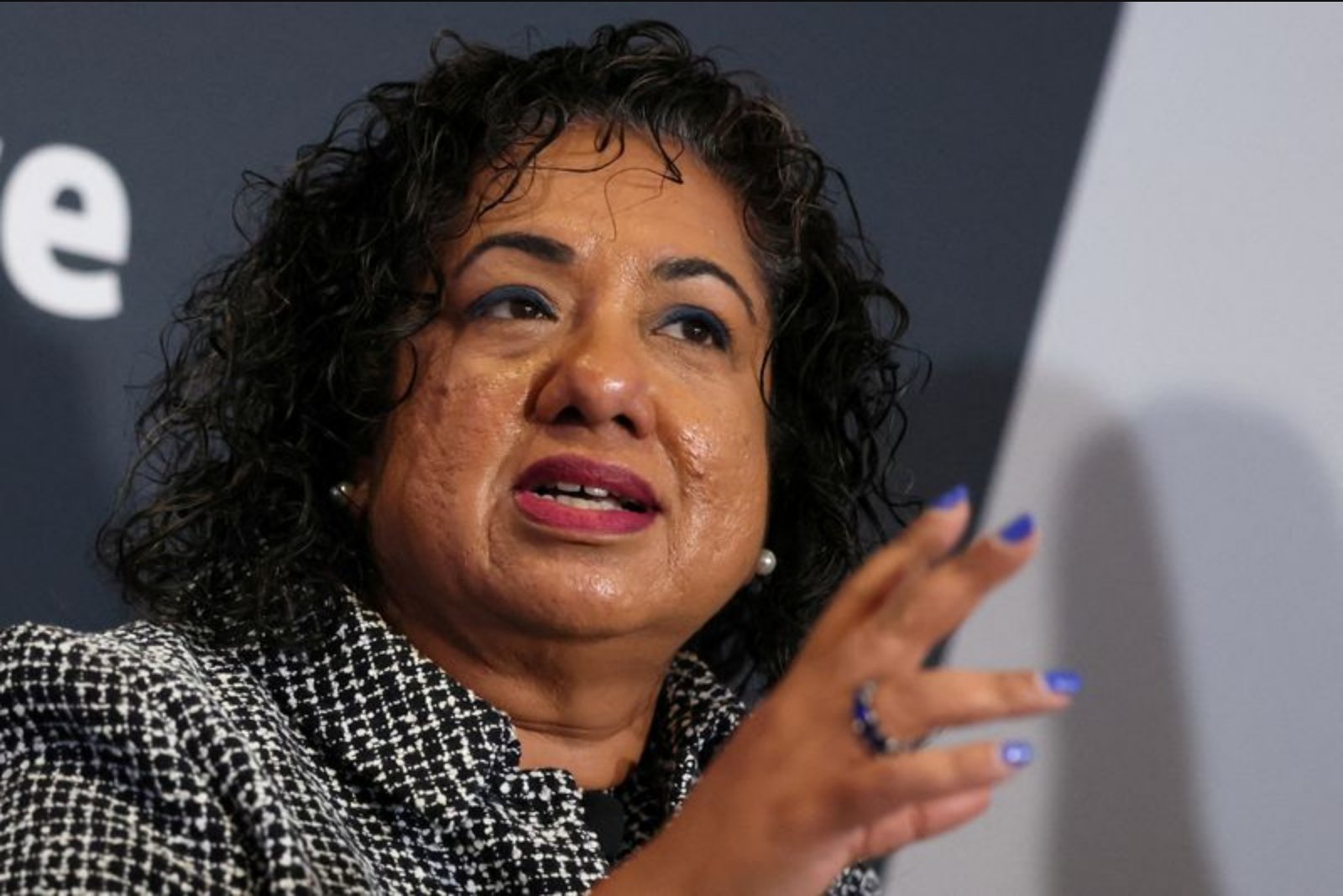
Global corporations are showing a growing willingness to join forces with Chinese technology and biotech firms as they seek shelter from rising economic and geopolitical risks, Anu Aiyengar, JPMorgan’s Global Chair of Investment Banking, said in an interview.
Aiyengar told Reuters that corporate leaders are leaning on acquisitions and strategic partnerships to bolster scale and resilience in an uncertain environment, and she expects dealmakers to be positioned for another potentially record-setting year in 2026.
"Collaborations, partnerships, and acquisitions all are on the table," Aiyengar said. "There’s so much innovation that is happening in biotech. And same in the area of technology. And that’s a new framing of China, which I think is in the healthy direction."
That new framing is already evident in the pharmaceutical sector, Aiyengar noted, as global drugmakers rush to license experimental medicines developed in China to manage costs ahead of looming patent expirations. Industry analysts anticipate licensing agreements in this space could reach new highs this year.
Market data supports a pick-up in dealmaking across the region. According to LSEG data, M&A activity in Asia Pacific (ex-Japan) jumped 57% year-on-year to start 2026 - the strongest opening since 2022.
Politics is also reshaping cross-border deal flows. During a visit by former President Trump to Beijing, China and the United States agreed to establish a Board of Investment intended to spur cross-border investment in non-sensitive sectors. At the same time, the scale of transactions has grown: LSEG counted a record 68 deals worth $10 billion or more in the prior year, double the tally from 2024.
"The market continues to reward scale. There’s a scale premium, right? Same industry. Larger company trades at a higher multiple than the smaller company," Aiyengar said, underscoring why larger combinations are attracting attention.
Chinese outbound acquisition activity is rising as well. Rhodium data show overseas purchases by Chinese firms reached $9.6 billion in the first quarter of 2026, the highest level since early 2021 and marking a fifth consecutive quarterly increase. Mining and energy transactions led that wave, including Zijin Gold’s $4 billion takeover of Canada’s Allied Gold in January.
Aiyengar cautioned clients against making long-term strategic choices based on short-term headlines. She said JPMorgan advises building flexibility into plans and creating "more levers that you can pull" to adapt to rapidly shifting conditions.
Nevertheless, geopolitics is already altering the map of cross-border M&A. LSEG notes an increasing tendency for deals to flow along politically aligned corridors rather than purely commercial ones. The effects of that shift were on display in April, when China blocked Meta’s more than $2 billion acquisition of AI start-up Manus on national security grounds.
Policy uncertainty tied to the United States' leadership has compounded the picture for dealmakers. Aiyengar highlighted that Trump’s second term has introduced additional uncertainty through abrupt policy shifts and volatile relations with China and Russia, complicating long-range planning for corporate executives.
Overall, Aiyengar’s observations paint a picture of companies prioritizing scale and strategic partnerships, with China increasingly viewed as a source of innovation and dealflow even as geopolitics reshapes where and how transactions can proceed.