
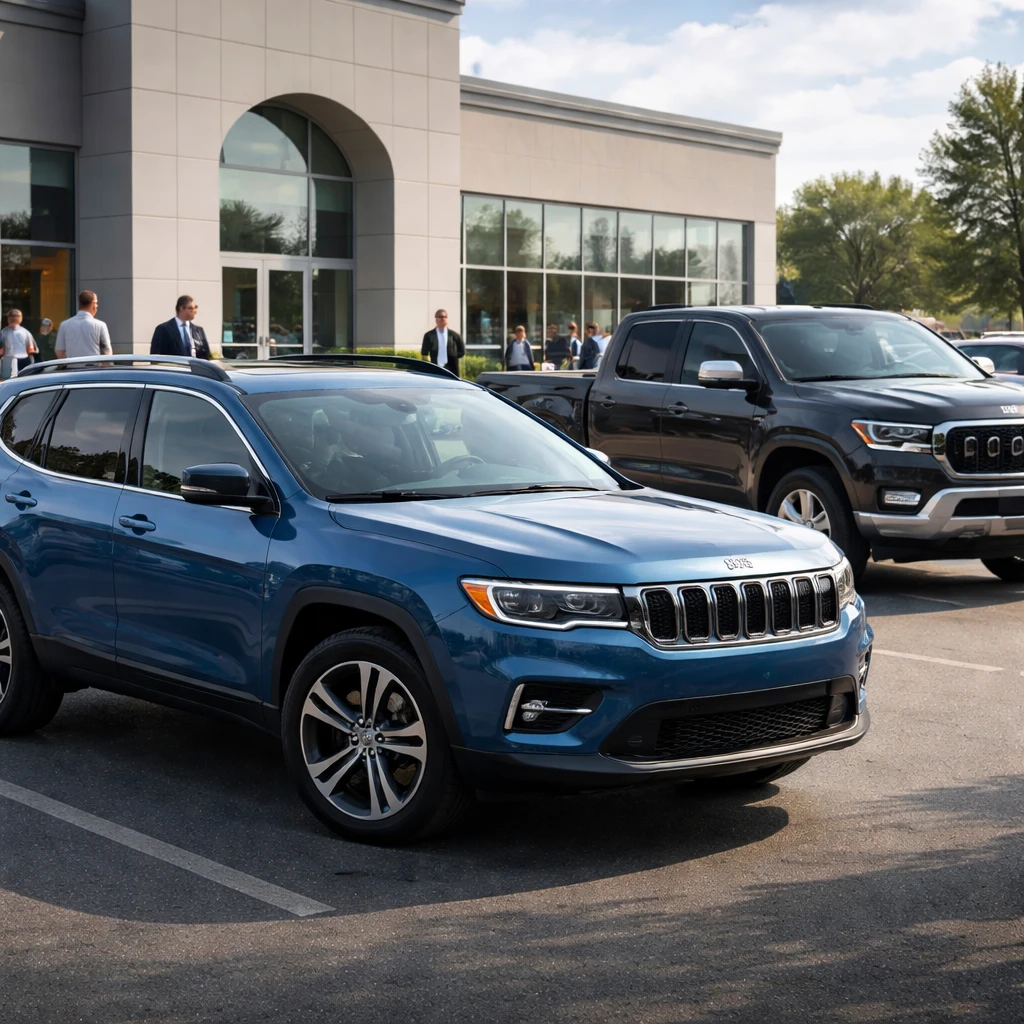
Performance snapshot
Stellantis NV recorded a mixed start to the year as its recovery plan encountered resistance from weak demand for the new Jeep Cherokee hybrid while the Ram brand recorded robust growth. Jeep deliveries were up 3% in the first quarter year-on-year, compared with a 20% jump in Ram sales, the latter fuelled in part by the return of the Hemi V-8 engine.
Cherokee rollout and market reception
The compact Cherokee returned to the market as a hybrid after a three-year absence, joining a refreshed Grand Cherokee and a more affordable Grand Wagoneer. Despite those product moves, the compact Cherokee has struggled to gain traction in a crowded segment that caters to value-conscious buyers. Through April, Stellantis sold about 4,500 Cherokee units, capturing just under 1% of the compact SUV segment, according to researcher Edmunds.com Inc.
Dealers who began receiving orders for the new Cherokee in December report that sales momentum has not improved materially in May. Management acknowledges production bottlenecks constrained early volumes, a factor the company says limited initial supply to dealers.
Pricing, incentives and competitive positioning
Price positioning appears to be a headwind for the new Cherokee. Edmunds data indicate the average transaction price for a Jeep Cherokee in April was $43,481, notably above the compact SUV segment average of $36,900. By comparison, a Toyota RAV4 hybrid averaged $36,104 and a hybrid Kia Sportage averaged $37,741 in transaction price. Dealer feedback in the market suggests current incentives for the Cherokee are not adequate to match those competing models.
In response, Jeep’s chief executive, Bob Broderdorf, said it is premature to judge the Cherokee’s longer term trajectory and noted an adjustment to leasing incentives. For May, the company trimmed the lease payment offer on the Cherokee by $60. Broderdorf highlighted the model’s efficiency metrics, describing it as achieving roughly 37 miles per gallon and capable of 500 miles on a tank, and said dealers will begin to see traffic improvement following the payment reduction.
Corporate strategy and investor outlook
Antonio Filosa, who became CEO of Stellantis in June 2025, has made Jeep and Ram central to his plan to revive the automaker’s fortunes. Filosa has steered the company back to profitability in the first quarter and helped reignite US sales, the firm’s most lucrative market. Nevertheless, he has faced investor scrutiny: lower-than-expected margins in a recent period pushed the stock lower last month and required public reassurance from management about the North American recovery.
Filosa is scheduled to present his strategic vision for Stellantis at the company’s US headquarters in Auburn Hills, Michigan, on Thursday.
Market environment and headwinds
Stellantis’ recovery faces broader macroeconomic pressures. Elevated interest rates, tariffs and rising gasoline costs have complicated efforts to accelerate sales across brands. These factors, combined with initial production constraints for the Cherokee and a higher-than-segment-average transaction price, help explain the model’s sluggish early performance relative to rivals in the compact hybrid SUV market.
Conclusion
Stellantis’ latest quarter shows divergent brand dynamics: Ram’s strong wholesale and retail response underscores demand for its truck line-up, while Jeep’s compact hybrid re-entry has been muted so far. Management has taken steps to ease incentives and said supply issues limited early availability, but pricing differentials and macroeconomic headwinds remain near-term constraints. How quickly the Cherokee can convert interest into higher retail sales will be a focal point for investors as the company outlines its path forward in the coming days.