
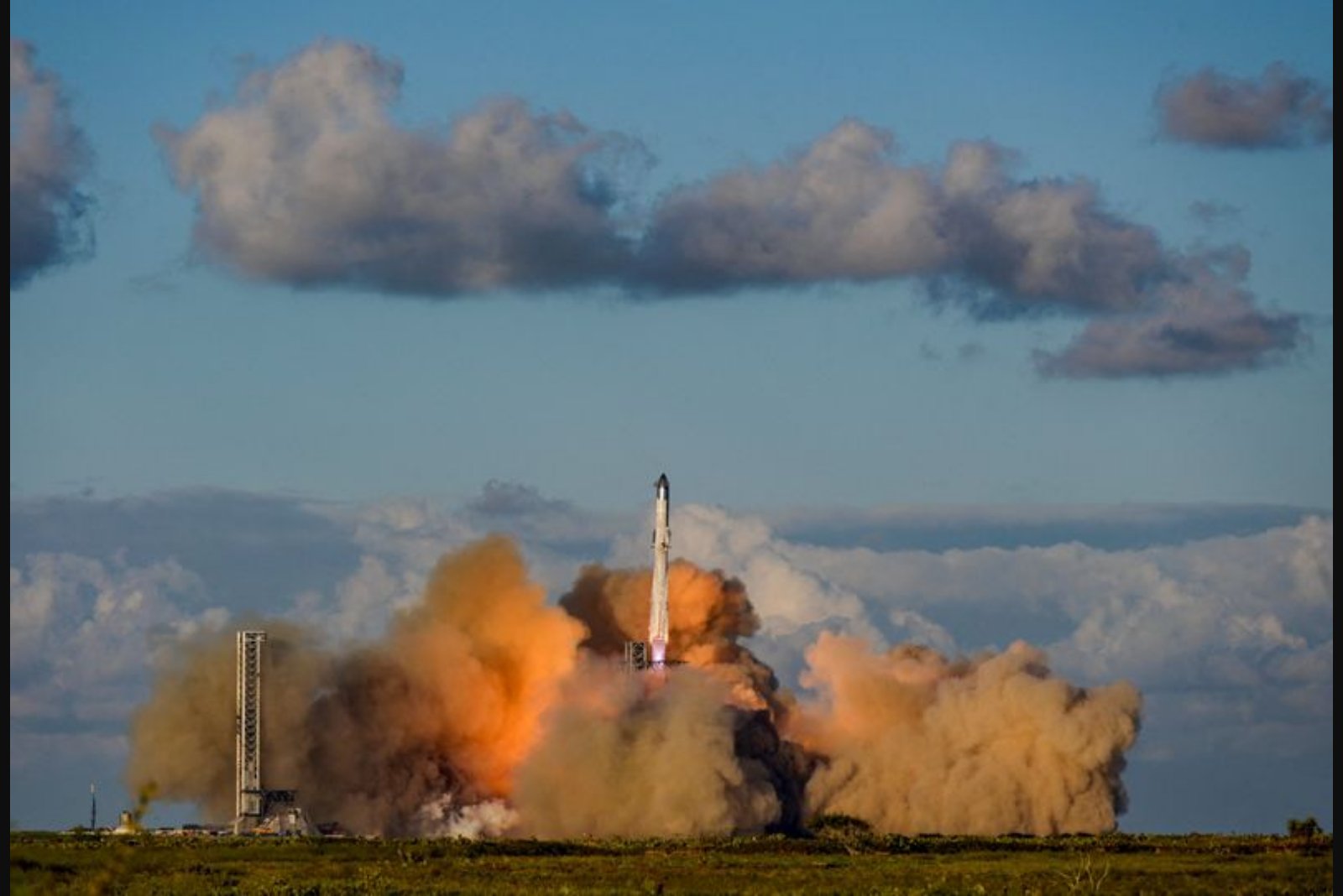
Investors contemplating participation in SpaceX’s IPO are effectively staking capital on CEO Elon Musk’s capacity to convert a fast-growing satellite enterprise into a much larger conglomerate by using rocket technology as an enabler for broader ambitions, including a costly push into artificial intelligence. SpaceX has become the world’s largest launch services provider by deploying thousands of Starlink broadband satellites and by scaling reusable launch vehicles, but the valuation it seeks is tied to much more than those current achievements.
The offering positions SpaceX not simply as an established satellite and launch company but as a potential juggernaut if several ambitious initiatives succeed. Central to that thesis is a sequence of events that must unfold in a particular order: Starlink must generate sizable free cash flow to help finance the next-generation Starship rocket; Starship must materially reduce per-launch costs; and that cost reduction must broaden the market sufficiently to sustain a new, capital-intensive AI business that is currently producing significant losses.
That framework underpins investor enthusiasm but also concentrates risk around execution. "The risk isn’t whether SpaceX is a real business; it clearly is," said Josh Gilbert, an analyst at eToro, a trading platform where the stock will be available on the day of debut. "The risk is whether a $1.75 trillion valuation adequately prices in the execution challenges that come with being part rocket company, part internet provider, part AI venture, and very much driven by the vision of one individual."
SpaceX disclosed substantial losses in its initial S-1 filing, testing investor patience with the pace and scale of spending. The company reported a loss of $4.28 billion in the three months ended March 31, an increase of eightfold from the year-earlier period. Those quarterly losses mean investors must rely less on conventional valuation metrics and more on belief in management’s ability to execute long-term plans.
Investor faith in Musk’s track record - which includes building a large electric-vehicle business and leading SpaceX to milestones such as private astronaut flights - is a driving force behind bullish sentiment. "You are not going to justify a $1.75 trillion or $2 trillion valuation for SpaceX using traditional fundamental metrics alone," said Greg Martin, cofounder of Rainmaker Securities. "Many investors ... believe SpaceX could become a $5 trillion to $10 trillion company over time."
Even so, the company’s history of delayed rollouts across other Musk-led ventures is acknowledged. Several high-profile products and initiatives from other businesses arrived later than originally promised, and some remain in development. Nevertheless, a broad cross-section of market participants remain optimistic: eighteen investors, analysts and fund managers are broadly bullish, and many contend that the satellite and launch businesses by themselves could justify a valuation near $2 trillion.
SpaceX’s financial statements also highlight contrasting dynamics across its three business segments. Starlink remains a central revenue driver, producing $3.26 billion in revenue in the March quarter, an increase of nearly one-third year-on-year, although margins were pressured by international expansion and other expenses.
By contrast, space launch revenue fell sharply: space revenue dropped 28.4% in the March quarter, and losses in that segment widened to $662 million from $70 million a year earlier as the company channeled significant investment into Starship development.
The AI unit is currently the largest source of operating losses. Losses at the AI business grew to $2.47 billion, while capital expenditures across the company tripled to $7.72 billion in the period, surpassing the combined capex of the other two segments. SpaceX explicitly noted the capital intensity of its strategy in its filing.
That filing also frames Starship as more than a rocket; company risk disclosures state that "Our ability to execute our growth strategy is highly dependent on Starship," and warn that delays in development or failure to meet cost targets could impede deployment of next-generation satellites and AI infrastructure, increase costs and jeopardize growth and customer retention. The company further observed that its operational rockets, Falcon 9 and Falcon Heavy, are not capable of launching the new satellite designs it envisions.
SpaceX’s balance sheet reflects the cumulative cost of over two decades of development. The company reported an accumulated deficit of $41.31 billion as of March 31, indicating that it has spent considerably more than it has earned during its history, largely driven by investments in reusable launch vehicles, the scale-up of the Starlink constellation and the build-out of large-scale AI data centers.
The filing underscores the interconnected nature of SpaceX’s operations. As the company put it, "The complexity and interdependence of our engineering, manufacturing, assembly and terrestrial, space transportation, and infrastructure systems mean that a disruption in one component can have cascading effects throughout our operations." That interdependence is central to both the upside narrative and to the downside risks.
For investors, the decision to embrace SpaceX at a near-$2 trillion valuation requires accepting a high degree of execution risk balanced against the potential for outsized returns if the planned sequence of milestones materializes. The company’s existing revenue streams and technological accomplishments provide a foundation; the IPO valuation, however, reflects expectations for transformational growth contingent on several technically demanding and capital-intensive steps.
How these dynamics play out will determine whether the market’s current optimism proves prescient or overly sanguine. For now, the valuation reflects a forward-looking bet on Musk’s ability to knit together satellite broadband, heavy-lift launch capability and AI infrastructure into a coherent, profitable whole.