
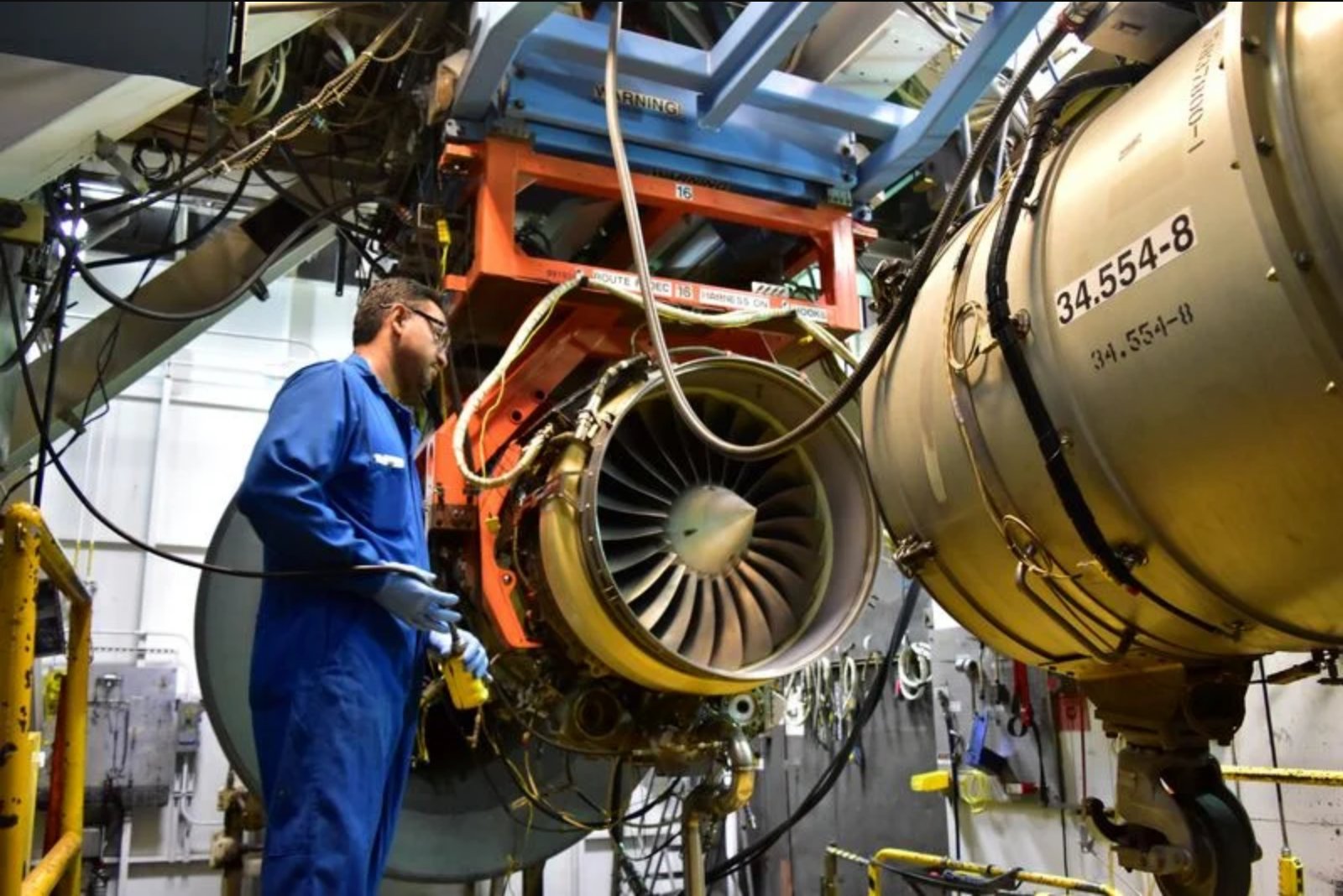
Honeywell Aerospace said it expects to record $6.5 billion in adjusted earnings by 2030, driven by strong demand from aircraft manufacturers and defense clients and by a tighter strategic focus following its planned split from Honeywell International later this month. The aerospace arm will trade as HONA after the separation on June 29.
In an interview, Honeywell Aerospace Chief Executive Jim Currier described a capital-first approach to driving growth. Instead of prioritizing dividends or stock buybacks, the company will channel investments into expanding factory capacity and strengthening the supply chain.
Currier said: "We have so much to make that just driving capital allocation into factories, suppliers, the business itself is going to provide a tremendous (return on investment capital) that’s going to drive the organic growth of the business." He framed the decision as necessary to meet heightened production needs rather than returning cash to shareholders in the near term.
Honeywell Aerospace is following a pattern of breaking up diversified industrial conglomerates into more narrowly focused businesses, a strategy that its leaders argue removes the distractions of a multi-industry parent. The company announced in 2025 plans to split Honeywell International into three independent firms centered on automation, aerospace and advanced materials; the spinoffs are expected to conclude this year.
Currier said the aerospace business did not enjoy significant operational synergies as part of the broader industrial portfolio. "All of the distractions that occur as part of a conglomerate are eliminated," he said. He added that there was a "lack of synergies that exist between aerospace and the rest of the portfolio (and) you don’t see a lot of that efficiency gain by being a part of this industrial conglomerate."
Currier pointed to a recent agreement to scale up precision-guided munitions production with the Pentagon, RTX and Lockheed Martin as an example of how a leaner company can move more quickly. That arrangement requires a $500 million investment by Honeywell Aerospace. "Before the breakup, that would have been a very difficult thing to do as part of an industrial conglomerate, (but) we were able to get that deal done in record time," he said.
For the current year, the company forecasts 7% to 9% sales growth, earnings before interest and taxes of $4.6 billion to $4.7 billion, and free cash flow of $1 billion to $1.5 billion in the second half of the year. Looking out to the rest of the decade, management expects annual sales growth in the range of 6% to 8% and more than $4 billion in free cash flow by 2030.
Those projections are underpinned by what the company described as broad-based demand: commercial airframers, aftermarket services, defense programs and space markets all contribute to the outlook. Honeywell Aerospace’s backlog has expanded to $19 billion, a 20% increase from a year earlier.
Management acknowledged that supply chain disruptions affected key products, including engines, during the first quarter, but characterized those issues as short-term and manageable. Still, questions remain among investors and analysts about the company’s supplier relationships and investment pace.
Analysts at Jefferies highlighted concerns that, after the separation, Honeywell Aerospace might receive less favorable treatment from critical suppliers of castings and forgings. They also noted the company’s historical investment levels have trailed some competitors, including RTX.
Currier said the company intends to invest not only in its own capacity but also in its suppliers. "If I need to buy equipment for suppliers, smaller suppliers that are providing critical components for us, we will go ahead and do that as well, where necessary and where required," he said. "So, when I think of capital deployment, it’s not just within our own four walls."
Honeywell Aerospace is monitoring the market for potential bottlenecks in several supply chain categories: castings, forgings, bearings, specialty materials, coatings and complex machining. Management plans to target investments where they are most likely to ease constraints and support ramping production.
The firm’s leadership has taken steps to build an independent identity ahead of the split. Last month, members of the company’s marketing team brought a sample polo shirt to the Phoenix, Arizona headquarters with the Honeywell Aerospace logo and the phrase "established in 2026." Currier placed the shirt on his conference table and said the moment underscored the reality of becoming a stand-alone aerospace and defense company. "That’s when it really hit me ... this is a brand-new aerospace and defense company, you know, out from underneath Honeywell, and so, it actually gave me some goosebumps," he said.
As Honeywell Aerospace prepares to begin life as HONA, management is positioning the company to prioritize capacity expansion and supply-chain investments to capture expected commercial and defense demand. The company’s near-term financial targets and its longer-term ambitions rest on executing that capital deployment strategy and addressing supply-chain risks.