
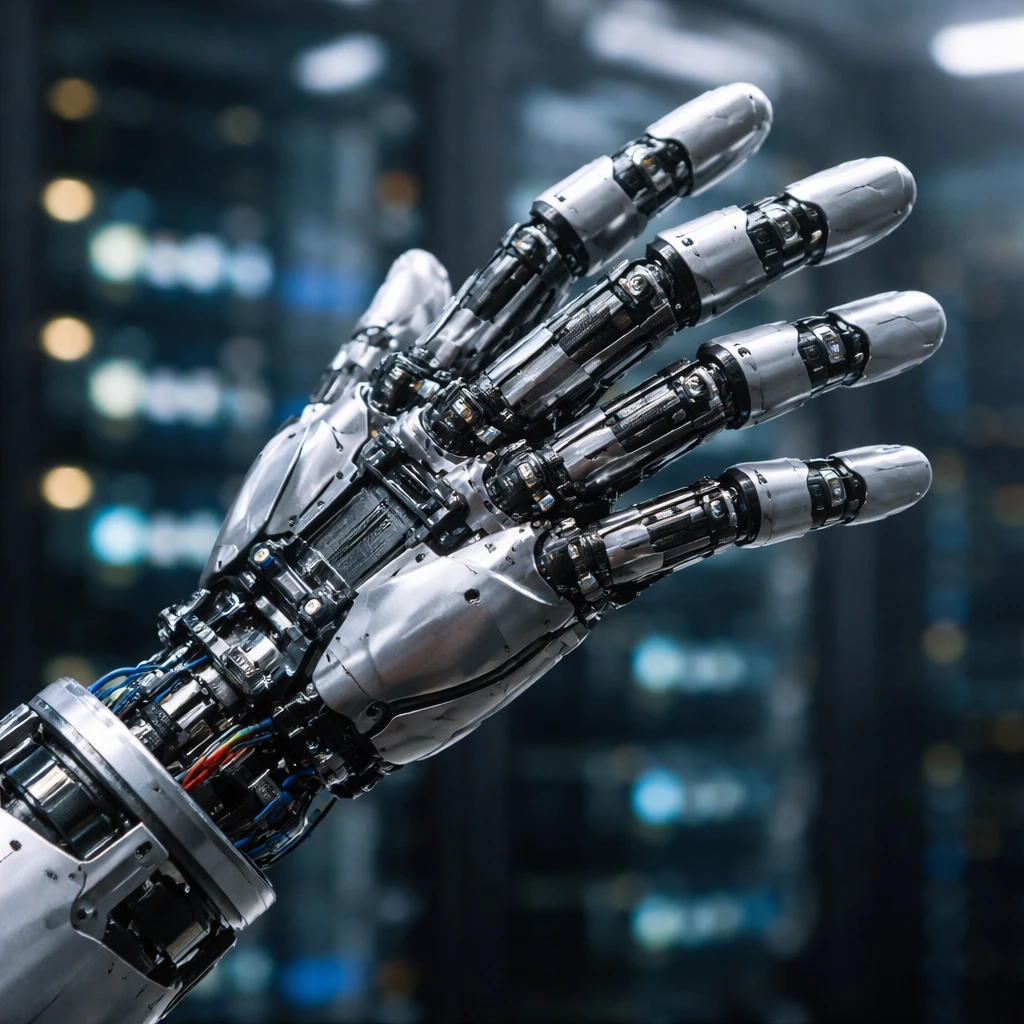
Hesai Group (NASDAQ:HSAI) saw its stock advance roughly 6% after Morgan Stanley published an analysis of Nvidia’s decision to adopt Sharpa as a reference design for humanoid robotics. The brokerage framed the selection as a meaningful commercial opportunity for Hesai because of the company’s contracted role supplying actuator modules to Sharpa.
According to Morgan Stanley, Nvidia selected Sharpa for its dexterous-hand technology. Sharpa’s offering is described as an integrated intelligence system that combines precision mechanical architecture, sensory intelligence and CraftNet - Sharpa’s end-to-end Vision-Tactile-Language-Action AI model that converts raw sensor inputs into rules enabling dexterous manipulation.
Hesai is described as commercially bound to Sharpa through a supply framework that commits the company to provide proprietary actuator modules. Margins on those sales are specified in the framework as locked at a 40-50% cost-plus basis, which Morgan Stanley equates to roughly a 30-35% gross profit margin.
The bank noted that Hesai’s Strategic Growth Initiatives included a 2026 annual revenue target of Rmb100 million, equivalent to about $14.8 million, a target set earlier. Morgan Stanley highlighted the potential for humanoid-related revenue to provide upside to that target over the coming 12-18 months.
In Morgan Stanley’s view, Sharpa’s selection turns a related-party supply arrangement into direct exposure to a validated humanoid reference platform. That matters because revenue tied to the reference design could become recurring: every commercial humanoid built on Nvidia’s stack that uses the reference design would drive actuator sell-through tied to Hesai, the bank said.
While the market for dexterous hands is described as crowded, Morgan Stanley emphasized that Nvidia initially chose Sharpa for its reference design. The brokerage argued the investment thesis is multi-faceted, combining contracted actuator sell-through, potential ecosystem lock-in around the reference platform, and consumer optionality.
The note from Morgan Stanley frames the Nvidia-Sharpa decision as an event that could transform Hesai’s relationship with the humanoid robotics supply chain, turning a contractual supplier position into recurring revenue exposure if the reference design sees commercial adoption.
Key takeaways
- Hesai shares rose about 6% after Morgan Stanley assessed Nvidia’s selection of Sharpa as a humanoid reference design.
- Hesai supplies proprietary actuator modules to Sharpa under a framework with margins locked at 40-50% cost-plus (about 30-35% gross profit margin).
- Morgan Stanley sees potential upside to Hesai’s previously stated 2026 Strategic Growth Initiatives revenue target of Rmb100 million (around $14.8 million) within the next 12-18 months if humanoid-related sales accelerate.
Risks and uncertainties
- The broader dexterous-hand market is competitive, which could limit the rate of commercial adoption of any single reference design - this impacts robotics and hardware sectors.
- Potential revenue upside depends on actual commercial uptake of the reference design on Nvidia’s stack; if adoption is slower than expected, Hesai’s pathway to recurring actuator revenue may be limited - this affects robotics and semiconductor ecosystems.
- The supply framework ties Hesai’s commercial economics to Sharpa’s execution and the reference design’s market penetration; any disruption or change in that dynamic could alter projected margins and revenues.